The Dasam Granth is a 1,428-page anthology of diverse compositions attributed to the tenth Guru of Sikhism, Guru Gobind Singh, and a topic of great controversy among Sikhs.
Yongming Yanshou ranks among the great thinkers of the Chinese and East Asian Buddhist traditions, one whose legacy has endured for more than a thousand years.
Norse Mythology explores the magical myths and legends of Norway, Sweden, Denmark, Iceland and Viking-Age Greenland and outlines the way the prehistoric tales and beliefs from these regions that have remained embedded in the imagination of the world.
John Nemec examines the beginnings of the non-dual tantric philosophy of the famed Pratyabhijna or "e;Recognition [of God]"e; School of tenth-century Kashmir, the tradition most closely associated with Kashmiri Shaivism.
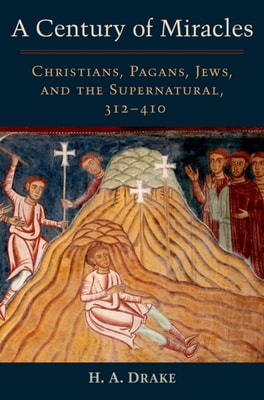
Rufinus' vivid account of the battle between the Eastern Emperor Theodosius and the Western usurper Eugenius by the River Frigidus in 394 represents it as the final confrontation between paganism and Christianity.
Religion is a particularly useful field within which to study Roman self-definition, for the Romans considered themselves to be the most religious of all peoples and ascribed their imperial success to their religiosity.
Hailed as "e;a feast"e; (Washington Post) and "e;a modern-day bestiary"e; (The New Yorker), Stephen Asma's On Monsters is a wide-ranging cultural and conceptual history of monsters--how they have evolved over time, what functions they have served for us, and what shapes they are likely to take in the future.
Two Greek cities which in their time were leading states in the Mediterranean world, Selinus in Sicily and Cyrene in Libya, set up inscriptions of the kind called sacred laws, but regulating worship on a larger scale than elsewhere - Selinus in the mid fifth century B.
John Cort explores the narratives by which the Jains have explained the presence of icons of Jinas (their enlightened and liberated teachers) that are worshiped and venerated in the hundreds of thousands of Jain temples throughout India.
In many of the world's religions, both polytheistic and monotheistic, a seemingly enigmatic and paradoxical image is found--that of the god who worships.
The Daode Jing, a highly enigmatic work rooted in ancient Chinese cosmology, ontology, metaphysics, and moral thinking, is regularly offered to college and high-school students in religion, philosophy, history, literature, Asian studies, and humanities courses.
On April 25, 1999, ten thousand Falun Gong practitioners gathered outside Zhongnanhai, the guarded compound where China's highest leaders live and work, in a day-long peaceful protest of police brutality against fellow practitioners in the neighboring city of Tianjin.
Hailed as "e;a feast"e; (Washington Post) and "e;a modern-day bestiary"e; (The New Yorker), Stephen Asma's On Monsters is a wide-ranging cultural and conceptual history of monsters--how they have evolved over time, what functions they have served for us, and what shapes they are likely to take in the future.
Daughters of Hecate unites for the first time research on the problem of gender and magic in three ancient Mediterranean societies: early Judaism, Christianity, and Graeco-Roman culture.
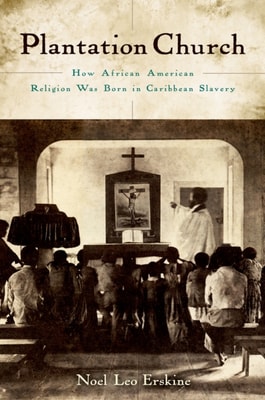
Noel Leo Erskine investigates the history of the Black Church as it developed both in the United States and the Caribbean after the arrival of enslaved Africans.
Chinese traditional culture cannot be understood without some familiarity with the I Ching, yet it is one of the most difficult of the world's ancient classics.
The first comprehensive book on alcohol in pre-modern India, An Unholy Brew: Alcohol in Indian History and Religions uses a wide range of sources from the Vedas to the Kamasutra to explore drinks and styles of drinking, as well as rationales for abstinence from the earliest Sanskrit written records through the second millennium CE.
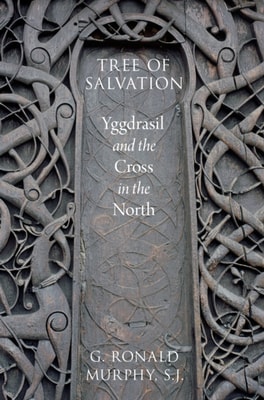
Winner of the 2014 Mythopoeic Myth & Fantasy Studies AwardAt the heart of the mythology of the Anglo-Scandinavian-Germanic North is the evergreen Yggdrasil, the tree of life believed to hold up the skies and unite and separate three worlds: Asgard, high in the tree, where the gods dwelled in their great halls; Middlegard, where human beings lived; and the dark underground world of Hel, home to the monstrous goddess of death.
In Spirit Song: Afro-Brazilian Religious Music and Boundaries, Marc Gidal investigates how and why a multi-faith community in southern Brazil utilizes music to combine and segregate three Afro-Brazilian religions: Umbanda, Quimbanda, and Batuque.
By the early twenty-first century, a phenomenon that once was inconceivable had become nearly commonplace in American society: the public spiritual teacher who neither belongs to, nor is authorized by a major religious tradition.
Noel Leo Erskine investigates the history of the Black Church as it developed both in the United States and the Caribbean after the arrival of enslaved Africans.
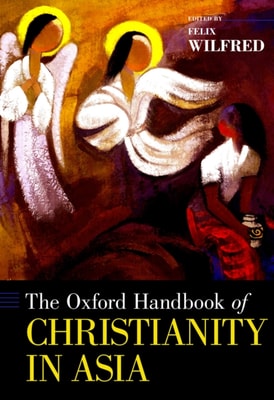
Named by the International Bulletin of Missionary Studies as an Outstanding Book of 2014 for Mission StudiesDespite the ongoing global expansion of Christianity, there remains a lack of comprehensive scholarship on its development in Asia.
Beatriz Caiuby Labate and Clancy Cavnar offer an in-depth exploration of how Amerindian epistemology and ontology concerning indigenous shamanic rituals of the Amazon have spread to Western societies, and of how indigenous, mestizo, and cosmopolitan cultures have engaged with and transformed these forest traditions.