This book introduces the reader to the past and present of Jewish life in Turkey and to Turkish Jewish diaspora communities in Israel, Europe, Latin America and the United States.
This book traces the development of Oman's inclusive agreements and highlights their importance for international negotiations, dealing with issues most relevant to humanity's own survival today, nuclear weapons or climate change.
This book demonstrates that the common belief that humanity is naturally disposed to religion did not disappear with the emergence of the Enlightenment.
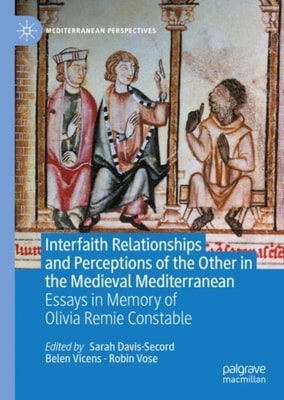
This book is a collaborative contribution that expands our understanding of how interfaith relations, both real and imagined, developed across medieval Iberia and the Mediterranean.
This book provides a comparative analysis of cosmopolitan (esoteric) religious movements, such as Theosophy, Groupe Independent des Etudes Esoteriques, Anthroposophy, and Monism, in England, France, Germany, and India during the late nineteenth-century to the interwar years.
The book highlights the personal and scientific struggles of Arthur Erich Haas (1884-1941), an Austrian Physicist from a wealthy Jewish middle-class family, whose remarkable accomplishments in a politically hostile but scientifically rewarding environment deserve greater recognition.
Old St Paul's and Culture is an interdisciplinary collection of essays that looks predominantly at the culture of Old St Paul's and its wider precinct in the early modern period, while also providing important insights into the Cathedral's medieval institution.
This book collects a renowned scholar's essays from the past five decades and reflects two main concerns: an approach to logic that stresses argumentation, reasoning, and critical thinking and that is informal, empirical, naturalistic, practical, applied, concrete, and historical; and an interest in Galileo's life and thought-his scientific achievements, Inquisition trial, and methodological lessons in light of his iconic status as "e;father of modern science.
This book focuses, from a legal perspective, on a series of events which make up some of the principal episodes in the legal history of religion in Ireland: the anti-Catholic penal laws of the late seventeenth and early eighteenth century; the shift towards the removal of disabilities from Catholics and dissenters; the dis-establishment of the Church of Ireland; and the place of religion, and the Catholic Church, under the Constitutions of 1922 and 1937.
This contribution to the global history of ideas uses biographical profiles of 18th-century contemporaries to find what Salafist and Sufi Islam, Evangelical Protestant and Jansenist Catholic Christianity, and Hasidic Judaism have in common.
This book explores the advantages of and challenges concerning Special Religious Education (SRE) in multicultural Australia and argues for the need for General Religious Education (GRE) as well.
This book discusses key works by important writers from Church of Ireland backgrounds (from Farquhar and Swift to Beckett and Bardwell), in order to demonstrate that writers from this Irish subculture have a unique socio-political viewpoint which is imperfectly understood.
This book brings together interdisciplinary scholars from history, theology, folklore, ethnology and meteorology to examine how David Cranz's Historie von Gronland (1765) resonated in various disciplines, periods and countries.
This book asks how the inhabitants and neighbours of the Eastern Roman Empire understand their identity as Romans in the centuries following the emergence of Islam as a world-religion.
Reading Illegitimacy in Early Iberian Literature presents illegitimacy as a fluid, creative, and negotiable concept in early literature which challenges society's definition of what is acceptable.
This book examines the views of Hermann Helmholtz, Hermann Cohen and Gottlob Frege in reaction to the epistemic crises induced by rapid changes in 19th century scientific practice.
This book illuminates the interconnections between politics and religion through the lens of artistic production, exploring how art inspired by religion functioned as a form of resistance, directed against both Romanian national communism (1960-1989) and, latterly, consumerist society and its global market.
This book investigates the memory of the Holocaust in Sweden and concentrates on early initiatives to document and disseminate information about the genocide during the late 1940s until the early 1960s.
This book examines the experiences and interconnections of the Reformations, principally in Denmark-Norway and Britain and Ireland (but with an eye to the broader Scandinavian landscape as well), and also discusses instances of similarities between the Reformations in both realms.
This book provides a study of the manner in which the Roman Catholic Church in France responded to successive revolutions between 1789 and 1870 as well as to the cultural upheaval associated with accelerating socio-economic change.
This book analyses the artistic and cultural legacy of Western Islamic societies and their interactions with Islamic, Christian and Jewish societies in the framework of the late medieval Mediterranean, from a range of multi-disciplinary perspectives.
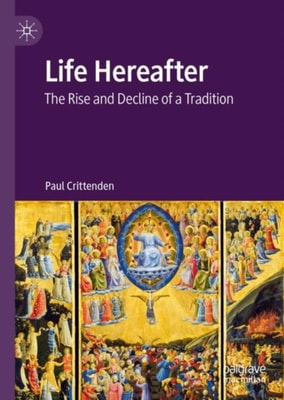
In this book, Paul Crittenden offers a critical guide to the problematic origins of biblical teaching about the afterlife and the way in which it was subsequently developed by Church authorities and theologians-Origen, Augustine, and Thomas Aquinas in particular.
This book explores specific aspects of Martin Luther's ideas on education in general, and on religious education in particular, by comparing them to the views of other great sixteenth-century reformers: Huldrych Zwingli, John Calvin, and Philip Melanchthon.
This book presents a revolutionary new reading of manuscript records left by puritan minister Thomas Shepard in Cambridge, Massachusetts that have been studied for decades as his on-the-spot recording of oral relations of faith delivered by candidates for church membership.
This book reconstructs the efforts that were made to establish a missionary network between the two Irish Colleges of Rome, Ireland, and the West Indies during the seventeenth century.
This book presents a comprehensive account of the historical development of the Charismatic Movement in Taiwan, placing it within the context of Taiwan's religious and political history.