This book explores the ways in which changing views on gender and the place of women in society during the latter half of the twentieth century affected women's participation and standing within British Paganism.
'In this compelling and thoroughly researched book, Benjamin Huskinson demonstrates that just as there is broad diversity within evangelicalism, so too there is broad diversity among "e;creationists.
This edited collection brings together varying angles and approaches to tackle the multi-dimensional issue of anti-Catholicism since the Protestant Reformation in Britain and Ireland.
This book demonstrates the complexity of nineteenth-century Britain's engagement with Palestine and its surrounds through the conceptual framing of the region as the Holy Land.
This thought provoking book deals with religious scholarship and important controversies of the early modern period, specifically those relating to the question of the salvation of the pagans and the afterlife.
This book offers the first full study of the challenges posed to an emerging English nationalism that stemmed from the powerful appeal exerted by the leaders of the international Protestant cause.
This book sheds light on the career of Samuel Prideaux Tregelles, and in doing so touches on numerous aspects of nineteenth-century British and European religious history.
This book reconstructs the history of a group of British Quaker families and their involvement in the process of settler colonialism in early nineteenth-century Australia.
The purpose of this book is to present unpublished papers at the cutting edge of research on dialetheism and to reflect recent work on the applications of the theory.
The modern West has made the focus on individuality, individual freedom, and self-identity central to its self-definition, and these concepts have been crucially shaped by Christianity.
This book explores the transformative impact that the immigration of large numbers of Jews from the former Soviet Union to Germany had on Jewish communities from 1990 to 2005.
This book examines the premodern encounter between the three monotheistic religions through the unique prism of a premodern literary work-The Parable of the Three Rings-a poignant and charming tale of a father who had three sons and one precious ring.
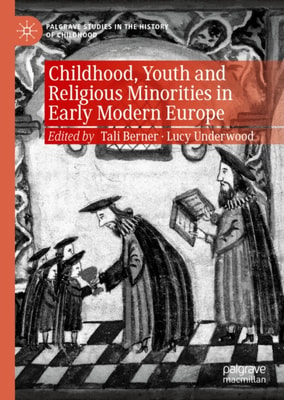
This edited collection examines different aspects of the experience and significance of childhood, youth and family relations in minority religious groups in north-west Europe in the late medieval, Reformation and post-Reformation era.
This book addresses the history of the senses in relation to affective piety and its role in devotional practices in the late Middle Ages, focusing on the sense of touch.
This book describes the history in late 19th-century Russia and immigration to Canada of an ethnic and religious group known as Doukhobors, or Spirit Wrestlers.
This book examines the Avar siege of Constantinople in 626, one of the most significant events of the seventh century, and the impact and repercussions this had on the political, military, economic and religious structures of the Byzantine Empire.
This book discusses the ways in which early modern hagiographic sources can be used to study lived religion and everyday life from the fifteenth to the seventeenth century.
This book investigates a host of primary sources documenting the Calvinist Reformation in Geneva, exploring the history and epistemology of religious listening at the crossroads of sensory anthropology and religion, knowledge, and media.
This book shows how, through a series of fierce battles over Sabbath laws, legislative chaplains, Bible-reading in public schools and other flashpoints, nineteenth-century secularists mounted a powerful case for a separation of religion and government.
Professor Somerville deals here with the history of Latin Christianity at a crucial time - the century of the Gregorian reform movement and of the Investiture conflict between the papacy and the empire.
This book describes the history in late 19th-century Russia and immigration to Canada of an ethnic and religious group known as Doukhobors, or Spirit Wrestlers.
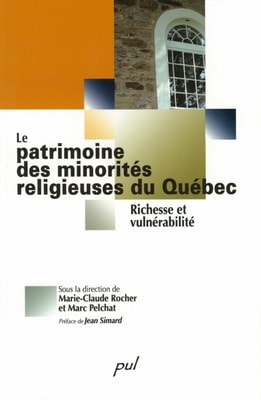
Tour à tour tolérées, interdites, marginalisées ou acceptées, les minorités religieuses du Québec ont marqué l’espace, la mémoire et la société de façons diverses mais de manière constante.
Quand le Québec s’appelait le Bas-Canada (1791-1840), l’Église catholique était menacée de toutes parts : statut politique précaire, vive concurrence des autres religions chrétiennes, pénurie chronique de prêtres à la campagne où une paroisse sur trois était sans curé.