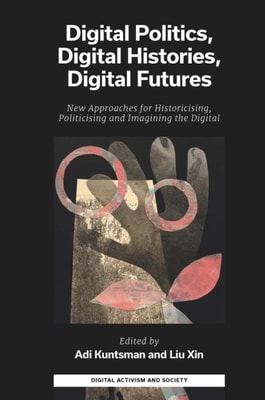
Global politics has been completely transformed by the rise of digitalisation and the politicised use of everyday digital communication tools by ordinary people in citizen engagement and mass protest.
Global politics has been completely transformed by the rise of digitalisation and the politicised use of everyday digital communication tools by ordinary people in citizen engagement and mass protest.
Collected Studies CS1065We assume that we have a clear understanding of how people in the Middle Ages thought and which attitudes they struck but in reality this is a subject of enormous complexity of which conclusions can only be drawn via painstaking archival research and decades of study.
Becket's life was lived on a European stage, his cause was conducted in a European setting, and the cult of the new martyr spread with extraordinary rapidity to the furthest reaches of Latin Christendom before the end of the twelfth century.
A 2023 Foreword INDIES Book of the Year Finalist in the Religion CategoryWith clarity and penetrating insight, Alex Ryvchin unravels the mystery of antisemitism Mandatory reading for anyone concerned with the ethical fate of the human race.
AJL 2024 Judaica Reference & Bibliography Awards Honorable MentionThe late Steven Lowenstein was a brilliant social historian who, after retiring from his academic position at the University of Judaism, toiled for yearsand up to his final daysto complete this monumental book, which is the definitive demographic history of German Jewry.
In a polarised milieu that too often posits "e;queer"e; and "e;Christian"e; as competing realms, this book explores the complexities of identity development, religious traumatisation, and the task of creating safe faith spaces in which LGBTQA+ people can find healing, particularly in the Evangelical context.
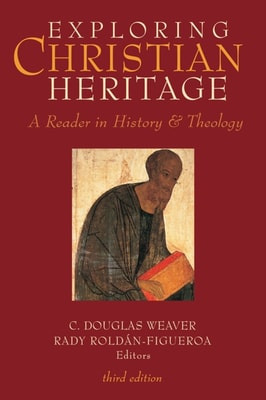
Exploring Christian Heritage provides students and teachers with a rich and substantial introduction to the texts that have shaped the Christian faith.
Inspired by the advice of his former teacher and mentor, Adolf von Harnack, William Wrede committed himself to the task of writing a dissertation on 1 Clement, which was originally published under the title Untersuchungen zum 1.
The area whose capital was the southern Lombard city of Benevento developed a culture identified with the characteristic form of writing known as the Beneventan script, which was used throughout the area and was brought to perfection at the abbey of Montecassino in the late eleventh century.
The first part of this collection brings together a selection of Peregrine Horden's papers on the history of hospitals and related institutions of welfare provision from their origins in Late Antiquity to their medieval flourishing in Byzantium and the Islamic lands as well as in western Europe.
Though it may not be immediately obvious why articles on topics from such distantly removed areas of western Europe - the Iberian peninsula and southern Italy - should appear in the same volume (the fourth collection by Roger Reynolds), the materials covered illustrate that they are indeed closely related, both in their differences and their similarities.
The papers presented here explore in various ways the interactions between clerics and the society in which Christian churches put down roots in Late Antiquity.
The area whose capital was the southern Lombard city of Benevento developed a culture identified with the characteristic form of writing known as the Beneventan script, which was used throughout the area and was brought to perfection at the abbey of Montecassino in the late eleventh century.
Though it may not be immediately obvious why articles on topics from such distantly removed areas of western Europe - the Iberian peninsula and southern Italy - should appear in the same volume (the fourth collection by Roger Reynolds), the materials covered illustrate that they are indeed closely related, both in their differences and their similarities.
These ten essays by John Van Engen situate religion in the history of medieval Western Europe: as an unavoidable presence in everyday life, as a conceptual framework for social and political life, as a force integral to its historical dynamics.
The papers presented here explore in various ways the interactions between clerics and the society in which Christian churches put down roots in Late Antiquity.
The first part of this collection brings together a selection of Peregrine Horden's papers on the history of hospitals and related institutions of welfare provision from their origins in Late Antiquity to their medieval flourishing in Byzantium and the Islamic lands as well as in western Europe.
The papers in this second selection of articles by Professor Colish focus on thinkers of the patristic age, and relate to her three monographic studies in this area published over the last two decades.
The papers in this second selection of articles by Professor Colish focus on thinkers of the patristic age, and relate to her three monographic studies in this area published over the last two decades.
The present collection of studies by Andrzej Poppe in many ways represents a continuation of the research brought together a quarter century ago in the author's previous Variorum volume.
What readers are loving about X Marks the Spot: 'Reads like an Indiana jones novel, full of adventure and discovery' 'A cracking good read' 'Fascinating' GREG JENNER'I couldn't put it down' JANINA RAMIREZ'Alive with the spirit of adventure' RANULPH FIENNES'If you love Indiana Jones, this is the real thing' DAN SNOWAncient shipwrecks in crystal seas, mythical princesses preserved in ice and astonishing lost rituals - this is the story of archaeology.
These ten essays by John Van Engen situate religion in the history of medieval Western Europe: as an unavoidable presence in everyday life, as a conceptual framework for social and political life, as a force integral to its historical dynamics.