Available for the first time in the English language, this is a complete and annotated translation of a key work by the twelfth-century Muslim philosopher, Averroes (Ibn Rushd).
This study puts the thought of Evagrius Ponticus, a fourth-century theologian, into dialogue with modern cognitive science in regard to the topic of evil, specifically moral evil.
The study of Maximus the Confessor's thought has flourished in recent years: international conferences, publications and articles, new critical editions and translations mark a torrent of interest in the work and influence of perhaps the most sublime of the Byzantine Church Fathers.
As a global religion with growing numbers of expressions, Christianity calls for deepening relationships across traditions while also formulating collaborative visions.
Having read the works of Teilhard de Chardin the author became more and more convinced of the breathtaking plan God had designed for His Creation and the building of His Kingdom and crucially, the human race's specific involvement in it.
Beginning with her award-winning book Theology in the Age of Scientific Reasoning (1990), Nancey Murphy has used philosophy of science as a way into, and catalyst for, fresh thinking in cosmology, divine action, epistemology, cognitive neuroscience, theological anthropology, philosophy of mind, and Christian virtue ethics.
The last few decades seem to have ushered in new levels of violence, challenging the notion that our globalized, interconnected world offers increased prospects for cooperation and peace.
In these times of increasingly contentious politics and uncivil discourse in the United States, the ongoing encounter of adherents of the Abrahamic faiths in the American heartland offers a model of positive interfaith relations.
In a concise and devastating style, Craig Parton, an experienced trial lawyer versed in the laws of legal evidence, argues that religions uniformly fail the simplest tests of admissibility for their respective claims.
Does humanity possess the freedom to think and act, or are we always caused and determined to think and act--exactly how we think and act--by things outside of our control?
The discussions about subject and validation in our late modernity tend to oscillate between the "e;weak"e; self of postmodernity ("e;empty"e; or "e;rhetorical"e;) and neo-Cartesian versions trying, as they do, to recover a discredited foundation.
A defense of the New Testament view that all things are to be united in Christ, which entails that the ultimate destiny of the universe, and of all that is in it, is to be united in God.
Process and Dipolar Reality takes up Whitehead's challenge to philosophy to regain its proper status, namely, an adventure in speculative thought elaborating a categoreal scheme aiming to be the coherent, conceptual framework within which every possible item of experience can be interpreted.
"e;The totalitarian state clearly intends to eliminate all those forms of organic community that rival the absolute loyalty of the individual to the state.
Gadamer's Path to Plato investigates the formative years of Hans-Georg Gadamer's Plato studies, while studying with Martin Heidegger at Marburg University.
In a highly-connected global village, the flow of worldviews from East to West (and vice versa) has great potential for good, but also some dangerous pitfalls.
In ZeroTheology, John Tucker argues that not only can one be a Christian without holding any traditional beliefs but that one can only be a Christian by getting out of religious belief altogether.
After spending many years in a religious order, Dominic Kirkham describes how he was driven to meet the challenge of modern thinking, an exercise that has proved both freeing and frightening.
Two major obstacles to belief in God in the twenty-first century are the idea that science is incompatible with religious faith, and the idea that the diversity of religions undermines the credibility of belief that any one religion could be truer than the others.
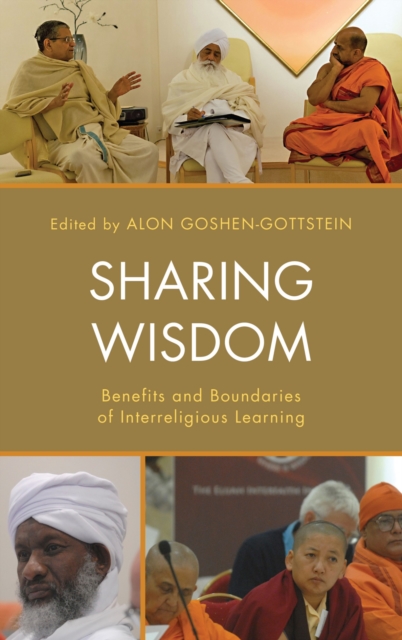
The essays collected here, prepared by a think tank of the Elijah Interfaith Academy, explore the challenges associated with sharing wisdom--learning, teachings, messages for good living.