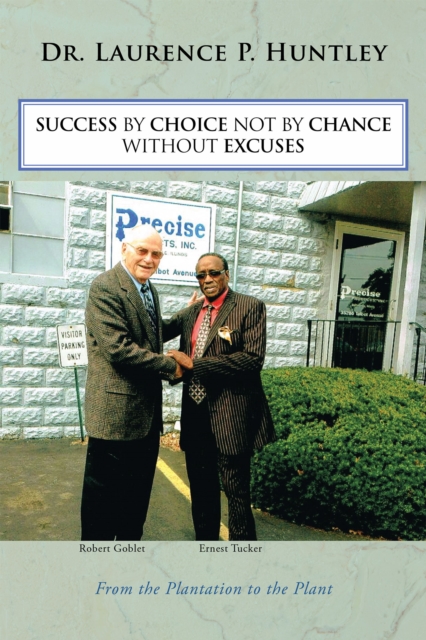
Success by Choice Not By Chance gives a road map which clearly shows the potential for any one to succeed in life whether they came from Tupelo, Mississippi or was born on Wall Street.
The intent of this book is to bring about awareness and restore a biblical identity to a people who are the only people in the history of mankind whose identity the world has concealed!
Subtle Implications is a defining clarification of the human experience as presented in the story of the authors life, and expressed in his Theories of Everything.
Science has never been able to explain why we cant see God with our physical eyes, even though Heor some mysterious powercreated the universe, is maintaining the universe, and someday may destroy the universe.
Paul looks to Illuminate basic faith, tradition and practice, offering direction to those who may feel dizzy in a world where cultural, political and religious landscapes seem to be changing by the minute.
Philosophy of ReligionAn examination of why we have religion in every society; what makes religion necessary, good, or bad; and how we can enrich the practice of whatever religion we choose to practice.
God and the Human Environment: Catholic Principles of Environmental Stewardship as a Template for Action in Nigeria brings into conversation the Churchs theological reflection on the mandate to care for Gods creation and the circumstances of the environment in Nigeria.
The Treasure of the Word: Commentary on Biblical Readings for Sundays, Feast Days, and Solemnities, Cycle C walks the reader through the lectionarys year of readings, beginning with Advent, the first season of the liturgical year.
The Treasure of the Word: Commentary on Biblical Readings for Sundays, Feast Days, and Solemnities, Cycle A presents concise and incisive reflections on the treasures one may excavate from the rich veins embedded in the lectionarys readings from the Word of God.
Those of you who consider yourselves freethinkers of whatever type or combination of typesatheist, agnostic, ignostic, humanist, Unitarian, nonreligious, antireligious, secularist, ethical culturist, bright, realist, skeptic, and so forthmay enjoy seeing whether you have or had similar thoughts, ideas, or experiences as me throughout your lives.
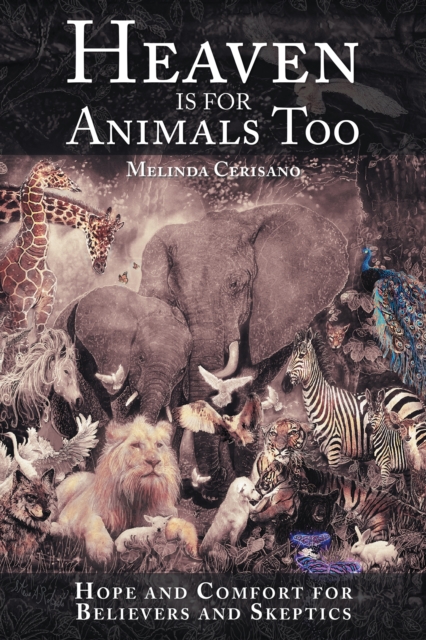
If you are an animal lover or if you have experienced the dreadful pain of losing a beloved pet, fasten your seatbelt, for this is a journey into the age-old controversy; do animals go to heaven?
Our world has been shaken from COVID and its far-reaching effects - shaken to the point that God's people may be tempted to give up in these uncertain times.
Consider Israel: Covenants in History looks at Biblical covenants and covenant features as a framework to study much of the Old Testament, the eschatological prophecies etc.
Given the precarious nature of the war and the possibility that Hawks Nest may be defeated, the God-King, Amesha Spenta, has condensed in writing, the ways and means to acquire the knowledge of the ages without the aid of the Sects and to bridge the gap between the subconscious mind and the vast collective warehouse known as the super-consciousness.
Some Suggested Thoughts on How to Use This BookRead it in the morning to gather strength and inspiration for the day, or at evening at the close of the day.
In Black Life Matter, Biko Mandela Gray offers a philosophical eulogy for Aiyana Stanley-Jones, Tamir Rice, Alton Sterling, and Sandra Bland that attests to their irreducible significance in the face of unremitting police brutality.