In a highly-connected global village, the flow of worldviews from East to West (and vice versa) has great potential for good, but also some dangerous pitfalls.
A Theologian's Guide to Heidegger provides a uniquely theological introduction to the philosophy of Martin Heidegger, by focusing on not just the relationship between Heidegger and theology, or even the nature of the discourse that must occur between theological concerns and Heidegger's philosophical errands, but by precisely exploring how theology can use Heidegger's philosophy as a means of outlining the scope and task of postmodern theology.
In this groundbreaking new work, Dillard makes a powerful case for bringing contemporary Christian theology into critical dialogue with Martin Heidegger's Contributions to Philosophy (Of the Event).
Portraits of Jewish Learning brings together colorful accounts of the ways that Jewish students today are having meaningful learning experiences in day school classrooms, Hebrew programs, synagogue-based schools, and high school and college courses that push students out of their comfort zone.
Is Darwinian evolution really the most successful scientific theory ever proposed--or even the best idea anyone has ever had, as Daniel Dennett once put it?
When the topic of homeschooling comes up, there often seem to be various assumptions as to why we homeschool our children, which are simply wrong, or, at the most, inadequate.
By redefining terms and language, the far-left controls discourse and alters Western civilization even to the extreme of exchanging that which was formerly nearly universally condemned for what is now nearly universally celebrated--the almost total desecration of the created order (Rom 1:18-32).
Evangelicalism, in spite of its size and relationship to various historic movements in Christian history, has never been known to be a perspective that interacts widely in its theological development.
The computer has increasingly become the principal model for the mind, which means our most basic experience of "e;reality"e; is as mediated through a screen, or stored in a cloud.
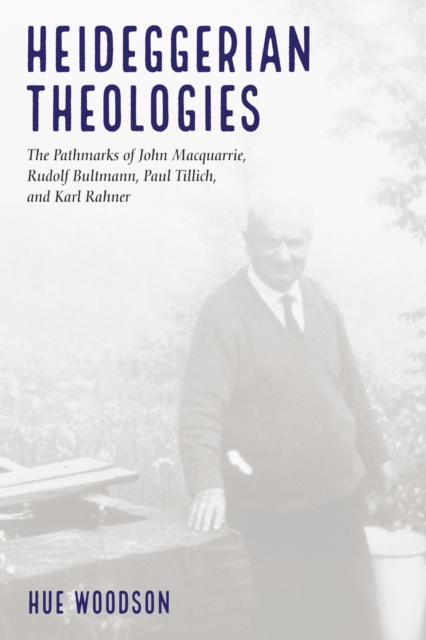
In light of Martin Heidegger's contextualized influence upon them, John Macquarrie, Rudolf Bultmann, Paul Tillich, and Karl Rahner engage in theologies that, in their respective tasks and scopes, venture into existential theology, following Heideggerian pathmarks toward the primordiality of being on the way to unconcealment, or "e;aletheia.
Calvinism and Middle Knowledge is an anthology of essays that moves the discussion of Molinism/middle knowledge out of the philosophical arena, where it has almost exclusively remained, and into the broader theological community.
Comprised of the wisdom of over fifty scholars, preachers, poets, and artists, this anthology is born of the conviction that open-hearted engagement across our differences is a prerequisite for healthy civic life today.
When writing to the Corinthians, the Apostle Paul used figurative temple language repeatedly to shape the identity of his audience ("e;Temple of God,"e; "e;Temple of the Holy Spirit,"e; and "e;Temple of the Living God"e;).
This book invites readers into Tolkien's world through the lens of a variety of philosophers, all of whom owe a rich debt to the Neoplatonic philosophical tradition.
Within the Christian theological tradition there has always been a variety of perspectives on hell, usually distinguished according to their views about the duration of hell's torments for the damned.
In 1992, Peter Ochs and a few Christian and Muslim colleagues began to gather small groups, in and outside the classroom, to practice close and attentive reading of the sacred Scriptures of the Jewish, Muslim, and Christian traditions.