This illuminating discussion of deism in the early American colonies presents an overview of its main tenets, showing how its influence rose swiftly and for a time became a highly controversial subject of debate among the first citizens of our nation.
The Collected Works of Spinoza: Complete Digital Edition, combining volumes I and II, provides for the first time in English, a truly satisfactory edition of all of Spinoza's writings, with accurate and readable translations, based on the best critical editions of the original-language texts, done by a scholar who has published extensively on the philosopher's work.
Religious freedom is so often presented as a timeless American ideal and an inalienable right, appearing fully formed at the founding of the United States.
Religious freedom is so often presented as a timeless American ideal and an inalienable right, appearing fully formed at the founding of the United States.
Nurture a Heart that Waits with Joyful, Expectant FaithStep into the Advent season with The Art of Living in Advent, a beautifully crafted daily devotional by Sylvie Vanhoozer, who blends Scripture, history, art, and reflection to enrich your spiritual preparation for Christmas.
The Buddha gives a systematic overview of his three great cycles of teachings (tridharmacakra), explains what his intent was in each of these cycles, and declares this foundational third-cycle sutra to be a presentation of his definitive intent.
Finalist, Non-fiction Inspiration, 2026 Next Generation Indie Book AwardsBronze Medalist, Enlightenment/Spirituality, 2026 Living Now Book AwardsIn this gritty memoir about tackling life's challenges with the promise of transcendence, Teilhardian scholar Christine M.
In a culture that includes sex in everything from advertising to climbing the corporate ladder, it's easy to feel fuzzy about the true purpose and place of sexuality.
Salafism is one of the most dynamic and rapidly growing Islamic movements and it is impossible to understand contemporary Islam without taking account of it.
Originally published in 1845, this concise critique formed the basis of thirty later lectures delivered in 1848 by Ludwig Feuerbach, one of Germany's most influential humanist philosophers.
Outreach Resource of the YearA Comprehensive Overview of Christianity and IslamTogether, the adherents of Christianity and Islam make up over half of the world's population, and their numbers are expected to keep growing.
Predicated on the immemorial core or "e;first"e; principles of the universal perennial philosophy, which finds expression from Lao Tzu to Ramana Maharshi in the East and from Pythagoras to Ren Gunon and Ananda K.
Salafism is one of the most dynamic and rapidly growing Islamic movements and it is impossible to understand contemporary Islam without taking account of it.
The Shocking Truth About the Islamic View of Non-Muslim WomenHoly Hell reveals how Islam sanctions the rape and sex slavery of infidel women, and how non-Muslim officials prefer to deny that fact rather than confront it.
Written in the tradition of the vastly popular Prometheus title Atheism: The Case Against God and The Atheist Debater's Handbook, this accessible and inviting primer of nonbelief ponders eight of the most-asked questions about atheism.
In Truth and Knowledge in an Empty World, sixteen leading experts in Buddhist philosophy tackle complex problems of how we can gain reliable knowledge when both the knower and what is known are empty of any intrinsic identity.
The Role of Psychedelics in the Development of Human Religious Practices explores how mind-altering substances have shaped humanity’s search for the sacred.
Religion, Performances, and Democracy examines how religion has profoundly influenced the socio political and cultural landscape of South Asia, shaping identities, public and private spaces, and social relationships over centuries.
The Role of Psychedelics in the Development of Human Religious Practices explores how mind-altering substances have shaped humanity’s search for the sacred.
In dialogue with Derridean deconstruction, this book highlights Nancy's distinctive figurative philosophical style which emerges as a transformative force, one that radicalises differance and draws out its creative potential.
A New Perspective for Biblical Justice in International RelationsPracticing a Christian vision of justice as a citizen in one's own country is difficult enough.
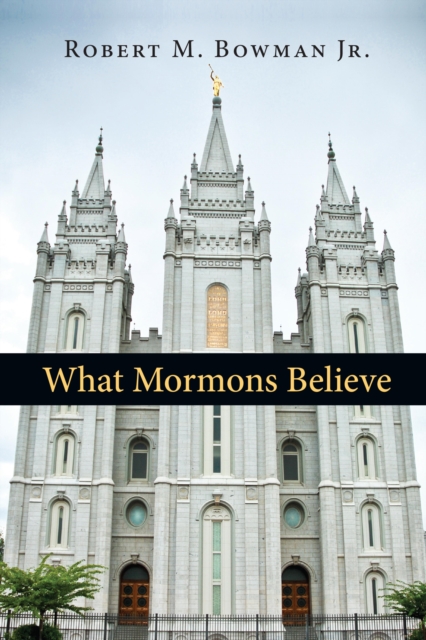
"e;The Church of Jesus Christ of Latter-day Saints is as American as apple pie,"e; writes Robert Bowman in this booklet-length introduction to the Mormon faith.