About the bookIn this book, we look at God's Book of Acts, Chapters 18 to the end of the book, where we see God continue to build His church on earth, and also continue to establish the pattern for all local churches on earth!
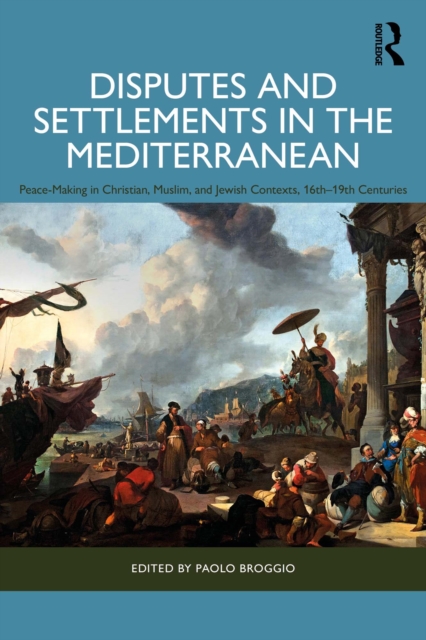
The struggle between Islam and the Crusaders comprised a dialogue of cultures on a broad geographic scale and a wide expanse of time, a perennial seesaw of conquest in the West as in the East.
Jesus Called You Into a New Lineage is a 365-day devotional designed to help believers live from their new identity in Christ rather than from fear, striving, memory, or the first report of the senses.
"e; Real Lived Horror, My Supernatural Childhood "e; is the true testimony of Kevik Mohhe KOUAKOU, who grew up in a haunted house in Abidjan, built on an ancient African cemetery.
In a rich survey encompassing music, art, literature, and architecture, Professor Davies studies the revolution in religious thought and worship in England during the Victorian era.
A photograph, map, or diagram illustrates the text for every site described in this pilgrimage to Palestine, beginning with places connected with John the Baptist and proceeding to Bethlehem and Nazareth, Samaria and Galilee, Jerash, Caesarea, Jericho, the Mount of Olives, Jerusalem, and Emmaus.
Over the past twenty years the American Catholic bishops have played a leading role in the antiabortion movement, published lengthy and highly detailed pastoral letters on nuclear weapons and on the American economy, and involved themselves, collectively and individually, in several national election campaigns.
Girl, Go is a powerful Christian devotional for women who are tired of waiting for the "e;perfect time"e; and ready to step into God's purpose with faith instead of fear.
Beginning with the conversion of Constantine in 312 and the establishment of the Christian Empire, the book continues through the Middle Ages up to the publication of Gratian's Decretum, the great, systematic book of Church law which transformed the idea of tradition into legal concepts.
Eric Hanson's multifaceted book examines the place of the church in the contemporary international system and the reciprocal influence of modern political and technological developments on the internal affairs of the church.
This volume attempts to put the clergy in the context of the issues and debates of the nineteenth century, treating the social history of the clergy, the repeated attempts to reform it, and the impact of these reforms on the structure and outlook of rank-and file parish clergy.
Calvin's eucharistic doctrine has been approached in the past from the standpoint of his polemic with the Lutherans and the Zwinglians, but Father McDonnell believes that Calvin's primary position was determined by his rejection of Roman Catholicism.
This book provides a comprehensive collective biography of the parish priests in one diocese--their origins, education, and careers: their relationship with their parishioners; and the process by which they were politicized prior to 1789.
Ambitiously undertaking to develop a strategy for making the study of religion "e;scientific,"e; Ninian Smart tackles a set of interrelated issues that bear importantly on the status of religion as an academic discipline.
Extracted from Pacifism in the United States, this work focuses on the significant contribution of the Quakers to the history of pacifism in the United States.
The author examines the logical structure of religious inquiry and discourse and the various meanings of religious utterances, and then develops principles of judgment and types of argument by which claims can be supported or challenged.
Most commentators imagine contemporary China to be monolithic, atheistic, and materialist, and wholly divorced from its earlier customs, but Kenneth Dean combines evidence from historical texts and extensive fieldwork to reveal an entirely different picture.
The author discusses the role of French Catholicism in the internal and foreign affairs of modern France, with a detailed examination of French Catholic groups and their effect on temporal life.
The author examines the role played by Syrian Christians in accelerating the forces of change in Muslim society at two junctures: the formative phase of Islamic civilization and the Ottoman collapse.
In Part I of Christianity and History, the author asks whether the committed Christian should be more conscious than the uncommitted of some meaning in history.
Under three successive Islamic dynasties--the Fatimids, the Ayyubids, and the Mamluks--the Egyptian Office of the Head of the Jews (also known as the Nagid) became the most powerful representative of medieval Jewish autonomy in the Islamic world.
In contrast to those critics who consistently have accused Soren Kierkegaard of neglecting the social dimension of human life, John Elrod holds that in those books written after the publication of Concluding Unscientific Postscript Kierkegaard turned his attention to the social and political issues of nineteenth-century Denmark.
This is an analysis of the powerful Islamic religious movement, initiated by Ibn Tumart among the Berber tribesmen of North Africa, which culminated in the creation of the huge Almohad empire in the twelfth century.
This is the first full study, translation, and critical annotation of the Essence of True Eloquence, by Tsong Khapa (1357-1419), universally acknowledged as the greatest Tibetan philosopher.
Before the outbreak of hostilities between Charles I and the Long Parliament, the King had authorized a regular monthly fast for the realm which members of parliament later adopted as a program of national humiliation.
Richard Antoun documents and exemplifies the single most important institution for the propagation of Islam, the Friday congregational sermon delivered in the mosque by the Muslim preacher.
In the first comprehensive commentary on Soren Kierkegaard's Concluding Unscientific Postscript the eminent Kierkegaard specialist Niels Thulstrup clarifies the book's intricate allusions to the thought and literature of its own and past ages.