This provocative book on The Future of Africa addresses fundamental genealogical developmental challenges of vital concern to Africa's transformation is premised on the orientation that the continent's future is up to Africans, cognizant of the fact that Africans cohabit the same diversified and inter-connected planet with others.
This volume addresses two primary research concerns: first, considering extraversion (or extroversion) as a term for characterizing a region that is "e;mobilizing resources from their (possibly unequal) relationship with the external environment"e;, a dynamic that constitutes a possible African potential; and, second, a survey of competing systems and strategies with a focus on relationships between formal and informal institutions in terms of their collaborations and conflicts.
The term 'African Potentials' refers to the knowledge, systems, practices, ideas and values created and implemented in African societies that are expected to contribute to overcoming various challenges and promoting people's wellbeing.
Colonial scholars have taken immense pleasure in portraying Africans as possessed by spirits but as lacking possession and ownership of their resources, including land.
Highlighting the problematiques of working with a narrow version of greenhouse effects or global warming, this book posits the theory of necroclimatism that encompasses broader versions of greenhouse effects and global warming.
The global epistemological gendarmerie do not only police epistemologies but they also infect the world with infectious epidemics of laughter targeted at those people whose epistemologies are offhandedly condemned as sterile and useless in controlling and containing pandemics.
Cet ouvrage qui est consacr, , la femme, aborde l'une des probl,matiques d'actualit, lourde qu'est la paix et vise , d,montrer que les femmes sont des v,ritables arm,es au service de la paix et du d,veloppement.
The advent of Coronavirus (also known as COVID-19) pandemic has caused much distress, despondence, fear and pandemonium across all nations of the world.
Placing security studies in the context of contemporary discourses about the ,colonial comeback, and posthumanism, this book postulates the notion of staticide which avers that the effacement of African state sovereignty is crucial for the security of the oncoming empire.
This book analyses the transition of South Asian nations from agrarian to industrialized economies, which is accompanied by a widening gap between agricultural and non-agricultural growth rates and a greater income disparity between farmers and urban residents.
This book uses narratives collected over a period of four years, detailing the stereotypes and stigmas attached to LGBTQ employees at the workplace in India, and it allows their voices to be heard.
This book makes an original contribution in addressing contemporary critical discussions and reflections on international health policies, strategies, programmes, systems, diseases, disasters, and public health issues.
This book explores how technological progress accelerates the transformation of economic development by adopting a fundamental logical approach to technological progress, intensive inputs, and promotion of productive efficiency to transformation of economic development.
Water scarcity due to climate change, population growth, and economic development is a critical issue in many semi-arid and arid regions around the world.
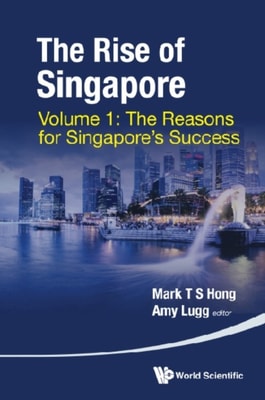
In the 50th anniversary year of Singapore's independence, it is timely to trace our developmental journey in order that young Singaporeans students, visiting tourists and foreigners working in Singapore may be informed about why and how Singapore succeeded, despite tremendous odds.
This book presents the analysis of problems and strategies related to the interface between basic and applied research in physics and industrial development, in the context of developing countries, with emphasis on the Latin American experience.
Written by a contemporary pioneer in the area of the universal paradigm and Islamic world-systems, this book offers a fresh post-modernist outlook on new epistemological investigations in the universal paradigm.
This edited book serves as the first instalment of a two-part title that aims to provide an academic exploration of the contemporary issues and perspectives on tourism in the Philippines.
The aim of this book is to provide the international readership a collection of articles authored by Chinese scholars on the subject of globalization and localization.
This book analyses how authoritarian rulers of Southeast Asian countries maintain their durability in office, and, in this context, explains why some movements of civil society organizations succeed while others fail to achieve their demands.
This book provides a focus on some of the main markers and challenges that are at the core of the study of structural transformations in contemporary capitalism and their implications for labour in the Global South.
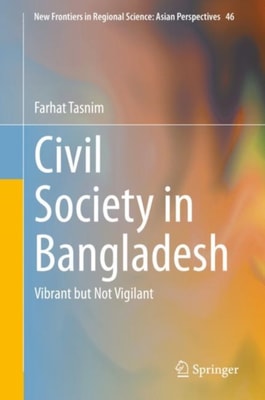
This book is the first of its kind to offer an understanding, analysis, and prediction of the state of civil society in Bangladesh in relation to development and democracy.
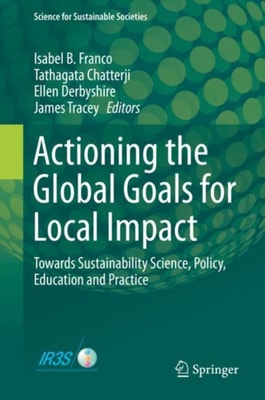
This book highlights the value of sustainability science in newly emerging and innovative approaches to research, education, capacity building and practice in order to transform rhetoric into impact sustainability.
At a time of significant transformations in Chinese society, this book addresses the key issue of social welfare and the reform of the welfare system in 21st century China.
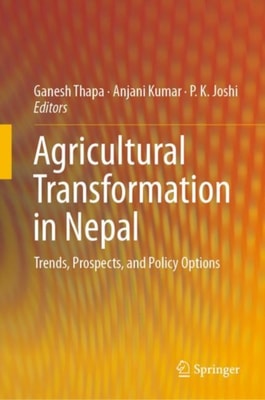
This book addresses some key strategic questions related to agriculture in the context of major contemporary developments and emerging challenges in Nepal such as the changing role of agriculture with economic growth, structural transformation in reducing poverty, improving nutritional outcomes, and addressing the challenges of climate change.