The establishment of a Middle East zone free of nuclear weapons, a concept more recently broadened to cover all weapons of mass destruction (WMD), has been before the international community for decades.
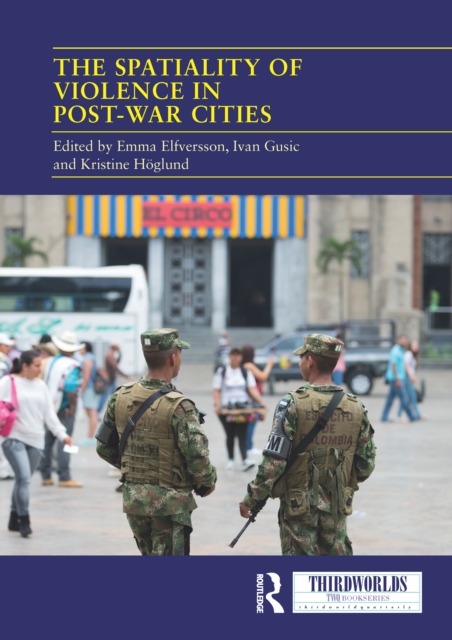
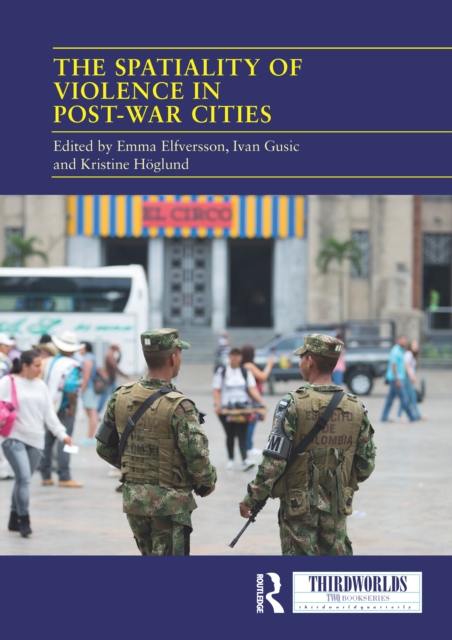
The Spatiality of Violence in Post-war Cities analyses violence in post-war cities from different perspectives and in different parts of the world, with a shared attention to space and how it affects violent dynamics.
The Spatiality of Violence in Post-war Cities analyses violence in post-war cities from different perspectives and in different parts of the world, with a shared attention to space and how it affects violent dynamics.
Reconceiving Civil Society and Transitional Justice examines the role of civil society in transitional justice, exploring the forms of civil society that are enabled or disabled by transitional justice processes and the forms of transitional justice activity that are enabled and disabled by civil society actors.
Reconceiving Civil Society and Transitional Justice examines the role of civil society in transitional justice, exploring the forms of civil society that are enabled or disabled by transitional justice processes and the forms of transitional justice activity that are enabled and disabled by civil society actors.
This comprehensive volume on teaching peace and war demonstrates that our choice of pedagogy, or the way we structure a curriculum, must be attentive to context.
This comprehensive volume on teaching peace and war demonstrates that our choice of pedagogy, or the way we structure a curriculum, must be attentive to context.
This book brings together a diverse range of international voices from academia, policymaking and civil society to address the failure to connect historical dialogue with atrocity prevention discourse and provide insight into how conflict histories and historical memory act as dynamic forces, actively facilitating or deterring current and future conflict.
This book brings together a diverse range of international voices from academia, policymaking and civil society to address the failure to connect historical dialogue with atrocity prevention discourse and provide insight into how conflict histories and historical memory act as dynamic forces, actively facilitating or deterring current and future conflict.
NGOs, Knowledge Production and Global Humanist Advocacy is an empirically and theoretically rich account of how international non-governmental organisations produce knowledge of and formulate understandings about the world around them.
NGOs, Knowledge Production and Global Humanist Advocacy is an empirically and theoretically rich account of how international non-governmental organisations produce knowledge of and formulate understandings about the world around them.
This volume examines the ongoing construction of the Responsibility to Protect (R2P) doctrine, elaborating on areas of both consolidation and contestation.
This volume examines the ongoing construction of the Responsibility to Protect (R2P) doctrine, elaborating on areas of both consolidation and contestation.
Stabilization as the New Normal in International Interventions provides the first comprehensive analysis of stabilization, which constitutes the new reference point for international intervention in unruly parts of the Global South.
Stabilization as the New Normal in International Interventions provides the first comprehensive analysis of stabilization, which constitutes the new reference point for international intervention in unruly parts of the Global South.
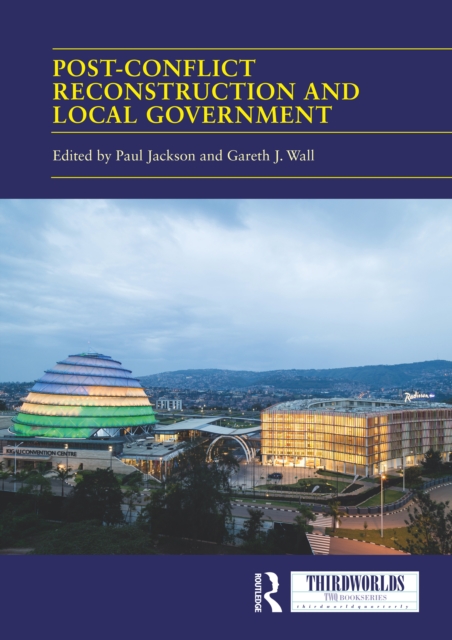
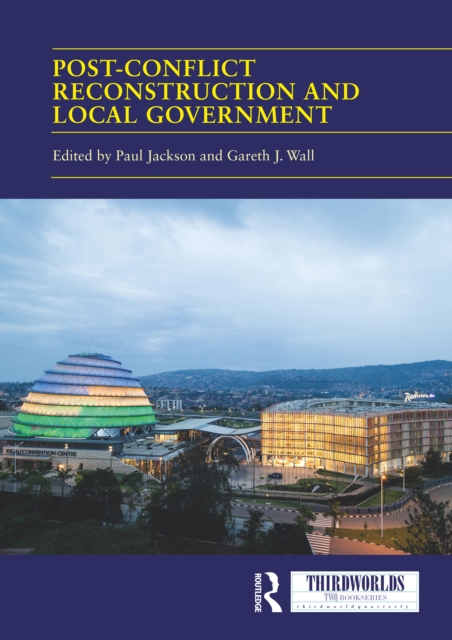
The subject of local government and post-conflict reconstruction sits at the intersection of several interrelated research areas, notably conflict/peacebuilding, governance, and political economy.
The subject of local government and post-conflict reconstruction sits at the intersection of several interrelated research areas, notably conflict/peacebuilding, governance, and political economy.
The complex problems of peace, security, and development in societies affected by conflict increasingly demand innovative ideas, and comprehensive strategies to tackle the diverse, simultaneous, and daunting challenges faced in trying to rebuild states and communities after war.
Urban Peacebuilding in Divided Societies explores the effects of urban policy and planning in the management of ethnic conflict in strife-torn societies, focusing on the cases of Belfast and Johannesburg.
While many have argued in the past decade that peace and conflict studies must engage more with local actors and communities, and scholars regularly describe the importance of local context and culture for building sustainable peace, there are substantial challenges methodologically to fulfilling this 'local turn'.
The complex problems of peace, security, and development in societies affected by conflict increasingly demand innovative ideas, and comprehensive strategies to tackle the diverse, simultaneous, and daunting challenges faced in trying to rebuild states and communities after war.
Urban Peacebuilding in Divided Societies explores the effects of urban policy and planning in the management of ethnic conflict in strife-torn societies, focusing on the cases of Belfast and Johannesburg.
While many have argued in the past decade that peace and conflict studies must engage more with local actors and communities, and scholars regularly describe the importance of local context and culture for building sustainable peace, there are substantial challenges methodologically to fulfilling this 'local turn'.
Resting on a convincing body of evidence that violence is not a necessary component of conflict among states and between states and non-state actors, World BEYOND War asserts that war itself can be ended.
Crime Prevention: Approaches, Practices, and Evaluations, Eleventh Edition, meets the needs of students and instructors for engaging, evidence-based, impartial coverage of interventions that can reduce or prevent deviance.
Crime Prevention: Approaches, Practices, and Evaluations, Eleventh Edition, meets the needs of students and instructors for engaging, evidence-based, impartial coverage of interventions that can reduce or prevent deviance.
We see the bloodshed, the hatred, the greed, the ruthless brutality in the world, and then we look to see who is making or letting this madness happen.
On September 20, 2001, the planned date of the meeting of the Community of Bishops of the Episcopal Church, was radically altered by the events of the previous week.
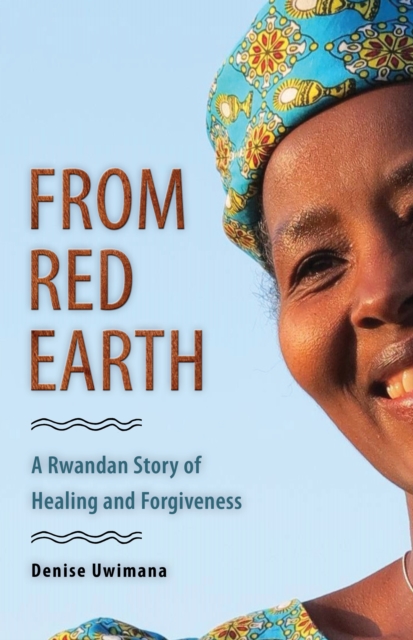
A Hundred Days of Carnage, Twenty-Five Years of RebirthIn the space of a hundred days, a million Tutsi in Rwanda were slaughtered by their Hutu neighbors.
The emergence of a 'new' democratic South Africa under Nelson Mandela was regarded as a high watermark for international ideals of human rights and democracy.