Butler sheds light on how American political leaders sell the decision to intervene with military force to the public and how a just war frame is employed in US foreign policy.
Bringing together both contemporary and historical just war concepts, Peter Lee shows that Blair's illusion of morality evaporated quickly and irretrievably after the 2003 Iraqinvasion because the ideas Blair relied upon were taken out of their historical context and applied in a global political system where they no longer hold sway.
Drawing on the fields of political economy and historical sociology, Jones dispels the overwhelming consensus among scholars that members of the Association of Southeast Asian Nations (ASEAN) never interfere in the internal affairs of other states, and pioneers a new approach to the understanding of regional politics in Southeast Asia.
With inevitable major economic and political transformations ahead, NGOs need to acknowledge and manage their policy dilemmas so that they can anticipate the many inevitable problems that consistently arise in attempting to avoid the return of war by building peace over the medium to long-term
In order to help the understanding of international campaigning activities of Non-Governmental Organisations, Tepe analyses the domestic politics of the International Campaign to Ban Landmines and provides a theoretical framework through which to access these.
Corporations in conflict zones and their provision of security are particularly relevant for understanding whether private actors are increasingly sources of governance contributions that regulate public goods.
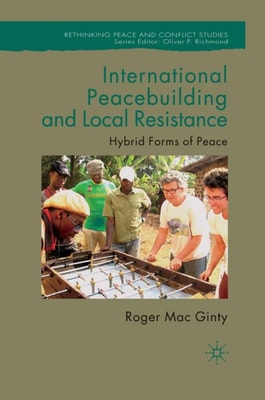
This book examines the role of everyday action in accepting, resisting and reshaping interventions, and the unique forms of peace that emerge from the interactions between local and international actors.
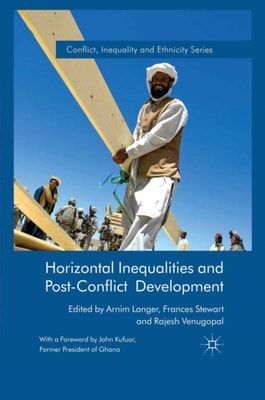
This book evaluates the extent to which post-conflict reconstruction has addressed problems of horizontal inequalities through country case studies on Burundi, Rwanda, Nepal, Peru, Guatemala, Bosnia and Herzegovina, and Afghanistan, and four thematic studies on macro-economic policies, privatisation, PRSP's, and employment generation.
Based on original empirical research, this book explores retributive and gender justice, the potentials and limits of agency, and the correlation of transitional justice and social change through case studies of current dynamics in post-violence countries such Rwanda, South Africa, Cambodia, East Timor, Columbia, Chile and Germany.
Understanding Collective Political Violence offers a unique view on contemporary processes of violent political mobilization across continents: Africa, Latin America, South East Asia and the Middle East.
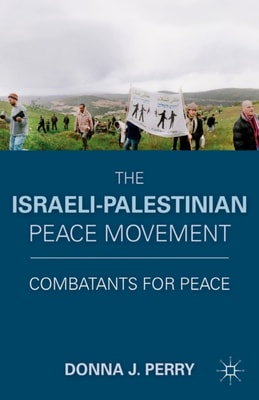
This study shows the promise of Israeli-Palestinian peace from the perspective of former combatants who transform themselves, each other, and those around them through moral conviction and action that reclaims the dignity of both peoples.
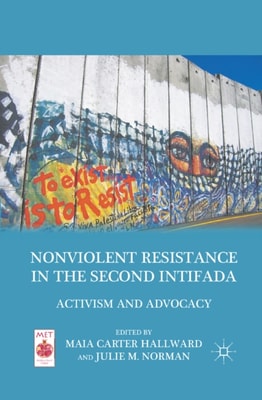
Offering diverse perspectives from scholars, practitioners, and activists, this bookillustrates the potential strengths and challenges of unarmed resistance in Palestine by Palestinians as well as of internationals and Israelis acting in solidarity.
This book presents an overview of psycho-social research on the Israeli-Palestinian conflict, presents and analyzes people-to-people activities in the region, and offers new conceptualizations for Israeli-Palestinian co-creation of a grassroots peace and social justice processes.
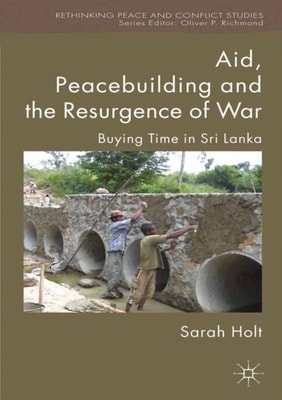
As one of South Asia's oldest democracies Sri Lanka is a critical case to examine the limits of a liberal peace, peacebuilding and external engagement in the settlement of civil wars.
This book analyses the role power sharing, social movements, economic regeneration, urban space, memorialisation and symbols play in transforming divided societies into shared peaceful ones.
Focusing on the EU and the Association of Southeast Asian Nations, this book demonstrates how collective identity depends on the construction of outsider states, such as Morocco, Turkey, and Australia, as different.
This study of the Greek-Turkish Aegean dispute book shows that the dispute is resolvable and that the crux of the problem is not the incompatibility of interests but the mutual fears and suspicions, which are deeply rooted in historical memories, real or imagined.
This volume investigates the role of the transnational terrorist and criminal organizations in the peace-building processes, with a particular focus on the Western Balkan region.
This book focuses on insurgent stateless warfare in its guerrilla and terrorist modes and in its nationalist, maoist and postmaoist phases of modernization.
The book provides critical perspectives that reach beyond the technical approaches of international financial institutions and proponents of the liberal peace formula.
Offers a novel cross-disciplinary theoretical perspective on conflict and conflict transformation in world society, and integrates the study of conflicts in the Middle East region into a modern systems theoretical framework.
This book explores the effects and consequences of major global power and major regional power status attribution on the foreign policies of states striving for such status and the consequences of status differentiation for the international system and the post-Cold War international order.
An analysis of the Turkish position regarding the Armenian claims of genocide during World War I and the continuing debate over this issue, the author offers an equal examination of each side's historical position.
Told from the perspective of its former Foreign minister, this is a uniquely candid account of Chechnya's struggle for independence and its two wars against Russia which will revise our understanding of the conflict and explain how it continues.
This book explores humanity's most persistent and tragic problem by answering some crucial questions including: How is military power created and asserted?
This edited volume represents a re-examination of the most central issues in the history of the Iraqi nation state until the American occupation (1920-2003) and, in the light of that history, a re-evaluation of developments under the occupation (2003-2008).
This book is an analysis and a set of tools of analysis to explain and understand why, when, where, and how the United States and its major NATO allies will agree or disagree on a collective policy regarding using military force abroad.
The forgotten history of the liberal radicals, socialist internationalists, feminists, and Christians who envisioned free trade as the necessary prerequisite for anti-imperialism and peaceToday, free trade is often associated with right-wing free marketeers.