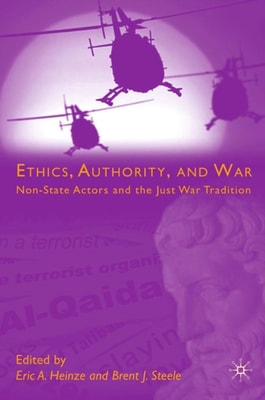
In original essays written by both senior scholars as well as rising younger scholars in the field of international ethics, this volume addresses the ethics of war in an era when non-state actors are playing an increasingly prominent role in armed conflict.
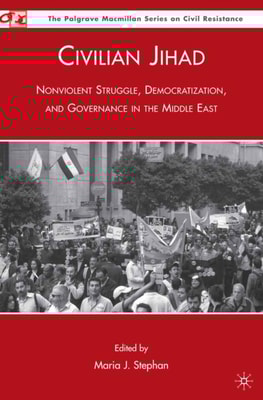
This book examines the role of nonviolent civil resistance in challenging tyranny and promoting democratic-self rule in the greater Middle East using case studies and analyses of how religion, youth, women, technology and external actors have influenced the outcome of civil resistance in the region.
From Civil Rights to Armalites traces and analyses the escalation of conflict in Northern Ireland from the first civil rights marches to the verge of full-scale civil war in 1972, focusing on the city of Derry.
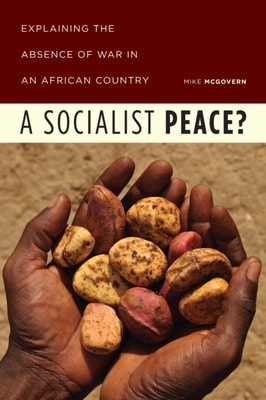
For the last twenty years, the West African nation of Guinea has exhibited all of the conditions that have led to civil wars in other countries, and Guineans themselves regularly talk about the inevitability of war.
Among the more frequent and most devastating of conflicts, civil wars-from Yugoslavia to Congo-frequently reignite and even spill over into the international sphere.
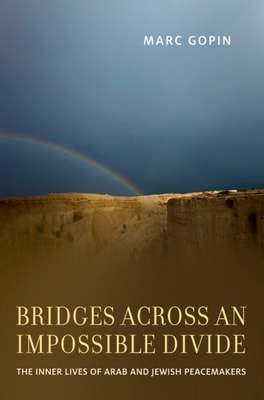
Marc Gopin offers a groundbreaking exploration of Arab/Israeli peace partnerships: unlikely friendships created among people who have long been divided by bitter resentments, deep suspicions, and violent sorrows.
The United Nations Peacebuilding Commission (UNPBC) was established in December 2005 to develop outlines of best practice in post-conflict reconstruction, and to secure the political and material resources necessary to assist states in transition from conflict to peacetime.
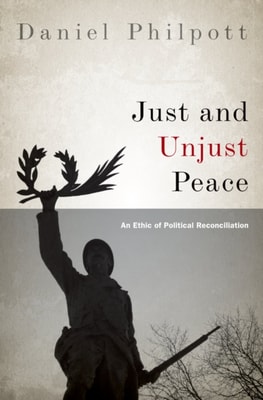
Winner of the 2013 Christianity Today Book Award in Missions / Global AffairsWinner of the Aldersgate Prize Honorable MentionWinner of the 2014 International Studies Association International Ethics Section Book AwardIn the wake of massive injustice, how can justice be achieved and peace restored?
Imprisoned by the Past: Warren McCleskey and the American Death Penalty connects the history of the American death penalty to the case of Warren McCleskey.
Research on prisons prior to the prison boom of the 1980s and 1990s focused mainly on inmate subcultures, inmate rights, and sociological interpretations of inmate and guard adaptations to their environment, with qualitative studies and ethnographic methods the norm.
Supporters of Hamas and radical religious Israeli settlers seem to serve one purpose in the international peace process: to provide an excuse for its failure.
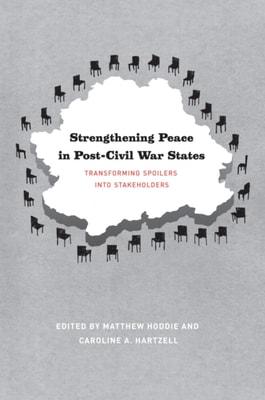
In the past two decades, states and multilateral organizations have devoted considerable resources toward efforts to stabilize peace and rebuild war-torn societies in places such as Afghanistan, Iraq, Kosovo, and Sierra Leone.
Despite the liberalized reconfiguration of civil society and political practice in nineteenth-century Europe, the right to make foreign policy, devise alliances, wage war and negotiate peace remained essentially an executive prerogative.
Marc Gopin offers a groundbreaking exploration of Arab/Israeli peace partnerships: unlikely friendships created among people who have long been divided by bitter resentments, deep suspicions, and violent sorrows.
Gender oppression has been a feature of war and conflict throughout human history, yet until fairly recently, little attention was devoted to addressing the consequences of violence and discrimination experienced by women in post-conflict states.
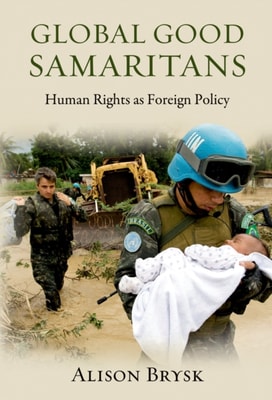
In a troubled world where millions die at the hands of their own governments and societies, some states risk their citizens' lives, considerable portions of their national budgets, and repercussions from opposing states to protect helpless foreigners.
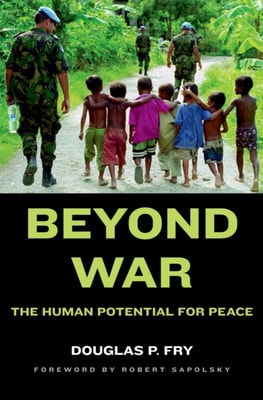
The classic opening scene of 2001, A Space Odyssey shows an ape-man wreaking havoc with humanity's first invention--a bone used as a weapon to kill a rival.
In the past two decades, states and multilateral organizations have devoted considerable resources toward efforts to stabilize peace and rebuild war-torn societies in places such as Afghanistan, Iraq, Kosovo, and Sierra Leone.
Waging Peace offers the first fully comprehensive study of Eisenhower's "e;New Look"e; program of national security, which provided the groundwork for the next three decades of America's Cold War strategy.
Focusing contemporary democratic theory on the neglected topic of punishment, Punishment, Participatory Democracy, and the Jury argues for increased civic engagement in criminal justice as an antidote to the American penal state.
Rituals can provoke or escalate conflict, but they can also mediate it and although conflict is a normal aspect of human life, mass media technologies are changing the dynamics of conflict and shaping strategies for deploying rituals.
Rituals can provoke or escalate conflict, but they can also mediate it and although conflict is a normal aspect of human life, mass media technologies are changing the dynamics of conflict and shaping strategies for deploying rituals.
Since the1950s the world has witnessed a period of extraordinary religious revival in which religious political parties and non-governmental organizations have gained power around the globe.
Winner of the 2013 Christianity Today Book Award in Missions / Global AffairsWinner of the Aldersgate Prize Honorable MentionWinner of the 2014 International Studies Association International Ethics Section Book AwardIn the wake of massive injustice, how can justice be achieved and peace restored?
For nearly two centuries in the United States, the punishment of crime was largely aimed, in theory and in practice, at prevention, rehabilitation or incapacitation, and deterrence.
Since the late nineteenth century, Jews and Arabs have been locked in an intractable battle for national recognition in a land of tremendous historical and geopolitical significance.