This book provides a comprehensive, conceptual and analytical framework for understanding the reordering process in the Latin American and Caribbean (LAC) region, driven and shaped by China-US rivalry.
Gorbachev at the Helm (1987) analyses the policy decisions taken at the 27th Congress of the Communist Party of the Soviet Union in February-March 1986, declared at the time by the Soviet government as a major turning point in Soviet history.
Soviet Russia (1955) discusses the origins and growth of Russian industry, in particular the emergence of a large modern working class and administrative class since the war, how the factories and farms are run, the wage systems, and the plans.
The Road to Intervention (1988) uses rarely-seen British government papers to analyse the position of the Allied and Russian governments in the last year of the First World War, as the Russian revolution ended their participation in the war and the Western Allies feared a huge German offensive in France in consequence.
The Soviet Union and Terrorism (1984) examines the extent of Soviet involvement in international terrorism, and the aims and objectives of Soviet foreign policy.
This book provides an original theoretically and empirically grounded analysis of regulatory enforcement activism in post-crises periods and the ensuing regulatory interactions.
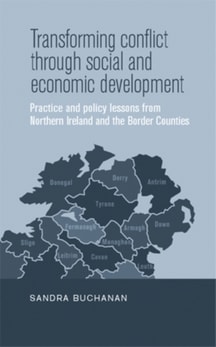
Transforming conflict through social and economic development examines lessons learned from the Northern Ireland and Border Counties conflict transformation process through social and economic development and their consequent impacts and implications for practice and policymaking, with a range of functional recommendations produced for other regions emerging from and seeking to transform violent conflict.
The Political Economy of Plea Bargaining provides the political, economic, and cultural context for understanding the evolution of plea bargaining as a juridical technology implemented to ensure the efficient administration of violations of criminal law.
Presenting cutting-edge research and scholarship, this extensive volume covers everything from abstract theorising about the meanings of responsibility and how we blame, to analysing criminal law and justice responses, and factors that impact individual responsibility.
This book adds to global knowledge of pathways out of crime (desistance) by exploring the desistance narratives of 15 women with histories of imprisonment in Aotearoa New Zealand (10 of whom identify as Maori, New Zealand's Indigenous population).
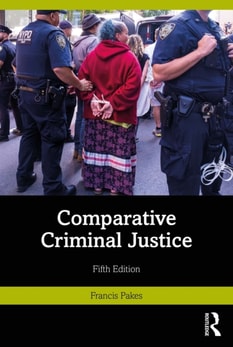
Now more than ever, the criminal justice system, and the programs, policies, and practices within it, are subject to increased public scrutiny, due to well-founded concerns over effectiveness, fairness, and potential unintended consequences.
This interdisciplinary anthology offers both theoretical reflections and empirical data on past, present and possible future war and crisis situations.
This interdisciplinary anthology offers both theoretical reflections and empirical data on past, present and possible future war and crisis situations.
Este libro aborda un grupo de emprendimientos y de asociatividades que surgen como alternativas de desarrollo para la reincorporación a la vida civil de las personas que pertenecieron al grupo insurgente de las Fuerzas Armadas Revolucionarias de Colombia (FARC), con ocasión de la firma de los Acuerdos de Paz del 2016.
Psychology and Criminal Justice covers the ways that psychology intersects with the criminal justice system, from explaining criminal behavior to helping improve the three criminal justice pillars of policing, courts, and corrections.
First published in 1965, the original blurb reads: "e;At the present time more and more public interest centres on crime, prison and prisoners, and the prison population in this country now exceeds 24, 000.
This carefully crafted ebook: "e;The Idea of a League of Nations (The original unabridged edition, Part 1 & 2)"e; is formatted for your eReader with a functional and detailed table of contents.
Awarded Digital Book World's Best Book Published by a University Press In this unprecedented view from the trenches, prosecutor turned champion for the innocent MarkGodseytakes us inside the frailties of the human mind as they unfold in real-world wrongful convictions.
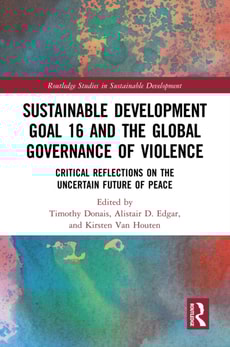
This book brings together a diverse range of scholars and practitioners working at the nexus of peace and development to reflect, at the mid-way point of the Sustainable Development Goals implementation period, what impact Goal 16 has made, or may yet make, toward reducing violence in 'all its forms.
This multidisciplinary volume examines the meaning of global conflict and cooperation by international actors that can be caused by dis- or misinformation to people and discusses how to build diplomacy for peace and regional cooperation.
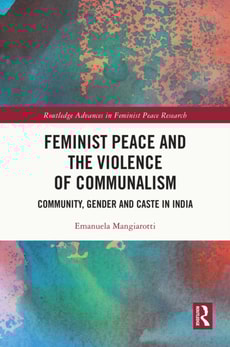
This book examines how narratives of communal conflicts in south India affect Muslims, women, and the lower castes, entrenching complex realities of marginalisation and violence.
This book brings together a diverse range of scholars and practitioners working at the nexus of peace and development to reflect, at the mid-way point of the Sustainable Development Goals implementation period, what impact Goal 16 has made, or may yet make, toward reducing violence in 'all its forms.
Exploring why prison officers leave His Majesty's Prison and Probation Service (HMPPS) and the processes and trajectories involved in returning to 'civilian life', this book examines the reasons that prison officers want to leave HMPPS and how they transition back to 'civvy street'.
This book demonstrates how participatory arts-based approaches can help children and youth contribute to peacebuilding within post-conflict contexts and to their communities.
This book analyses the deradicalisation and peacebuilding programme undertaken in north-east Nigeria, following the Boko Haram insurgency in the region.
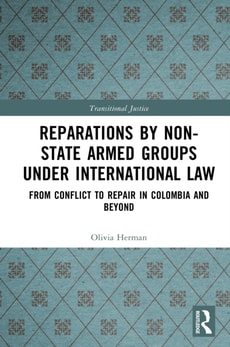
This book examines whether and how non-state armed groups might be required to provide reparations for the harm caused by their violations of international law committed during situations of non-international armed conflict.
Para el desarrollo del proyecto se hizo una delimitación espacial respecto a la ubicación de la población de Unión Berrecuy Medio Baudó Chocó y se consideraron los hechos ocurridos a partir de 2008 relacionados con la posible transculturización que el grupo social ha sufrido con el impacto violento derivado de las acciones de los grupos al margen de la ley que se suponen han trastocado el "habitus individual que posiblemente constituye un habitus colectivo de la comunidad" (Moreno Durán y Ramírez 2018) que históricamente se ha constituido a partir de los principios religiosos menonitas con los cuales se ha fortalecido una cohesión social y una especie de plataforma de memoria colectiva.
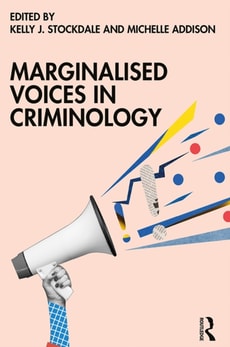
This book is about people who are marginalised in criminology; it is an attempt to make space and amplify voices that are too often overlooked, spoken about, or for.
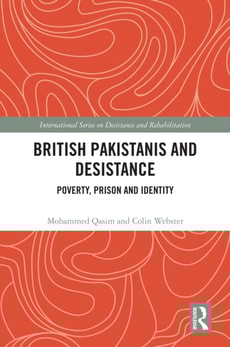
Focusing on the lives of first- and second-generation British Pakistani young adult men and those approaching middle age who offend or have offended and the experiences of their fathers bringing them up in a de-industrialised city, this book examines the influence of social relations on their moves toward and away from crime, particularly the impact of father-son relationships.
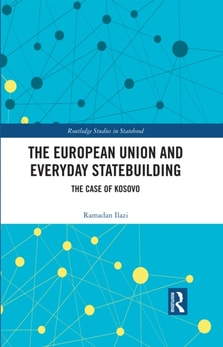
This book examines the European Union's everyday statebuilding practices, using the case of Kosovo as an example of how it uses informal practices to influence local actors.
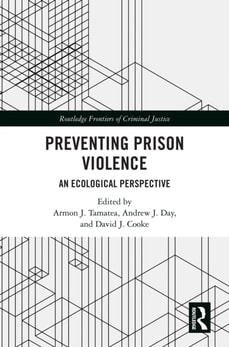
Preventing Prison Violence introduces the idea of 'prison ecologies' - a multi-layered perspective to understanding prison violence as a 'product' of human, environment (social and physical), systemic, and societal influences - and how an ecological approach is helpful to prevention efforts.
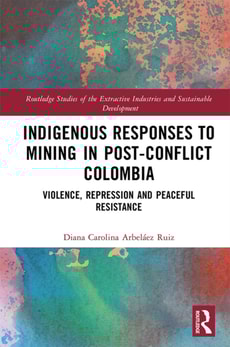
This book examines Indigenous responses to mining and their connection to peacebuilding, focusing on the experience of the Nasa Indigenous people of North Cauca during the most recent Colombian post-agreement transition.
This book examines Indigenous responses to mining and their connection to peacebuilding, focusing on the experience of the Nasa Indigenous people of North Cauca during the most recent Colombian post-agreement transition.
This book investigates two critical political science domains: international negotiation processes and the establishment of good governance practices, using real-world examples.