The Routledge International Handbook of Constructivist Grounded Theory in Educational Research provides a comprehensive overview of the state of the art in Constructivist Grounded Theory (CGT) methodology, including core grounded theory tenets and processes as well as constructivist 'adaptations'.
This book investigates the situated (re)production of categories, from the most mundane and unremarkable to those most strongly associated with power and privilege.
This accessible book offers a detailed guide to a wide range of methodological concepts, both those of a philosophical kind and those that are more technical in character: from constructionism to critical realism, grounded theory to regression analysis, odds ratios to triangulation.
Posthumanist Collaborations in Performance presents a novel approach for readers to engage with new materialist performance as a method of qualitative inquiry and as a means of combating the anthropocentric loneliness of modern life.
This concise guide equips readers with the essential skills required to analyze and critically appraise health research evidence, an integral element to evidence-based practice and professional development.
In today's healthcare landscape, there is a pressing need for quantitative methodologies that include the patients' perspective in any treatment decision.
The challenge of disentangling political communication processes and their effects has grown with the complexity of the new political information environment.
This easy-to-follow book will revolutionise how you approach text mining and data analysis as well as equipping you with the tools, and confidence, to navigate complex qualitative data.
Translation as a Cognitive Activity provides an overarching account of translation as a cognitive activity, from the pioneering use of think-aloud protocols as a sole technique used to investigate the translation process in the mid-1980s to the latest developments in the field.
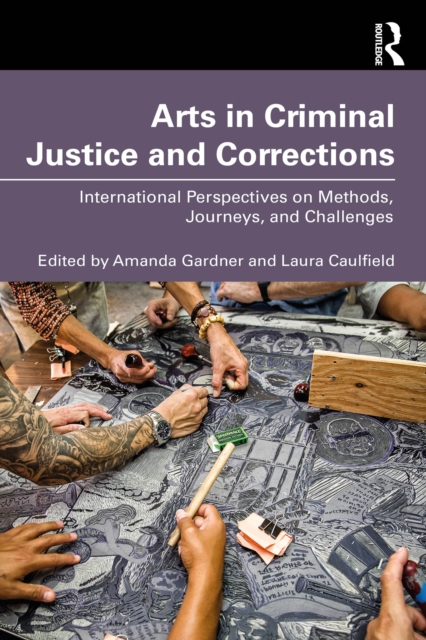
Offering a lively, international, and interdisciplinary introduction to research on arts programmes in prisons, Arts in Criminal Justice and Corrections is the first volume to bring together leading figures from the USA, the UK, Australia, New Zealand, and Belgium to explore key methodological approaches and issues through the lens of the researchers themselves.
For surveys involving sensitive questions, randomized response techniques (RRTs) and other indirect questions are helpful in obtaining survey responses while maintaining the privacy of the respondents.
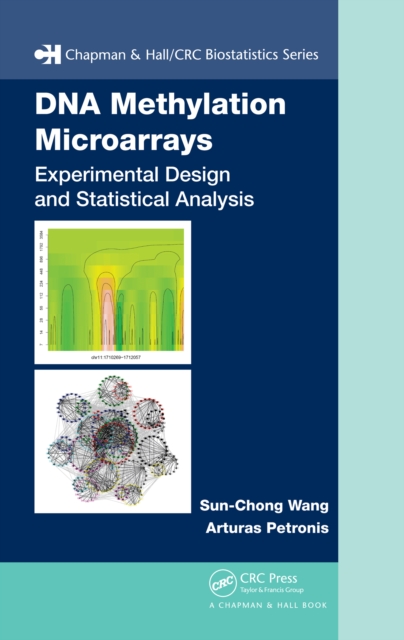
Providing an interface between dry-bench bioinformaticians and wet-lab biologists, DNA Methylation Microarrays: Experimental Design and Statistical Analysis presents the statistical methods and tools to analyze high-throughput epigenomic data, in particular, DNA methylation microarray data.
Drawing on studies of international communication and late Qing and Republican newspapers, this book examines the intellectual and practical development of communication from a global and historical perspective.
An easy to understand guide on research terminology, with the distinct advantage of having an entire action research project to portray key principles of research.
This book explores how we can re-constitute our approach to analysing and empirically investigating the organisation of white-collar and corporate crimes, with a view to building fuller theoretical and empirical accounts.
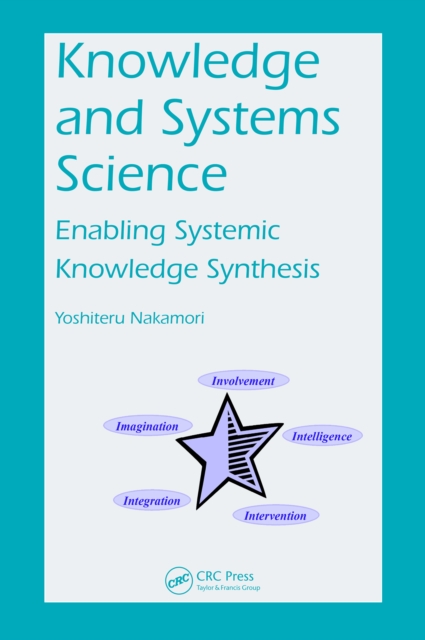
Integrating ideas from the fields of systems science and knowledge science, Knowledge and Systems Science: Enabling Systemic Knowledge Synthesis shows how to create and justify various pieces of knowledge systemically.
The seventh edition of this best-selling text continues to provide occupational therapy students and researchers with expert guidance on conducting research, from the formulation of a research hypothesis to collecting, analyzing, and interpreting data.
Managing the Work Situation outlines a perspective on how organization and management in the contemporary world of work happens as active everyday accomplishments by workers and managers, facing and handling complex work situations with an excess of expectations.
Now in its fifth edition, The Historians Toolbox is designed to help students become skilled in the intellectual process and craft of history, offering an overview of the field and techniques for reading and writing about history.
Corpus Linguistics for Oral History takes a step-by-step approach to presenting how corpus linguistics tools and techniques can be applied to oral history archives.
A Guide for Statistical Tests and Interpretations with SPSS is designed for students taking basic and advanced courses in statistics, taking an integrative and practical approach to learning statistics.
Beyond Words presents a range of illuminating approaches to examining every day social interactions, to help the reader understand human movement in new ways.
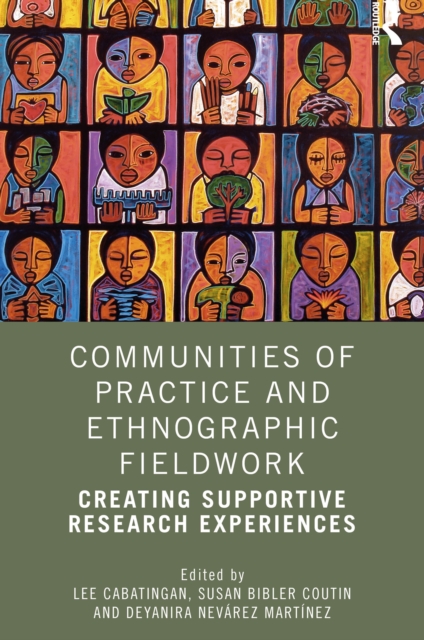
Communities of Practice and Ethnographic Fieldwork offers a new perspective on how ethnography might be learned in real time through participation in a supportive community of practice.
This impactful guide takes you through the process of effective reflective practice with a clear and creative focus on helping you be successful in your professional and academic life.