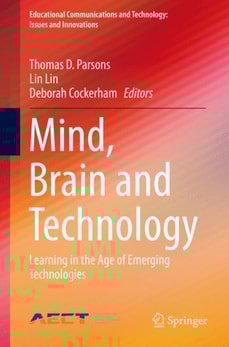
This book chronicles the revolution in STEM teaching and learning that has arisen from a convergence of educational research, emerging technologies, and innovative ways of structuring both the physical space and classroom activities in STEM higher education.
This book draws together for the first time some of the most important international policy practice and research relating to education in out-of-home care.
This book focuses on quality work in higher education, and examines the relationship between the organizational and pedagogical dimensions of quality work in higher education.
This book discusses current issues in literacy teacher education and illuminates the complexity of supporting self-efficacious educators to teach language and literacy in the twenty-first century classroom.
By uniting key concepts and methods from education, psychology, statistics, econometrics, medicine, language, and forensic science, this textbook provides an interdisciplinary methodological approach to study human learning processes longitudinally.
This book identifies and expands upon the link between ontology and education, exposing a lack of ontological inquiry as the vital missing element in the study and practice of modern education today.
This book models project-based environments that are intentionally designed around the United States Common Core State Standards (CCSS, 2010) for Mathematics, the Next Generation Science Standards (NGSS Lead States, 2013) for Science, and the National Educational Technology Standards (ISTE, 2008).
In the book, the relationship between affect and modeling is discussed because, as educational psychologists have suggested for decades, affect directly influences achievement.
Italian critical theorist Giorgio Agamben may be best known for his political writings concerning the curtailing of privacy rights in the wake of 9/11 and the status of prisoners of war and refugees.
This book presents a literature review of and a state-of-the-art glimpse into current research on affect-related aspects of teaching and learning in and beyond mathematics classrooms.
This book presents commentaries by a leading international group of peace education scholars and practitioners concerning Reardon's peace education theory and intellectual legacy.
The book contains practical and innovative strategies to train clients with Traumatic Brain Injury, Autism, Intellectual Impairment and Behavioural Disorders to compensate for their deficits and to function independently within their environments.
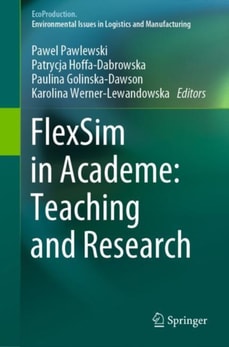
This book describes a variety of teaching and academic research applications that effectively utilize FlexSim to: (1) provide guidelines, methods and tools for simulation modeling and analysis in a variety of educational settings and (2) address a variety of important design and operational issues in industry.
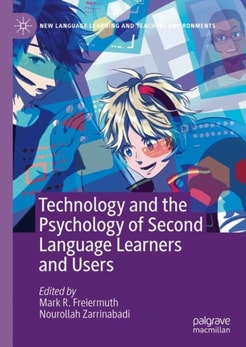
This edited volume brings together large-scale research as well as case studies from a range of geographical contexts and represents a variety of educational settings involving second language learners and users.
The book comprises a selection of 14 papers concerning the general theme of cultural conceptualizations in communication and translation, as well as in various applications of language.
This book introduces the concept of the 'native speaker' frame: a perceptual filter within English Language Teaching (ELT) which views the linguistic and cultural norms and the educational technology of the anglophone West as being normative, while the norms and practices of non-Western countries are viewed as deficient.
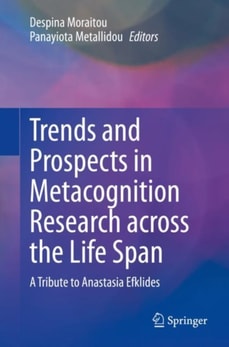
This volume brings together trends and their prospects to understand the complexity of metacognitive phenomena, with emphasis on the interactions of metacognition with affect.
By traveling to different parts of the world, this book provides a multidisciplinary perspective on the current state of adolescent education and demonstrates how education systems are formed by and closely tied to culture.
This book offers essential insights into the challenges and complexities surrounding the medium of instruction (MOI), its impact on all languages and stakeholders in multilingual contexts, educational processes, developments and outcomes.
"e;Theoretically wise and practically powerful, this book is about how to take full advantage of advances in technology and the learner autonomy they afford, rather than simply adapt to or deny them.