This book is a unique collection of interdisciplinary articles that argue for religious education to be directed primarily towards the spiritual insofar as it is part of a flourishing human life.
Taking as a starting point the work of Aotearoa New Zealand to provide an education system that includes curriculum, pedagogy, and language from indigenous Maori culture, this book investigates the ensuing practices, policies, and dilemmas that have arisen and provides a wealth of data on how truly culturally inclusive education might look.
Featuring in-depth examinations of concepts of knowing, learning, and education from a range of cultures worldwide, this book offers a rich theory of indigenous concepts of education, their relation to Western concepts, and their potential for creating education that articulates the aspirations of communities and fosters humanity for all learners.
This is the first investigation of the roles of autobiography in teacher education to be informed by concepts and examples from China, Europe, and North and South America.
This volume demonstrates that Critical Friendship Theory can help distinguish education doctorate (EdD) programs from research doctorates (education PhDs).
In this comparative study of young people's educational careers in England and Germany, individual factors, social class, school and country characteristics are shown jointly to shape these careers through mutually reinforcing processes.
This book examines the multiple relationships between education, pedagogy, and social change in Latin America and beyond through a discussion of critical theory in education and its uses in Latin American society today.
This book examines four theses regarding Asian higher education and development: interplay between cultural traditions, economic development, globalization, and the evolution of the 'hybrid' university.
In one volume, this edited collection provides both a theoretical and praxis-driven engagement with teaching world literature, focusing on various aspects of critical pedagogy.
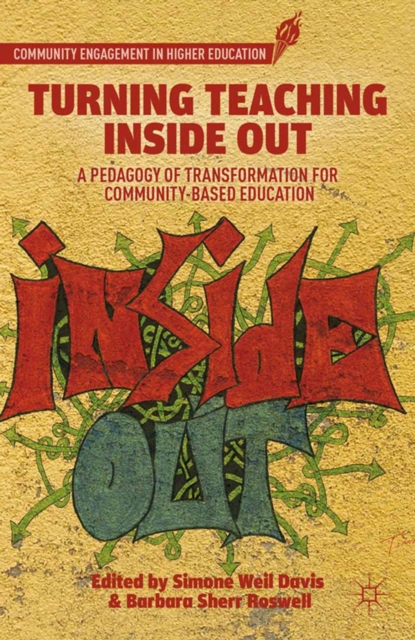
Using the successful Inside-Out program, in which incarcerated and non-incarcerated college students are taught in the same classroom, this book explores the practice of community-based learning, including the voices of teachers and participants, and offers a model for courses, student life programs, and faculty training.
Exploring the theoretical, policy and classroom (pedagogical) dimensions of transformative change within the context of inclusive education policy and practice, this book documents how ideological presuppositions and professional practice should be transformed in order to meet learner diversity in effective and non-discriminatory ways.
Asia is rapidly developing a wide variety of regional organizations and interactive patterns, reflecting in large part its increasing role in the global economic and political engagements.
Amidst claims of threats to national identities in an era of increasing diversity, should we be worried about the upsurge in religious animosity in the United States, as well as Europe?
2013 Outstanding Academic Title by Choice ReviewKumar asks in this volume: Since characteristic features of human consciousness - fear, conditioning, and fragmentation - work against the educational experience, how can we re-imagine curriculum as a space for meditative inquiry and allow it to provide transformative educational experiences to teachers and their students?
An edited collection whose contributors analyze the relationship between writing, learning, and video games/videogaming, these essays consist of academic essays from writing and rhetoric teacher-scholars, who theorize, and contextualize how computer/video games enrich writing practices within and beyond the classroom and the teaching of writing.
Pinar documents that the field of curriculum studies in the United States is in the early stages of a second paradigm shift, this time stimulated by present political circumstances.
This collection, now in paperback, explores how universities are coping with the range of reforms and changes taking place across higher education today.
Drawing on a major EU-funded research project, this book examines how religious/secular beliefs are formed at school and in the family across different European countries, offering insights into key policy issues concerning the place of religion in the school system and illuminating current debates around religion and multiculturalism.
Academics and practitioners examine the developing field of integrated education in conflicted societies, where children who would normally be educated apart are deliberately educated together.
This collection explores the relationship between new equality regimes and continued societal inequalities, exploring change, ambivalence and resistance specifically in relation to compulsory and post-compulsory education, seeking to more fully situate the educational journeys and experiences of staff and students.
As the end of the century draws closer, one of the most pressing challenges facing educators in the United States is the specter of an 'ethnic and cultural war' - a code phrase that engenders our society's licentiousness toward racism.
Provides an original and challenging contribution to contemporary debates on the civic purpose of higher education, exploring its manifestations through practices of teaching and research.
The progressive raising of the school-leaving age has had momentous repercussions for our understanding of childhood and youth, for secondary education, and for social and educational inequality.
Cultural and spiritual resources are arguably essential to achievement of educational goals, both as economic and political initiatives and as human rights.
The fascination with the commercial value of research, coupled with the rise of neo-liberal 'new public management' in the public sector, has led to the rise of a managerial class in the university.
Carries readers into Chinese and American elementary and high school classrooms, and highlights the big differences between schooling in China and the United States.
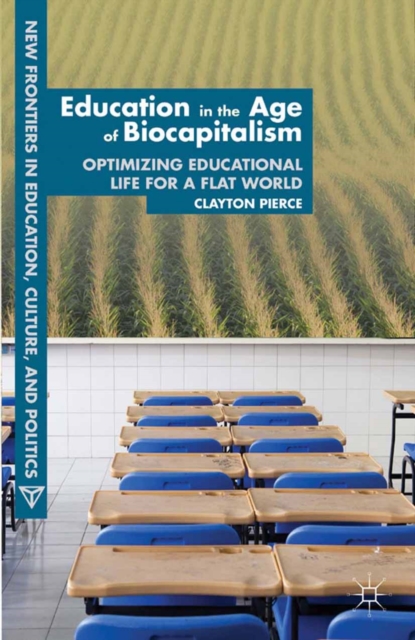
Biocapitalism, an economic model built on making new commodities from existing forms of life, has fundamentally changed how we understand the boundaries between nature/culture and human/nonhuman.
The faculty at the University of Houston's program in Futures Studies share their comprehensive, integrated approach to preparing foresight professionals and assisting others doing foresight projects.
Assembles essays addressing the recurring question of the 'subject,' understood both as human person and school subject, thereby elaborating the subjective and disciplinary character of curriculum studies.
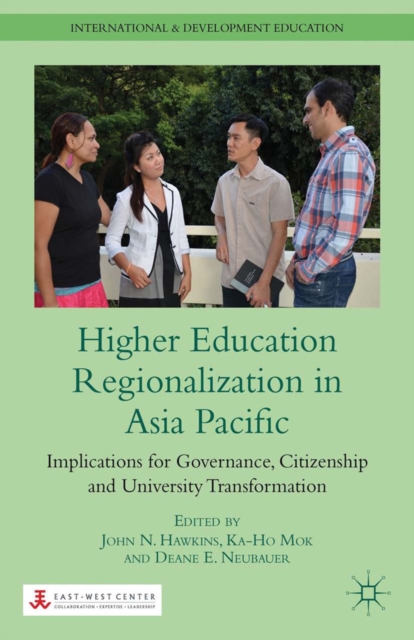
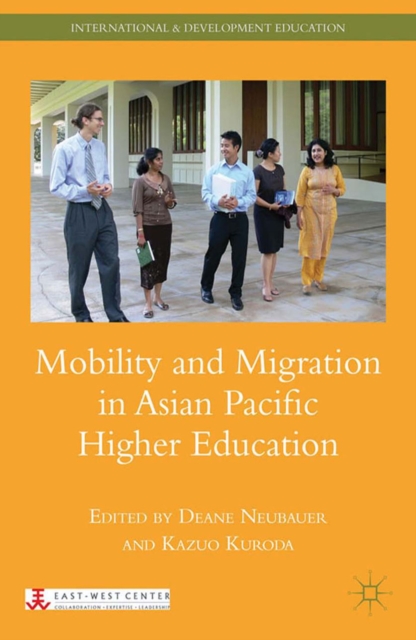
Through case studies in eight Asian countries, Europe, and the United States, this volume explores the range and consequences of increased mobility within Asia-Pacific higher education and the patterns of migration emerging for persons, ideas, institutions, and practices.
Analyzes a community from the standpoint of immigrant mothers in South Central Los Angeles who were concerned about the education of their children and the violence in their communities.
Provides a critical space in which to interrogate the ways in which postcolonial voices are imagined and struggle to be valued, heard, and responded to.
Comprised of chapters written by established Canadian curriculum scholars as well as junior scholars and graduate students, this collection of essays provoke readers to imagine the different ways in which educational researchers can engage the narrative inquiry within the broader field of curriculum studies.
Exploring the ways undergraduate theatre programs can play a significant role in accomplishing the aims and learning outcomes of a contemporary liberal education, Kindelan argues that theatre's signature pedagogy helps all undergraduates become actively engaged in developing critical and value-focused skills.
Federal and state funding agencies have invested billions of dollars into secondary STEM (Science, Technology, Education, Mathematics) educational reform over the past decade.