Curriculum Windows Redux: What Curriculum Theorists Can Teach Us about Schools and Society Today is an effort by students of curriculum studies, along with their professor, to interpret and understand curriculum texts and theorists in contemporary terms.
The purpose of the edited volume is to provide an international lens to examine evidence-based investigations in Ethno-STEM research: Ethno-science, Ethno-technology, Ethno-engineering, and Ethno-mathematics.
Practice and research of peace education has grown in the recent years as shown by a steadily increasing number of publications, programs, events, and funding mechanisms.
Curriculum Windows: What Curriculum Theorists of the 1970s Can Teach Us about Schools and Society Today is an effort by students of curriculum studies, along with their professor, to interpret and understand curriculum texts and theorists of the 1970s in contemporary terms.
For social studies teachers reeling from the buffeting of top-down educational reforms, this volume offers answers to questions about dealing with the Common Core State Standards (CCSS).
In many elementary classrooms, social studies has taken a back seat to English Language Arts and Mathematics in the wake of No Child Left Behind and Race to the Top This volume is not another hand-wringing lament.
Curriculum and Teaching Dialogue (CTD) is a publication of the American Association of Teaching and Curriculum (AATC), a national learned society for the scholarly fields of teaching and curriculum.
Scholars and practitioners in the fields of education and educational psychology have come to agree that conceptions of learning and teaching, student and teacher motivation, engagement, learning and teaching strategies, and by implication, student academic achievement and teacher effectiveness are also influenced by a sociocultural context where the schooling process takes place.
Liminal Spaces and Call for Praxis(ing) follows the theme of the Curriculum & Pedagogy conference that highlighted issues of power, privilege, and supremacy across timelines and borders.
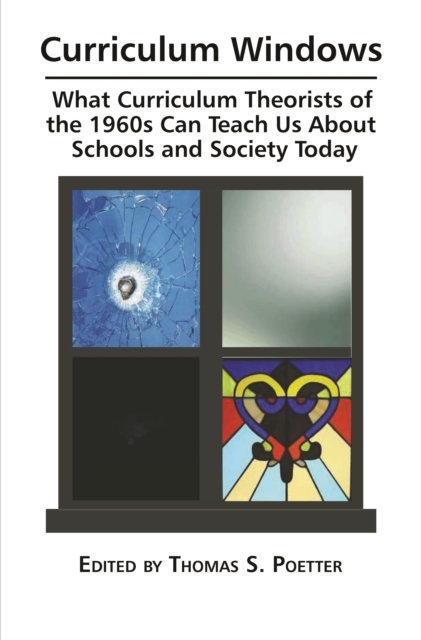
Curriculum Windows: What Curriculum Theorists of the 1960s Can Teach Us about Schools and Society Today is an effort by students of curriculum studies, along with their professor, to interpret and understand curriculum texts and theorists of the 1960s in contemporary terms.
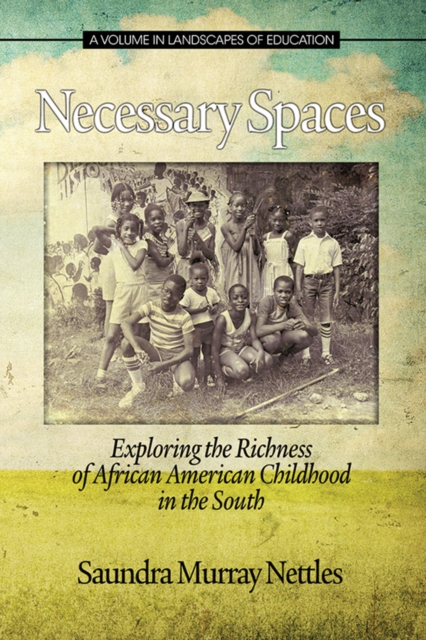
In Necessary Spaces: Exploring the Richness of African American Childhood in the South, Saundra Murray Nettles takes the reader on a journey into neighborhood networks of learning at different times and places.
Robert Lake explores with the reader what is meant by imagination in the work of Maxine Greene and Paulo Freire and their relevance in an era of increasingly standardized and highly scripted practices in the field of education.
The impetus for this volume comes from reflecting on many years of experience, successes and failures in development evaluation in Asia and Africa, and from recent work supported by the Rockefeller Foundation on Rethinking, Reshaping, and Reforming Evaluation.
Scholars and practitioners in the fields of education and educational psychology have come to agree that conceptions of learning and teaching, student and teacher motivation, engagement, learning and teaching strategies, and by implication, student academic achievement and teacher effectiveness are also influenced by a sociocultural context where the schooling process takes place.
This book provides the most current and complete version of statements defining a competent instructional designer, for those who are or aspire to practice in virtually any context, anywhere in the world.
The mathematics curriculum - what mathematics is taught, to whom it is taught, and when it is taught - is the bedrock to understanding what mathematics students can, could, and should learn.
This book provides the most current and complete version of statements defining a competent instructional designer, for those who are or aspire to practice in virtually any context, anywhere in the world.
The goal of this text is to help teachers in diverse classrooms understand the importance of students' culture, languages, and schooling experiences to curriculum, assessment, and student achievement.
This book, the second in the series, is a distinct exploration of how educational policy makers, curriculum developers, educators, learners and social activists can utilize the hitherto untapped rich resource of African traditional oral literature and visual cultures.
Over the past thirty years, Holt High School in central Michigan has engaged in a quiet revolution that has transformed mathematics teaching and learning in the district.
This volume offers a collection of scholarship that extends curricular conversations, crosses borders of praxis, and expands democratic, critical and aesthetic imaginaries toward the ends of lending momentum to the ever-present and wide-open question: What is to be done- in terms of curriculum and pedagogy- in P-12 schools, in teacher education and other higher education contexts, in communities, as well as within our own lives as teachers, leaders and learners?
The general theme of this book is to encourage the use of relevant methodology in data mining which is or could be applied to the interplay of education, statistics and computer science to solve psychometric issues and challenges in the new generation of assessments.
This book, the second in the series, is a distinct exploration of how educational policy makers, curriculum developers, educators, learners and social activists can utilize the hitherto untapped rich resource of African traditional oral literature and visual cultures.
Curriculum Windows: What Curriculum Theorists of the 1950s Can Teach Us about Schools and Society Today is an effort by students of curriculum studies, along with their professor, to interpret and understand curriculum texts and theorists of the 1950s in contemporary terms.
On Indian Ground: Northwest is the second of ten regionally focused texts that explores American Indian/Alaska Native/Native Hawaiian education in depth.
edTPA is the most widely-used performance assessment for pre-service teachers in the United States, and a requirement in many states for teaching licensure.
Curriculum and Teaching Dialogue (CTD) is a publication of the American Association of Teaching and Curriculum (AATC), a national learned society for the scholarly field of teaching and curriculum.
The goal of this text is to help teachers in diverse classrooms understand the importance of students' culture, languages, and schooling experiences to curriculum, assessment, and student achievement.
10 Great Curricula is a collection of stories written by educators who have come to understand curricula differently as a result of their engagement with a graduate course and its instructor.
Practice and research of peace education has grown in the recent years as shown by a steadily increasing number of publications, programs, events, and funding mechanisms.
The purpose of the edited volume is to provide an international lens to examine evidence-based investigations in Ethno-STEM research: Ethno-science, Ethno-technology, Ethno-engineering, and Ethno-mathematics.
This book of matrices with Black boys as the main character is designed to help gifted and talented education teachers leverage Black boys' identities to inform and shape how they plan and deliver curriculum and instruction and manage the multicultural, democratic, and culturally responsive classroom.
This edited volume extends our field of studies by highlighting novel 21st century curricular designs and pedagogical practices in the preparation of future bilingual teachers and their relevance for advancing curriculum, instruction, and educational achievement across bilingual school contexts.
Within the context of recent, and ongoing, plural pandemics such as COVID-19 up/ending lives, social and racial chaos and catastrophe, political pressures, and economic convulsions, The Kaleidoscope of Lived Curricula: Learning Through a Confluence of Crises offers a journey through a collection of scholarly reflective creative pieces--stories of lived curricula.
With increasing diversity and widening disparities in the United States and globally there are significant challenges and opportunities throughout the educational landscape.
The Campaign for the Civic Mission of Schools (2011) lamented the "e;lack of high-quality civic education in America's schools [that] leaves millions of citizens without the wherewithal to make sense of our system of government"e; (p.