The book series, entitled "e;Research in Curriculum and Instruction"e;, will focuses on a) considerations of curriculum practices at school, district, state, and federal levels, b) relationship of curriculum practices to curriculum theories and societal issues, c) concerns derived from curriculum policy analyses and from analyses of various curriculum advocacies, and d) insights derived from investigations into curriculum history.
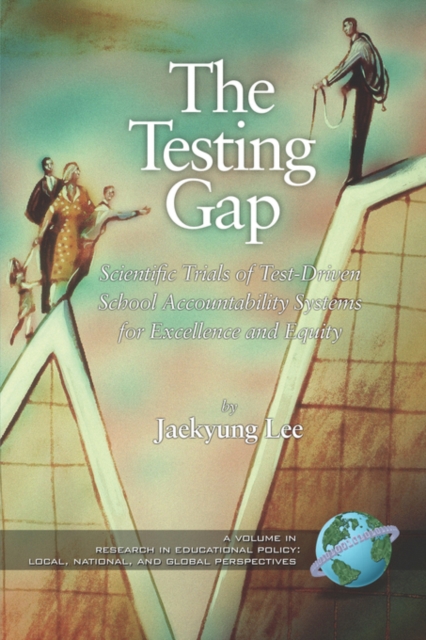
The objective of this book is to advance our understanding of the design, implementation and evaluation of test-driven external accountability policies for improving both academic excellence and equity.
This volume covers topics including: A New Theoretical Framework for Education, University Curriculum Reforms and Curriculum and Teaching in an Age of School Reform
This book explores the negotiation of the ways that teachers are involved in the process of changing curriculum and pedagogies and also the realities of implimenting those changes in the classroom.
This volume contains the proceedings of the First International Curriculum Conference sponsored by the Center for the Study of Mathematics Curriculum (CSMC).
While Research on the effectiveness of electronic portfolios for assessment and accreditation is emerging, many who are now using, or who are beginning to use, electronic portfolios are looking to justify the cost and effort involved.
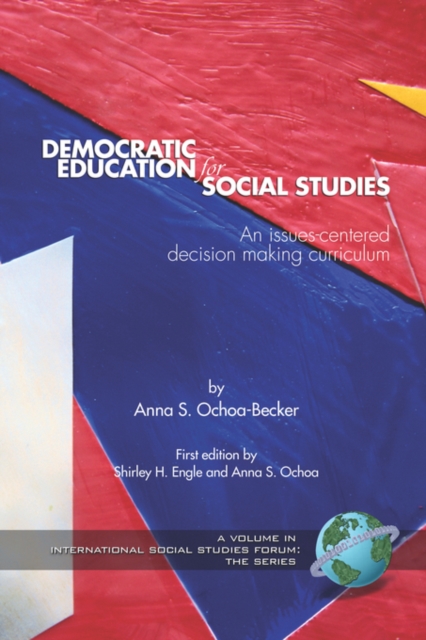
In the first edition of this book published in 1988, Shirley Engle and I offered a broader and more democratic curriculum as an alternative to the persistent back-to-the-basics rhetoric of the '70s and '80s.
This volume covers topics including: A New Theoretical Framework for Education, University Curriculum Reforms and Curriculum and Teaching in an Age of School Reform
Addressing Social Issues in the Classroom and Beyond: The Pedagogical Efforts of Pioneers in the Field is comprised of essays that delineate the genesis and evolution of the thought and work of pioneers in the field of social issues and education.
The interplay between sociopolitical forces and economic agendas becomes apparent when one examines the June 28, 2007 United States Supreme Court Decision, Parents Involved In Community Schools v.
The Campaign for the Civic Mission of Schools (2011) lamented the "e;lack of high-quality civic education in America's schools [that] leaves millions of citizens without the wherewithal to make sense of our system of government"e; (p.
Matthew Arnold, 19th century English poet, literary critic and school inspector, felt that each age had to determine that philosophy that was most adequate to its own concerns and contexts.
Improving Writing and Thinking through Assessment is designed to help individual faculty and administrators select assessment approaches and measures to maximize their students' writing and thinking.
The study reported in this volume adds to the growing body of evaluation studies that focus on the use of NSF-funded Standards-based high school mathematics curricula.
This book provides an essential resource for educators and museum professionals who wish to develop education focused eMuseums that feature motivational standards-based curriculum for diverse learners.
Addressing Social Issues in the Classroom and Beyond: The Pedagogical Efforts of Pioneers in the Field is comprised of essays that delineate the genesis and evolution of the thought and work of pioneers in the field of social issues and education.
With increasing diversity and widening disparities in the United States and globally there are significant challenges and opportunities throughout the educational landscape.
It is now nearly thirty years since sociocultural theories of learning created great excitement and debate amongst those concerned with learning in diverse contexts.
Filling in the Blanks is a book dedicated to helping policymakers, researchers, academics and teachers, better understand standardized testing and the Black-White achievement gap.
Creative problem solving, collaboration, and technology fluency are core skills requisite of any nation's workforce that strives to be competitive in the 21st Century.
From a field developed out of the need to train military personnel at scale to its current role in enabling virtual learning and training experiences, instructional design has developed into a complex, multifaceted discipline.