Tracing the life of Sir Cyril Norwood, one of England's most prominent and influential educators, this book investigates the historical development of secondary education in England and Wales during the early Twentieth century.
This study explores the history of the New School that developed in the postwar period and its role in communicating antifascism to young people in the Soviet zone.
Engages a topic of pressing concern for government, business, and education leaders around the world: the race to establish 'world-class' universities.
The first comparative study of the spread of mass education around the world in the late nineteenth and early twentieth centuries, this unique new book uses a bottom-up focus and demonstrates, to an extent not appreciated hitherto, the gulf between the intentions of the government and the reality on the ground.
Providing comparative and international contexts to understand the history of the making of the teacher in Victorian England, this is a compelling account of the development during this time of teacher training, inspections and certification - reforms which shaped the good teacher as a modern and moral individual.
Chou and Ching examine the processes of schooling in Taiwan amidst social, cultural, economic, and political conflict resulting from local and global dilemmas.
Tracing the history of Native American schooling in North America, this book emphasizes factors in society at large - and sometimes within indigenous communities - which led to Native American children being separate from the white majority.
Tracing the history of black schooling in North America, this book emphasizes factors in society at large - and sometimes within black communities - which led to black children being separate from the white majority.
This volume seeks to revise the Saidian analytical framework which dominated research on the subject of colonial knowledge for almost two decades, which emphasized colonial knowledge as a series of representations of colonial hegemony.
This collection, comprised of chapters focused on the intellectual histories and present circumstances of curriculum studies in Brazil, is Pinar's summary of exchanges (occurring over a two-year period) between the authors and members of an International Panel (scholars working in Finland, South Africa, the United States).
An educational crisis from its origins to present-day experiences In the United States today, almost three-quarters of the people teaching in two- and four-year colleges and universities work as contingent faculty.
Providing an overview and Marxist assessment of Tony Blair and New Labour's UK education policies, structures, and processes, the contributors in this exciting new collection discuss specific aspects of education policy and practices.
Deans of men in American colleges and universities were created in the late nineteenth and early twentieth centuries to help manage a growing student population.
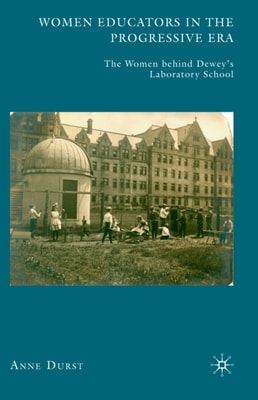
In 1896, John Dewey established the Laboratory School at the University of Chicago - an experimental school designed to test his ideas in the reality of classroom practice.
The collection's focus is on girls' secondary education, and hence the gendered cultural expectations of the middle classes and upper classes, will provide the dominant narrative, given the relatively recent democratization of European educational systems.
This history of one of the most contentious educational issues in America examines bilingual instruction in the United States from the common school era to the recent federal involvement in the 1960s and 1970s.
While much has been written about South African education, now, for the first time, gathered in one collection are glimpses of South African curriculum studies described by six distinctive points of view.
This edited volume brings together historians of education and comparative education researchers to study the educational reconstruction projects that Americans have launched in post-conflict settings across the globe.
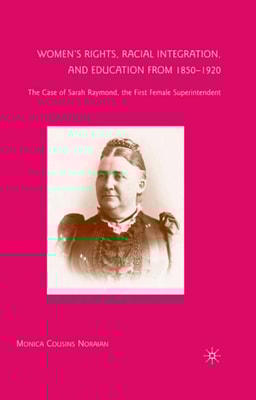
This historical biography examines Sarah Raymond Fitzwilliam's abolitionist roots growing up on a stop of the Underground Railroad, her training at a 'normal school,' her tenure as a teacher, principal and the nation's first city school superintendent (Bloomington, Illinois 1874-1892).
This timely book argues that the New Zealand educational reforms were the product of longstanding unresolved educational issues that came to a head during the profound economic and cultural crisis of the 1970s and early 1980s.
This study collects the oral histories of residents of a single county in North Carolina who lived through the consequences of desegregation, examining the complex social and historical constructions of racial difference in education.
The first public orphanage in America, the Charleston Orphan House saw to the welfare and education of thousands of children from poor white families in the urban South.
Compares the privileged educational experience offered to the children of relocated Nazi scientists in Texas with the educational disadvantages faced by Mexican American students living in the same city.
Spare the Rod traces the history of discipline in schools and its ever increasing integration with prison and policing, ultimately arguing for an approach to discipline that aligns with the moral community that schools could and should be.
American schoolteaching is one of few occupations to have undergone a thorough gender shift yet previous explanations have neglected a key feature of the transition: its regional character.
From the 1890s through World War II, the greatest hopes of American progressive reformers lay not in the government, the markets, or other seats of power but in urban school districts and classrooms.
While white residents of antebellum Boston and New Haven forcefully opposed the education of black residents, their counterparts in slaveholding Baltimore did little to resist the establishment of African American schools.
Allison Davis (1902-83), a preeminent black scholar and social science pioneer, is perhaps best known for his groundbreaking investigations into inequality, Jim Crow America, and the cultural biases of intelligence testing.
Providing a sweeping millennium-plus history of the learned book in the West, John Willinsky puts current debates over intellectual property into context, asking what it is about learning that helped to create the concept even as it gave the products of knowledge a different legal and economic standing than other sorts of property.
It is one thing to lament the financial pressures put on universities, quite another to face up to the poverty of resources for thinking about what universities should do when they purport to offer a liberal education.
In the early twentieth century, a curriculum known as nature study flourished in major city school systems, streetcar suburbs, small towns, and even rural one-room schools.