This work considers the potential of photographs for orienting in a critical direction the scope, questions and interests of the disciplinary conventions of the field of educational inquiry.
This volume examines the interface between the teachings of art and the art of teaching, and asserts the centrality of aesthetics for rethinking education.
PURPOSE OF THE STUDY Primary education in Europe, as in the United States and other conti- nents, is passing through a period of profound change, affecting some of the fundamental educational aims at primary school level and teaching structure, content and methods.
Many books have been written about Wittgenstein's philosophy, but this collection of articles on Wittgenstein and education is the first study in book form in this area.
Mathematics teaching and learning have been dominated by a concern for the intellectual readiness of the child, debates over rote learning versus understanding and, recently, mathematical processes and thinking.
An outstanding feature of this book is the broad range of the contributors, drawn from Europe, the Middle East and North America, testifying both to the range of Professor Agassi's interests and the geographical spread of his influence.
Many Sides is the first full-length study of Protagorean antilogic, an argumentative practice with deep roots in rhetorical history and renewed relevance for contemporary culture.
While analysing what it means to be European, Ortega y Gasset pointed out that European culture is defined by human's desire to find the most perfect way of being, a way that must be both firmly founded in history and clearly projected into the future.
This series will include monographs and collections of studies devoted to the investigation and exploration of knowledge, information, and data-processing systems of all kinds, no matter whether human, (other) animal, or machine.
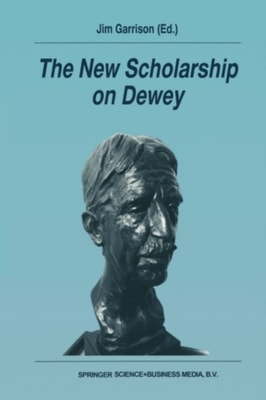
Although John Dewey's ideas have been of central interest in Anglo-Saxon philosophy and history of education, it is only recently that similar interest has developed in continental Europe.
As Europe moves toward 1992 and full economic unity, and as Eastern Europe tries to find its way in the new economic order, the United States hesitates.
Some philosophers think that Paul Feyerabend is a clown, a great many others think that he is one of the most exciting philosophers of science of this century.
For two reasons, we are particularly proud to include Wolfgang Brezinka's Philosophy of Educational Knowledge in this series of books on Philosophy of Education.
Since 1979, when Richard Rorty's Philosophy and the Mirror of Nature appeared, there has been a flood of new scholarship on the philosophy of John Dewey.
PURPOSE OF THE STUDY Primary education in Europe, as in the United States and other conti- nents, is passing through a period of profound change, affecting some of the fundamental educational aims at primary school level and teaching structure, content and methods.
Contemporary thinking on philosophy and the social sciences has primarily focused on the centrality of language in understanding societies and individuals; important developments which have been under-utilised by researchers in mathematics education.
This series will include monographs and collections of studies devoted to the investigation and exploration of knowledge, information, and data-processing systems of all kinds, no matter whether human.
The rich and diverse contributions to this volume span a wide variety of disciplines, from psychology and philosophy to neuroscience, by some of the most influential scholars in the emerging science of personal wisdom.
This book offers current international initiatives, developed for working with children from "e;Birth to Eight"e; by a diverse group of noted professional authors.
This book presents John Dewey's work as a claim to the human potentials found in experience, the imagination and the possibilities that emerge from our disposition towards liberty.