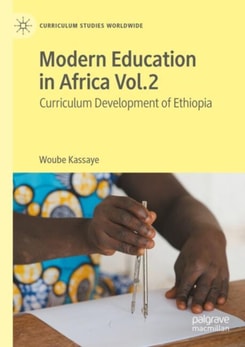
This book, the first of two volumes, focuses on the conceptualization of Indigenous Knowledge and Curriculum, Ethiopian/African Philosophy and the possibilities of Indigenization/Africanization of African Education.
Owning Your Project-Based Learning is a user-friendly, vividly illustrated guide designed to help undergraduate students and their instructors fully realize the power of project-based learning (PBL).
With the social, economic and political challenges alongside implications of the digital era and environmental sustainability in the 21st century, understanding how children feel about themselves, particularly within the complex web of their relationships with family members, peers, friends, practitioners, and professionals is of ultimate importance.
La educación para la paz es de gran significación en el ámbito educativo del país, de gran importancia son también las propuestas pedagógicas que se presenten para la formación de Maestros, ya que constituye un complemento más, para ayudar a mejorar la convivencia pacífica en las instituciones de educación superior y demás escenarios del territorio, siempre y cuando se generen estrategias didácticas aterrizadas y contextualizadas para la enseñanza-aprendizaje.
This book provides philosophical, political and practical insights that open ways for the university in going beyond its tightly controlled state and into more playful and imaginative futures.
Building on the pioneering 2009 volume, Race, Culture, and Identities in Second Language Education, this book reflects the significant expansion in the research since its publication and offers a wider breadth of perspectives on the complex theoretical terrain of race, racism, and antiracism in language education.
Higher education research is a developing field internationally, which is attracting more and more researchers from a great variety of disciplinary backgrounds within and beyond higher education institutions.
In Equitable Instruction for English Learners in the Content Areas, ESL expert Valentina Gonzalez shows you how to meet the needs of English learners in K-8 classrooms.
This book offers a defence of ethical reading in secondary school English classes at a time when reformers and policy makers are trying to reorganize English language arts around technical skills or politics.
Recognizing the strategic role that national identities play in post-colonial struggles for justice, this book conceptualizes a new approach to teaching national identity that, following Hannah Arendt, emphasizes children's ability to renew culture.
Ideal for literacy methods and elementary instruction courses, this book brings together three strands of educational practice-Culturally Sustaining Pedagogy (CSP), Disability Sustaining Pedagogy (DSP), and balanced literacy-to present a cohesive, comprehensive framework for literacy instruction that meets the needs of all learners.
This book gathers a diverse set of empirical research chapters from practitioners in the higher education sector in Vietnam to explore the effects of higher education reform on university learning and teaching from the point of view of the classroom educators.
Young Children and the Environment tackles one of the biggest contemporary issues of our times - the changing environment - and demonstrates how early education can contribute to sustainable living.
This book examines the vital roles of teacher leadership in the ever-evolving landscape of educational change, a constant presence in educational settings.
This book demonstrates how artificial intelligence (AI) can be used to uncover the patterns of classroom dialogue and increase the productiveness of dialogue.
An innovative exploration into the immediate and profound effects of sensory engagement, this book delves specifically into the incorporation of smell within the context of contemporary childhood experiences.
Power, Culture, and Family-School Relations: Towards Culturally Sustaining Practices explores the extent to which common practices in school-based family outreach advance equity or sustain the status quo in power and cultural relations.
Disrupting the individualism of much conventional psychological research into learning, this book presents a situated, practice-based understanding of learning, based on the theories of situated learning and practice architectures, conceptualising learning as ontological transformation.
This edited collection highlights the diversity of perspectives within the broad field of intercultural education, focusing on education in modern multicultural societies, as well as exploring the role of migrant populations as modern citizens.
First published in 1988, Teachers as Intellectuals encourages us to see schools as democratic spaces in which teachers and students work together to transform society.
This core text, now in its second edition, provides an easy-to-read, comprehensive introduction to educational research that will develop your understanding of research strategies, theories and methods, giving you the confidence and enthusiasm to discuss and write about your research effectively.
This essential manual helps educators comfortably and knowledgeably deliver lessons in comprehensive sex education to young people with developmental disabilities in the context of special education.
Drawing on research and practice, this key text provides a rich, detailed, and accessible guide to Communities of Practice (CoPs) theory and how to implement it within higher education.
This book calls on educators to teach the whole child by including their faith as integral to their identity and offers suggestions for how to honor faith within a nurturing learning environment.
Multiracial students have unique needs that are not being met in schools, because teachers and school personnel assume that those needs are the same as those of monoracial minority children.
A passionate defense of the humanities from one of today's foremost public intellectualsIn this short and powerful book, celebrated philosopher Martha C.
This companion presents a comprehensive overview of educational policies in India, tracing the development of modern education from the late eighteenth century until Indian independence.