Das Buch bietet eine Einführung in die Zusammenhänge von subjektiven und strukturellen Momenten der Vulnerabilität und ihren pädagogischen Implikationen.
Educational psychology is the study of how humans learn in educational settings, the effectiveness of educational interventions, the psychology of teaching and the social psychology of schools as organizations.
This short book provides an introduction to the study of education, outlining the dual purpose of education - to help people live well and to help develop a world worth living in.
Educational psychology is the study of how humans learn in educational settings, the effectiveness of educational interventions, the psychology of teaching and the social psychology of schools as organizations.
Educational psychology is the study of how humans learn in educational settings, the effectiveness of educational interventions, the psychology of teaching and the social psychology of schools as organizations.
This book directly addresses the multiplicity and complexity of narrative research by illustrating a variety of avenues to pursuing and publishing research that falls under the umbrella of narrative work.
En los albores del siglo XXI la globalización ha permeado todas las esferas de la sociedad y su impacto ha llegado a las puertas de nuestras universidades.
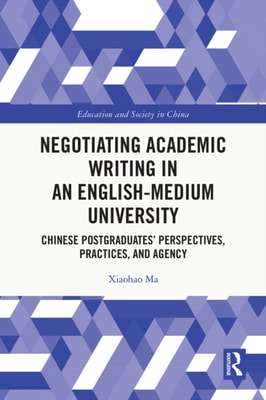
Building on a collection of students' perspectives and narratives, Ma examines how non-native English speaking (NNES) students negotiate English academic writing (EAW) to reveal the general patterns and distinct routes in addressing challenges in higher education.
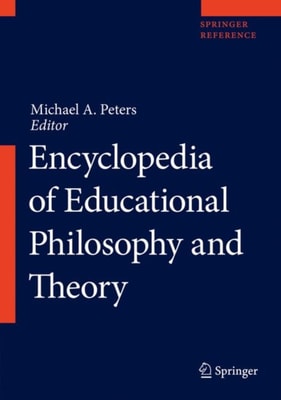
This encyclopaedia is a dynamic reference and study place for students, teachers, researchers and professionals in the field of education, philosophy and social sciences, offering both short and long entries on topics of theoretical and practical interest in educational theory and philosophy by authoritative world scholars representing the full ambit of education as a rapidly expanding global field of knowledge and expertise.
This book introduces readers to the theory of practice architectures and conveys a way of approaching practice theory through developing a practice sensibility.
This book offers a snapshot of interculturality as a complex, unstable and highly political object of research and education when it locates at the centre of multifaceted dialogues between teachers and students; students and students; teachers, students, scholars and readers.
This book urges readers to develop a radical capacity to unthink and rethink interculturality, through multiple, pluri-perspectival and honest dialogues between the authors, and their students.
This book explores how stretching stories through posthuman and autoethnographic perspectives can produce new stories that decolon(ial)ize traditional thinking and approaches to Early Childhood Education (ECE).
This book provides a refreshing look at kindergarten teachers' practical knowledge and their context-specific reasoning of the usefulness of constructivism from a culturally emic perspective.
This book provides a fresh and unique overview of the modernization and internationalization of Chinese higher education, focusing on Chinese higher education from 1949 to 2018.
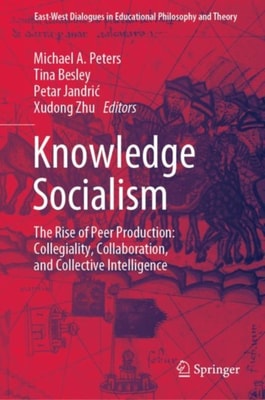
This is the first collection focusing on knowledge socialism, a particularly apt term used to describe a Chinese socialist mode of production and socialist approach to development and modernity based around the rise of peer production, new forms of collaboration and collective intelligence.
This memoir presents a special look into Professor Cheng-Few Lee's formative childhood years, his distinguished career as a respected scholar and conference organizer, and his substantial experience in the fields of education and policy-making.
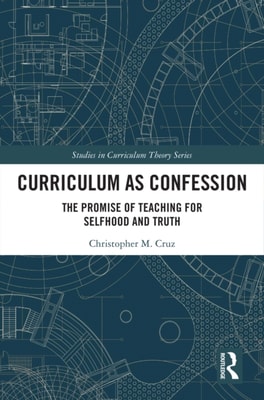
This book offers a philosophical inquiry into the idea of curriculum as confession and considers how it can help us answer questions of justice, selfhood, and truth.
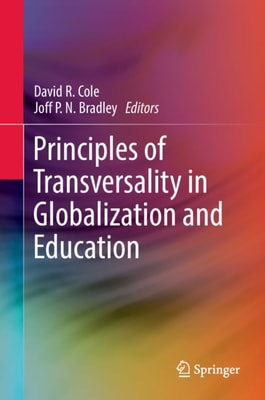
This unique book comprehensively covers the evolving field of transversality, globalization and education, and presents creative, research-based thought experiments that seek to unravel the forces of globalization impacting education.
This book presents a critical reimagining of education and educational research in addressing practices of representation and their relation to epistemology, subjectivity and ontology in the context of early childhood education.
This book offers a theoretical and epistemological-methodological framework as an alternative approach to the instrumental-descriptive methodology that has prevailed in psychology to date.
This book proposes that paradox, as a theoretically rich and historically enduring concept, has significant potential for researchers in the field of critical leadership studies.
International comparative studies of student achievement have caught the attention of governments, policy-makers, school leaders and educational researchers globally.
This book documents and deconstructs the concept of educational leadership within various education settings originating from diverse global environments.
This textbook shows how people can and do transform the world through transforming their practices and the practice architectures that shape them, and contributes to contemporary practice theory.
This book presents a novel conceptualisation of universal information processing systems based on studies of environmental interaction in both biological and non-biological systems.
This book tries to trace Dewey's intellectual history from his early years to the end, focusing on the themes of psychology and the psychological aspect of education in Dewey's lifelong writing.
This book starts from the premise that honest and constructive dialogue between scholars and educators of interculturality, especially from different geopolitical spheres, is needed more than ever.
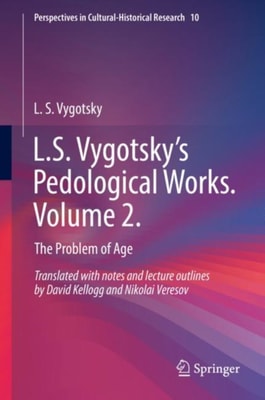
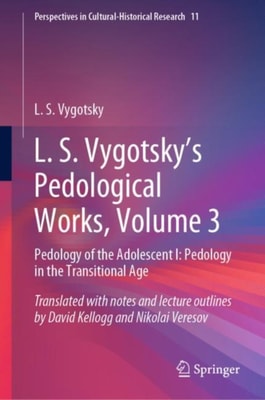
This book provides both a lost last word and a firm first foundation: seven lectures, given in the last months in the life of the Soviet thinker, teacher, and writer L.
Educational philosophies of self-cultivation as the cultural foundation and philosophical ethos for education have strong and historically effective traditions stretching back to antiquity in the classical 'cradle' civilizations of China and East Asia, India and Pakistan, Greece and Anatolia, focused on the cultural traditions in Confucianism, Taoism, and Buddhism in the East and Hellenistic philosophy in the West.