Professional teaching placements are an essential part of secondary teacher training, with trainees spending around two thirds of their time in schools.
With approximately 16,000 students beginning primary teacher education in the UK each year, and each of those being expected to teach art and design, this pioneering volume provides a renewed emphasis on ideas, issues and research in art and design education in the primary and early years phases.
Many educators understand that inquiry-based learning holds great potential but still need guidance to implement inquiry in their daily instructional practice.
This innovative approach to managing Forest School, with a focus on children with additional or complex needs, helps children to explore, increase their confidence, take measured risks, improve their self-esteem and become more resilient.
Where spirituality in the UK once existed as a shared experience of mutual religious and cultural norms, it has evolved to one where religion, faith and individualism challenges a 'one-size fits all' experience.
Where spirituality in the UK once existed as a shared experience of mutual religious and cultural norms, it has evolved to one where religion, faith and individualism challenges a 'one-size fits all' experience.
What if you could challenge your twelfth-grade students to explore energy consumption and climate change in their own communities, and connect that information with other communities around the world?
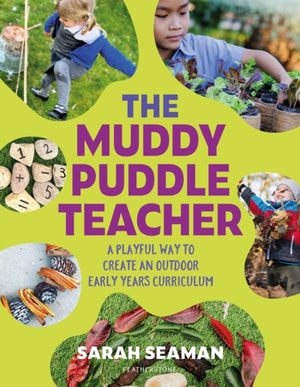
'A fantastic addition to every bookshelf' - Kathy Brodie, Host and founder of Early Years TV, @kathybrodieThe Muddy Puddle Teacher gives you everything you need to create an engaging, active and inclusive outdoor curriculum for your Early Years setting.
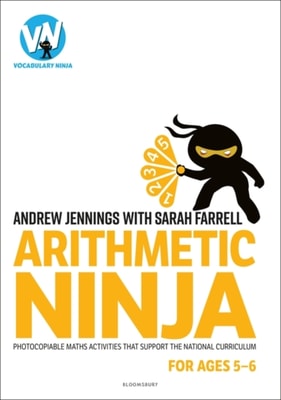
Arithmetic Ninja for Ages 5-6 is the essential photocopiable maths resource for every Year 1 classroom from Andrew Jennings, the creator of Vocabulary Ninja, Comprehension Ninja and Write Like a Ninja.
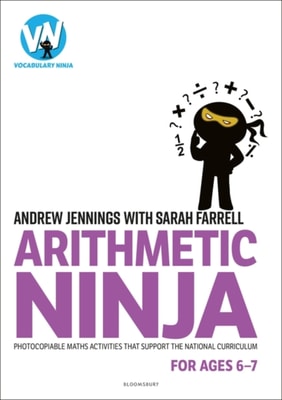
Arithmetic Ninja for Ages 6-7 is the essential photocopiable maths resource for every Year 2 classroom from Andrew Jennings, the creator of Vocabulary Ninja, Comprehension Ninja and Write Like a Ninja.
Arithmetic Ninja for Ages 7-8 is the essential photocopiable maths resource for every Year 3 classroom from Andrew Jennings, the creator of Vocabulary Ninja, Comprehension Ninja and Write Like a Ninja.
Arithmetic Ninja for Ages 8-9 is the essential photocopiable maths resource for every Year 4 classroom from Andrew Jennings, the creator of Vocabulary Ninja, Comprehension Ninja and Write Like a Ninja.
Arithmetic Ninja for Ages 9-10 is the essential photocopiable maths resource for every Year 5 classroom from Andrew Jennings, the creator of Vocabulary Ninja, Comprehension Ninja and Write Like a Ninja.
Arithmetic Ninja for Ages 10-11 is the essential photocopiable maths resource for every Year 6 classroom from Andrew Jennings, the creator of Vocabulary Ninja, Comprehension Ninja and Write Like a Ninja.
Supporting Early Childhood Practice Through Difficult Times encourages early childhood students and practitioners to take stock of current practices and pedagogies in light of challenges like the COVID-19 pandemic, ecological concerns, and regulatory pressures.
This collection of chapters from established thinkers and emerging scholars provides a series of unique insights into collaboration between schools and the means by which the policy context influences such activity.
This collection of chapters from established thinkers and emerging scholars provides a series of unique insights into collaboration between schools and the means by which the policy context influences such activity.
Through different approaches like toys and play, children explore and know the rules and symbols of their communities and recreate roles and situations that reflect their sociocultural and 21st century plurilingual world.
This concise, digestible book shows how the cultivation of reason became the defining aim of western education, and critiques how this aim has been eclipsed in recent decades by the neoliberal system of mass schooling imposed by the state.
This volume discusses the various challenges faced by children in India from different perspectives such as education, psychology, and sociology during the COVID-19 pandemic.