Written by experienced clinicians, this book provides an exploration of how educators can easily use Dyadic Developmental Practice (DDP) to help vulnerable pupils to thrive.
Confidence, emotional intelligence and resilience are vital to children's mental wellbeing, and this book gives early years practitioners all the tools they need to promote these skills in young children.
Explaining the importance of supporting children through change for their wellbeing and social and emotional development, this practical guide gives early years practitioners and parents the tools to help children cope with change and everyday transitions.
This book is the perfect starting point for anyone looking to promote and encourage mental health in their school, or evaluate their existing provision, in line with current government priorities.
The first book offering support for parents and carers of children and young people with Body Dysmorphic Disorder (BDD), this guidebook explains the condition as well as the impact that it may have in education settings, family life and socialisation.
This book offers a unique and critical explication of teachers' understanding and experience of care during a period of regulatory scrutiny and 'notice to improve'.
This book offers a unique and critical explication of teachers' understanding and experience of care during a period of regulatory scrutiny and 'notice to improve'.
SEND Leadership completes the 'Essential SENCO Toolkit' trilogy and provides SENCOs and SEN practitioners with the guidance and tools needed to aid their leadership and quality assurance (QA) roles.
This original ethnographic study looks at how children are 'civilised' within child institutions, such as schools, day care centres and families, under the auspices of the welfare state.
This original ethnographic study looks at how children are 'civilised' within child institutions, such as schools, day care centres and families, under the auspices of the welfare state.
What is the Gulen Movement and why is Turkey's President Erdogan so convinced that the organisation and its charismatic leader were behind the failed military coup of 15th July 2016?
Offering practical guidance on encouraging creativity in early childhood settings, this much-needed book highlights the importance of the arts and creativity for children's learning, critical thinking, social interaction and self-regulation.
Martin Griffin and Jon Mayhew's Storycraft: How to teach narrative writing is an inspiring and practical resource to support secondary school teachers in developing their students' creative writing.
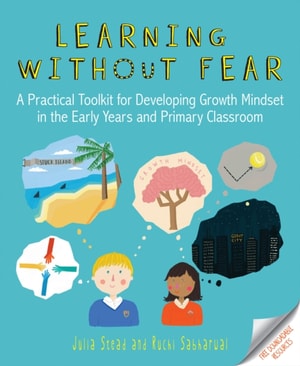
In Learning without Fear: A practical toolkit for developing growth mindset in the early years and primary classroom, Julia Stead and Ruchi Sabharwal provide teachers of this age group with a colourful collection of strategies and resources designed to nurture young learners' resilience and learning capabilities.
Mark Enser's 'Making Every Geography Lesson Count: Six principles to support great geography teaching' maps out the key elements of effective geography teaching and shows teachers how to develop their students' conceptual and contextual understanding of the subject over time.
Developed for schools exploring the use of restorative approaches to conflict resolution, this manual explains how to set up and run a restorative peer mediation programme, to provide students with the skills needed to nurture a climate of care and co-operation.
Packed with fun, creative and multi-sensory activities, this resource will help children and teenagers with dyslexia become successful learners across the curriculum.
This fun and engaging activity book helps to teach teens to manage emotions and develop relationships by tracking their progress using Dialectical Behaviour Therapy (DBT) techniques.
This highly accessible and much-needed resource sets out practical advice on positive behaviour management in primary schools, exploring how to support children effectively with their personal, social and emotional development.
Restorative practice (RP) has been successfully implemented in schools for decades and is primarily associated with improving behaviour and relationships, by changing the culture of problem solving in the school.
TEACH SECONDARY AWARDS FINALISTCurrently teachers don't receive the training or induction they need to make their school an LGBT+ inclusive environment.
Discussions with school children aged 5-11 reveal that there is still a degree of uncertainty amongst students about whether it is ok to ask questions about autism.
The development of new policy on the British Values and the Prevent Duty in the early years has raised many questions about appropriate implementation.
Answering all of the key questions about the kindergarten experience, this compact guide will give parents the confidence to be the most effective, up-to-speed advocates as their child enters formal education.