The wisdom in the creatures of God, a book by Imam Abu Hamid Al -Ghazali, in which he talked about the types of God's creatures that inspire the creation of God, the wonders of his ability, and the creatures that he mentioned, indicating the wisdom in its existence: the sun, the moon, the planets, the earth, the seas, the water, the bird, the seven flies and the seed And mosquitoes, fish and plants in its shapes, colors and types.
Relief of the Linning of Satan's fisheries is a book written by Abu Abdullah Shams al -Din Muhammad bin Abi Bakr Al -Zara'i, the Damascene, known as Ibn Qayyim al -Jawziya, arranged in thirteen chapters, in which he presented the diseases and treatment of the human psyche, and the devil's intrigues that he asserted for man, and in it the chapters of this great benefits are great Benefit, and scholars have witnessed it to the service of science and the definition of religion for Muslims
Taqi al -Din, Muhammad ibn Bir Ali al -Baraki al -Roumi al -Hanafi died 981Taqi al -Din, Muhammad ibn Bir Ali al -Baraki al -Roumi al -Hanafi died 981Taqi al -Din, Muhammad ibn Bir Ali al -Baraki al -Roumi al -Hanafi died 981Taqi al -Din, Muhammad ibn Bir Ali al -Baraki al -Roumi al -Hanafi died 981
The soul of the souls to the wedding of the wedding is a book written by Ibn Qayyim al -Jawziyyah, in which he describes Paradise as a pleasant description of his reader and interesting to the beholder in which he described its people, their food, their drink and their brides from the poplar and their attributes, as he mentioned several gates of Heaven and expanded its doors and the degrees of heaven and the previous ones from this nation to them and their descriptions and mentioned the types of the people of Paradise Which was guaranteed to them without others, with the description of the soil, light, palaces, trees, drinking of its people, food, dress, tents, pleasure, servants, and servants.
Khamis bin Ali bin Ahmed, Abu Al -Karam Al -Wasiti Al -Hawzi died 510Khamis bin Ali bin Ahmed, Abu Al -Karam Al -Wasiti Al -Hawzi died 510Khamis bin Ali bin Ahmed, Abu Al -Karam Al -Wasiti Al -Hawzi died 510
Muhammad ibn Idris, Abu Abdullah al -Qadri al -Husayni al -Fassi died 1350Muhammad ibn Idris, Abu Abdullah al -Qadri al -Husayni al -Fassi died 1350Muhammad ibn Idris, Abu Abdullah al -Qadri al -Husayni al -Fassi died 1350Muhammad ibn Idris, Abu Abdullah al -Qadri al -Husayni al -Fassi died 1350Muhammad ibn Idris, Abu Abdullah al -Qadri al -Husayni al -Fassi died 1350Muhammad ibn Idris, Abu Abdullah al -Qadri al -Husayni al -Fassi died 1350
This book consists of stories of struggles in science education presented by a network of science educators working in Australia, Brazil, Canada, Britain, and the United States.
Honorable Mention: African Studies Review Best Anthology or Edited Collection Prize 2025This book brings together the first book collection of African research in mathematics education in multilingual societies and chronicles current research in different linguistic contexts across the African continent, (including Algeria, Namibia, Malawi, Morocco, Rwanda, South Africa) on issues of multilingualism in mathematics education, but more importantly, it foregrounds pertinent issues for future research.
One of the great foundations upon which Islamic legislation was based on achieving and preserving the interests of the servants, for this, the five necessities that the Sharia recommended to preserve and care for them are the preservation of religion, the preservation of the soul, the preservation of supply, the preservation of money, the preservation of the offspring, and the preservation of the soul.
The Akkad talks in this book about the status of women in Islam, using verses from the Holy Qur'an, explaining the verses, discussing social issues that mean women, such as religious rights, marriage and divorce, as well as approved the Holy Book of God, presents the commandments of the Qur'an in the treatment of women, and solving the problems of marriage.
Informing the signatories about the Lord of the Worlds, a book written by Ibn Qayyim al -Jawziyyah, in which his work was collected between jurisprudence, its origins, the purposes of Sharia, the history of legislation and legal policy, using the first thing that was taken and received from the Messenger of God, may God bless him and grant him peace, and whoever spread jurisprudence and religion, then he spoke about diligence and measurement in a lengthy research.
This new text is a guide for understanding, envisioning, and acting on the lessons of English as a Lingua Franca (ELF) research in English Language Teaching (ELT) classrooms.
Music Studies and Its Moment of Truth: Leading Change through America's Black Music Roots presents a new framework for racial justice discourse in the context of music studies and education.
This book consists of stories of struggles in science education presented by a network of science educators working in Australia, Brazil, Canada, Britain, and the United States.
In einer zunehmend globalisierten Welt, in der Menschen unterschiedlicher Kulturen und Religionen interagieren, ist es wichtig, Kinder und Jugendliche auf das Leben in Vielfalt vorzubereiten.
New Generation Korean is an immersive and visually appealing resource specifically designed for secondary and post-secondary Korean language learners, as well as independent self-study enthusiasts.
On the authority of Abu Hurairah, may God be pleased with him, he said: The Messenger of God - may God's prayers and peace be upon him - said: (God says on the Day of Resurrection: Where are the people who love me?
For fifteen chapters in this book, the great thinker "Abbas Mahmoud Al -Akkad" put an important intellectual background on the Islamic power in the twentieth century, which dominates the two real powers at the time, namely the Persians and Romans.
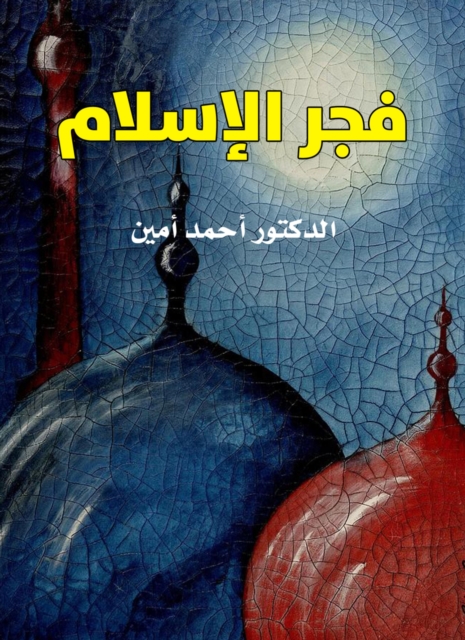
It is a book on history, written by the Arab thinker Ahmed Amin, dealing with the intellectual and civilizational march of the Islamic nation, since the pre -Islamic era, in which he talked about the Arabs in pre -Islamic, especially the Arabian Peninsula, and the contact of the Arabs with their neighboring nations, then the nature of the Arab mentality, and the life of this mentality.
Abdul Hamid Muhammad bin Badis Al -Sunhaji died 1359Abdul Hamid Muhammad bin Badis Al -Sunhaji died 1359Abdul Hamid Muhammad bin Badis Al -Sunhaji died 1359Abdul Hamid Muhammad bin Badis Al -Sunhaji died 1359Abdul Hamid Muhammad bin Badis Al -Sunhaji died 1359Abdul Hamid Muhammad bin Badis Al -Sunhaji died 1359
En la actualidad, la educación enfrenta múltiples retos para quienes asumen tanto la tarea de acompañar los procesos de formación como de gestionar las instituciones educativas.
17 aktivierende Methoden führen zur Methodenvielfalt sowie einem abwechslungsreich und lebendig gestalteten Geschichtsunterricht, der fachlich intensive Lernprozesse anstrebt, den SchülerInnen häufiger das Wort gibt, sie auch kognitiv-produktiv herausfordert, ihnen ermöglicht sich in historischen Rollen zu erleben und der neue Wege für ein empathisches Verstehen historischer Lebens- und Herrschaftsverhältnisse eröffnet.
This book presents a four-step framework to help English as a world language (EWL) learners successfully develop global competence, which is defined as the skills, values, and behaviors that prepare young people to thrive in diverse environments.
This book presents a four-step framework to help English as a world language (EWL) learners successfully develop global competence, which is defined as the skills, values, and behaviors that prepare young people to thrive in diverse environments.
This book examines the role of the visual and performing arts in higher education and argues for the importance of socially engaged transdisciplinary practices, not just to the college curriculum but also to building an informed and engaged citizenry.
Early and ongoing intervention is known to be a critical element in increasing the likelihood that students in underserved communities will attendcollegeandthenthrivethereand beyond.
Drawing on a total of 8,308 haiku poems written by 834 English as a foreign language (EFL) university students in Japan, this book explores the value, possibility, and potential of teaching and researching English-language haiku in second and foreign language (SFL) contexts.
Early and ongoing intervention is known to be a critical element in increasing the likelihood that students in underserved communities will attendcollegeandthenthrivethereand beyond.
This practical, hands-on book explains how to ensure that your students are information and communication technology literate-that is, competent with a range of tools, technologies, and techniques for seeking out and applying information.
This creative volume demonstrates the urgent importance of engaging students cognitively and affectively with the climate crisis and environmental education, underpinning the vital role the language arts play in expanding this engagement for a better future.
The practice of teaching international law is conducted in a wide range of contexts across the world by a host of different actors - including scholars, practitioners, civil society groups, governments, and international organisations.
Teaching with Dystopian Text propounds an exchange of spatial to pedagogical practices centered around "e;Orwellian Spaces,"e; signaling a new utility for teaching with dystopian texts in secondary education.
Teaching with Dystopian Text propounds an exchange of spatial to pedagogical practices centered around "e;Orwellian Spaces,"e; signaling a new utility for teaching with dystopian texts in secondary education.
This book explores ways in which systems of local knowledge, culture, language, and place are foundational for STEM learning in Indigenous communities.
Combining the research talents of many long-standing members of the Association for the Study of Play, this work provides discussions of the theory and applied value of play, as well as ongoing research from America, Australia, Taiwan, and Korea.
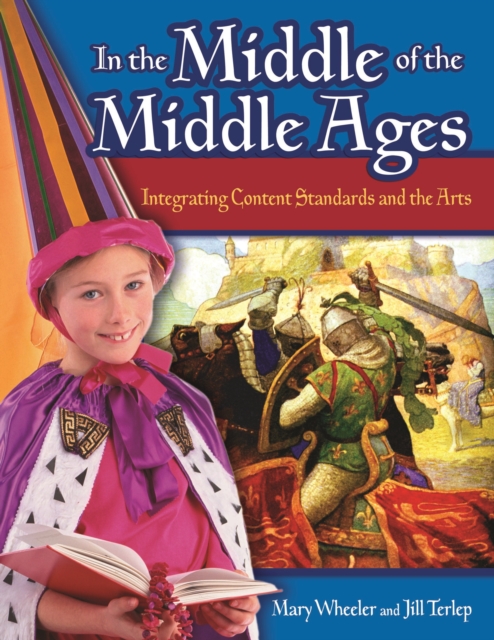
Students revisit Europe during the Middle Ages through guided practice activities, poems, songs, and an educational play packaged into a unique teacher resource book.
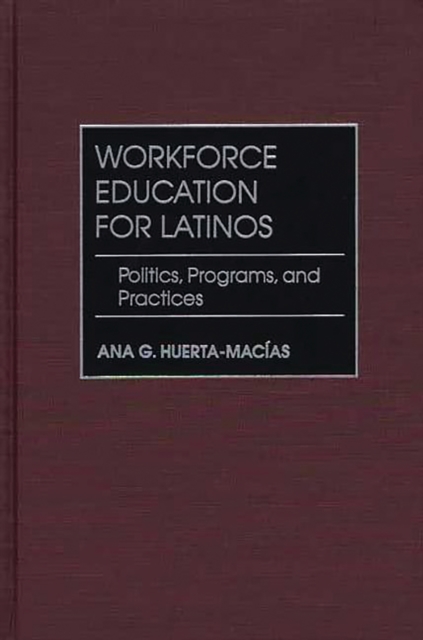
The author provides a comprehensive discussion of the political, economic, curricular, and instructional issues relevant to workforce education for Latinos with low levels of literacy and formal education.