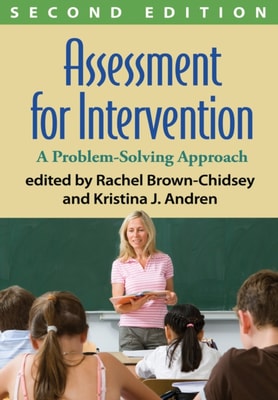
This user-friendly volume provides evidence-based tools for meeting the needs of the approximately 15% of K to 6 students who would benefit from more support than is universally offered to all students but do not require intensive, individualized intervention.
Cutting-edge research reveals that parents can play a huge role in helping toddlers and preschoolers with autism spectrum disorder (ASD) connect with others and live up to their potential.
Meeting a key need for teachers, this book provides practical, data-based tools for helping students with attention-deficit/hyperactivity disorder (ADHD) succeed in the classroom.
Problem-solving assessment is an essential component of multi-tiered systems of support such as response to intervention (RTI) and positive behavioral interventions and supports (PBIS).
What tools are in the toolkit of an excellent special educator, and how can teacher preparation programs provide these tools in the most efficient, effective way possible?
There are many things that influence language acquisition yet many of them are not presented to Language teachers when they train for their teaching certificate.
Making ADHD a Gift explains, in everyday language, what ADHD is, how it is diagnosed, and how this condition can affect people throughout their lifetime.
Positive Behaviour Support Strategies for Students with Attention Deficit Hyperactivity Disorder equips parents, educators and professionals with the knowledge and skills to assess, manage and prevent challenging behaviours in children who have been diagnosed with ADHD.
Positive Behaviour Support Strategies for Students with Oppositional and Defiant Behaviours equips parents, educators and professionals with the knowledge and skills to assess, manage and prevent challenging behaviours in children who have been diagnosed with anA OppositionalA and Defiant Disorder or are showing signs ofA oppositionalA and defiant behaviour persistently.
Positive Behaviour Support Strategies for Students with Anxious Behaviours equips parents, educators and professionals with the knowledge and skills to assess, manage and prevent challenging behaviours in children who have been diagnosed with an Anxiety Disorder or exhibit persistent anxious behaviours.
Positive Behaviour Support Strategies for Students with Oppositional and Defiant Behaviours equips parents, educators and professionals with the knowledge and skills to assess, manage and prevent challenging behaviours in children who have been diagnosed with Autism Spectrum Disorder (ASD).
This new edition of the best-selling Reaching the Unseen Children provides a powerful and accessible resource for schools working to close the attainment gap between disadvantaged children, particularly white pupils from low-income backgrounds, and their peers.
Dyslexic people face many problems in the workplace: difficulties with reading and writing, memory, organisation and time management, and a recent TUC report on dyslexia in the workplace estimates that 3 million people are affected.
Filling a vital need, this is the first comprehensive guide to supporting K12 teachers in effective implementation of classwide positive behavioral interventions and supports (CWPBIS).
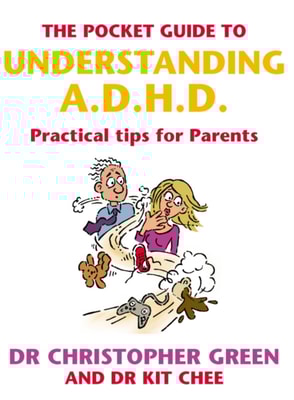
In his typically friendly and clear style, the ever-popular Dr Chris Green, with Dr Kit Chee, explains the treatments and causes of Attention Deficit Disorder, a condition that affects the learning and behaviour of up to 1 in 10 children in this country.
The second edition of The SAGE Handbook of Special Education provides a comprehensive overview of special education, offering a wide range of views on key issues from all over the world.
Intensive Interaction is an approach to teaching the fundamentals of communication to children and adults who have severe learning difficulties or autism, and who are still at an early stage of communication development.
There are a number of different approaches and therapies available for children, young people and adults on the autistic spectrum, and the amount of information available on each one can be daunting for professionals and parents alike.
The aim of this book is to make sure all students on the Autistic Spectrum are given the opportunity to engage in appropriate teaching and learning experiences.
[The authors] provide a detailed breakdown of the scientific underpinnings of Waldon's theory in language accessible enough for parents and rigorous enough to satisfy the informed researcher/practitioner.
Covering a wide range of concepts and taking a broader perspective of what inclusion entail, this book offers an overview of current research, policy and practice in diversity and inclusion in the early years.
This book is a really practical, hands-on guide packed with a wealth of advice on strategies and things to try"e; reflecting the authors' extensive experience.
This book is a really practical, hands-on guide packed with a wealth of advice on strategies and things to try"e; reflecting the authors' extensive experience.