Covering a wide range of concepts and taking a broader perspective of what inclusion entail, this book offers an overview of current research, policy and practice in diversity and inclusion in the early years.
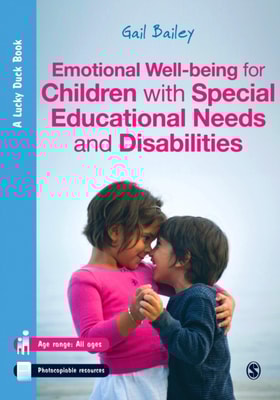
This practical guide details the strategies that practitioners can use in their setting to build better outcomes for children with Special Educational Needs (SEN) and disabilities.
'This important revision with updated material will inform professionals, students, and the interested public of evolving international perspectives on EBD.
[The authors] provide a detailed breakdown of the scientific underpinnings of Waldon's theory in language accessible enough for parents and rigorous enough to satisfy the informed researcher/practitioner.
`This book provides a succinct overview of SEN policy and is likely to be a useful resource for those undertaking accredited courses related to SEN and inclusion' - SENCO Update'The combination of the theoretical and practical aspects of special educational needs makes this book a valuable resource for practitioners and should enable them to develop reflective and insightful practice.
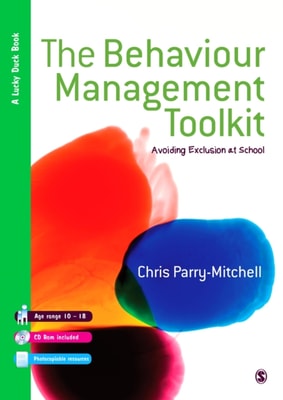
Based on her successful work across a range of schools, this book consists of 10 sessions that make up a programme to help students who are at risk of exclusion.
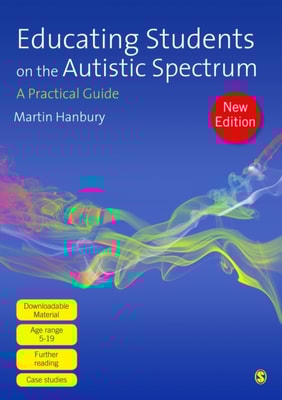
The aim of this book is to make sure all students on the Autistic Spectrum are given the opportunity to engage in appropriate teaching and learning experiences.
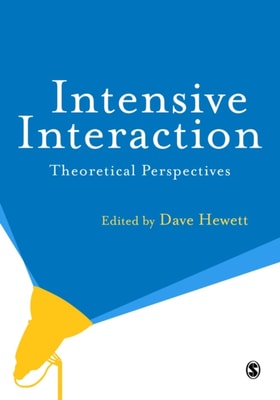
Intensive Interaction is an approach to teaching the fundamentals of communication to children and adults who have severe learning difficulties or autism, and who are still at an early stage of communication development.
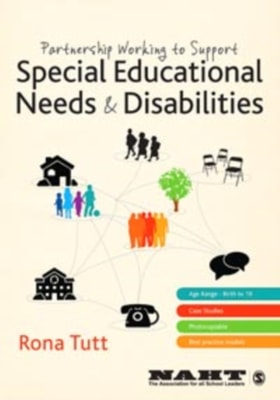
In order to achieve the best outcomes for all children and young people, schools must work in partnership with students, parents, other professionals and the wider community.
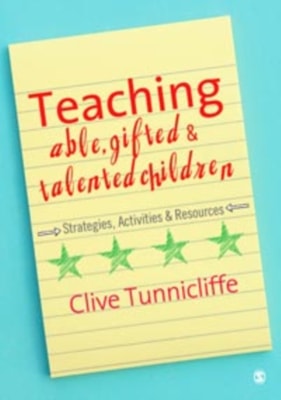
Clive Tunnicliffe offers a vision of provision for able, gifted and talented (AG&T) learners within the context of Every Child Matters (ECM) legislation and the drive to achieve personalised learning.
There are a number of different approaches and therapies available for children, young people and adults on the autistic spectrum, and the amount of information available on each one can be daunting for professionals and parents alike.
In the third edition of this respected and influential textbook, Kate Wall blends theory and practice with an informative and highly accessible writing style to provide a detailed analysis of provision for young children with additional needs.
'This book would be excellent for anyone thinking of taking on the role of home/support worker or someone already in this post who would like to refresh their ideas and views.
Written with both new and experienced practitioners in mind and packed with practical advice, suggestions, case studies and useful photocopiable materials, this new edition of a much-loved book will help all SENCOs (Special Educational Needs Co-ordinators) succeed in what is often a very demanding role.
'This resource will be very valuable for professionals planning in-service training to assist settings to develop as Autistic Spectrum Disorder-friendly environments.
This new edition of the leading book in autism and early years practice continues to provide excellent guidance for all early years students and practitioners on how to work with young children who have autism or who appear on the autistic spectrum.
Clive Tunnicliffe offers a vision of provision for able, gifted and talented (AG&T) learners within the context of Every Child Matters (ECM) legislation and the drive to achieve personalised learning.
Making sure that young children with special educational needs have the right support is a top priority for all early years settings, but spotting additional needs can be tricky.
'This book is an essential resource for all those in Early Years settings; providing invaluable information about addressing the wide range of aspects involved in developing effective provision for able learners' - Nursery World'This book is essential reading for all those involved in Early Years.
Written by authors with extensive experience of working with students with dyslexia, this book provides clear guidance and practical strategies for dyslexia-friendly practice for those working with young people aged 14 to 19 and adults in education or work-based training.
With downloadable electronic resourcesOffering practical advice and guidance on how to establish and maintain effective multi-agency partnership working in your setting, this book will tell you how to meet the Every Child Matters outcomes for children and young people.
'Geoff Dean's English for Gifted and Talented Students 11-18 is a principled and pragmatic book that will provide Heads of Department with a foundation in this important area of curriculum development' - English Drama Media'The really surprising thing about Geoff Dean's book is that you come away from it with more than you expected.
Teachers in mainstream schools are increasingly accommodating pupils on the autistic spectrum in their classrooms, and this books offers advice on one of the most difficult aspects of teaching children and young adults with autism - understanding and managing their often challenging behaviour.
`This deceptively little book contains more truth and provides more insight into what it is like to have Asperger's Syndrome than many a weighty tome on the subject.
In order to achieve the best outcomes for all children and young people, schools must work in partnership with students, parents, other professionals and the wider community.
`Teachers will find this book helpful because it locates convincing theoretical reasoning with the familiar practice of the learning environments of the secondary school.
`This is an extremely timely book, which would be a very useful addition to any staffroom library' - Special `One of the most detailed overviews on what is really happening with inclusion at ground level.
'This book will be really useful to all teachers of upper Primary/lower Secondary pupils but will be especially useful as a resource for using with gifted children of 9 to12 years, as it will promote and support the type of self-directed, investigative enquiry that they enjoy.
With increasing expectations from parents and practitioners for inclusive early years settings, many practitioners are anxious about identifying and accommodating children's individual needs as early as possible.
Praise for the first edition:`The underlying philosophy of this practical book is that raising self-esteem in pupils (including dyslexics) will lead to achievement of higher academic results and fewer behaviour problems.
In the third edition of this respected and influential textbook, Kate Wall blends theory and practice with an informative and highly accessible writing style to provide a detailed analysis of provision for young children with additional needs.