The Youth, Prosperity, and Security Initiative at the Center for Strategic and International Studies (CSIS), in partnership with the International Youth Foundation (IYF), has developed a groundbreaking Global Youth Wellbeing Index, to elevate distinct young people's issues and comparative status from within national and population-wide measures of national poverty, development, and wellbeing.
A Fragile Enterprise recounts true stories the front lines of the struggle between the entitled few and the marginalized many in America's public schools.
In the early 1960s America was in a confident mood and embarked on a series of efforts to solve the problems of poverty, racial discrimination, unemployment, and inequality of educational opportunity.
In his 1998 State of the Union address, President Clinton challenged Americans to a public debate about how to fix the long-term financial problems of Social Security.
Twenty years ago cooperative federalism, in the form of federal grant-in-aid programs administered by state and local governments, was applauded almost without reservation as the best means of helping the handicapped, the educationally disadvantaged, the poor, and other groups with special needs.
In recent years, workers earnings have hardly grown, violence and crime have plagued the inner cities, homelessness and public begging have become commonplace, and family life has greatly deteriorated.
Containing more than 450 entries, this easy-to-read encyclopedia provides concise information about the history of and recent trends in drug use and drug abuse in the United States-a societal problem with an estimated cost of $559 billion a year.
Over the past two decades Americans have become increasingly skeptical about the benefits of community growth and hostile to new taxes--while continuing to demand improvements in local services.
For over four years, Washington responded to war in Bosnia by handing the problem to the Europeans to resolve and substituting high-minded rhetoric for concerted action.
As water becomes ever more important in a rapidly growing United States challenged by lessening firm-yield water reliability, the public needs to understand the myriads of quite different state-by-state water policies.
The historian James Allen Smith traces the evolution of Washington's oldest and prototypical think tank on the occasion of its seventy-fifth anniversary in 1991.
With health care reform at the top of the domestic agenda, this volume assesses the Clinton administration's proposals and several alternative plans by discussing how six other countries have organized health care finance and delivery to achieve universal access to comparable quality care at much lower costs.
In 1984, Congress simultaneously eliminated state-local regulation of cable television rates and banned telephone companies from offering cable service in their own franchise areas.
As water becomes ever more important in a rapidly growing United States challenged by lessening firm-yield water reliability, the public needs to understand the myriads of quite different state-by-state water policies.
The devastating and politically consequential defeat of President Clinton's comprehensive health plan in Congress has unleashed a torrent of speculation over "e;"e;who or what killed reform.
Examines the effects of rising social security costs and of measures adopted to deal with them, and discusses possible ways of coping with the shortfall of available money for the aging American population.
Setting National Priorities continues the highly acclaimed and influential series of books that examine domestic and foreign policy choices confronting the United States.
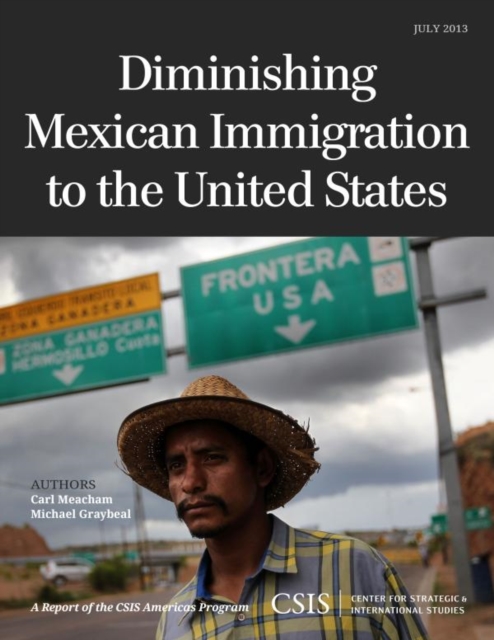
This report examines the fundamental link between Mexico's economic performance and migration to the United States, with a particular focus on the post-NAFTA time period.
An efficient transportation system reduces the cost of distance by moving people and goods from their origins to their destinations as cheaply, quickly, and safely as possible.
Describes how China is in the lead in transforming finance for the digital ageThis book is the product of a joint research project between economists at the National School of Development, especially the affiliated Institute of Digital Finance, at Peking University and at the Brookings Institution.
The Politics of Compassion explores the manifold obstacles that hinder our individual and collective capacity to care for the vulnerable, offering insights from history, religion, ethics, cognitive and social sciences, international relations, public policy, and contemporary politics.