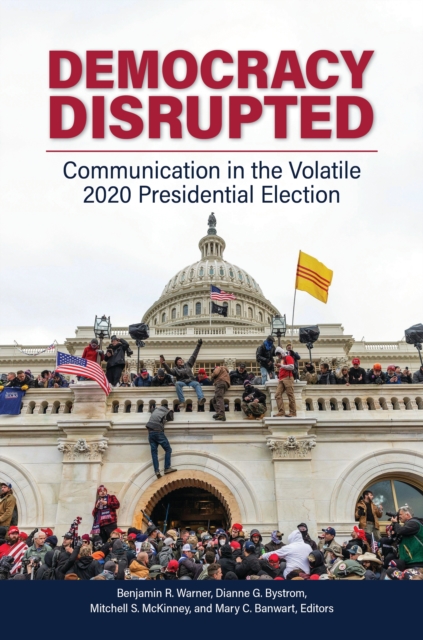
Leading scholars analyze three disruptions in the 2020 presidential campaign and election: disruptions to the status quo caused by the renewed quest for racial justice and greater diversity of candidates, pandemic disruptions to traditional campaigning, and disruptions to democratic norms.
Focusing on how rape, sexual assault, and harassment relate to underrepresentation of women in public authority, this book provides an insightful exploration of the policy context that impedes women's advancement to positions of power.
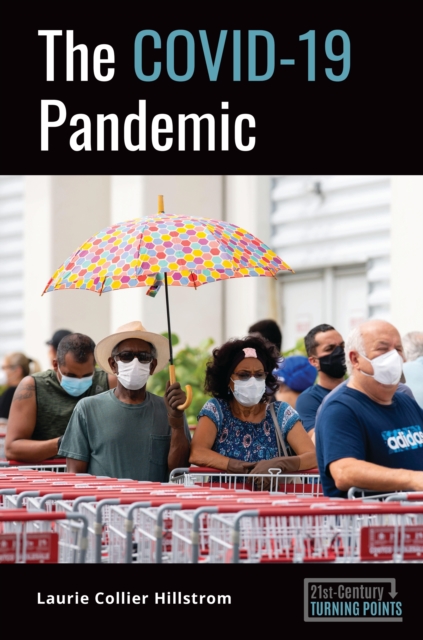
Highlighting American cultural and political contexts, this book provides an in-depth assessment of the breadth and magnitude of the United States' errors in its response to the COVID-19 pandemic.
This authoritative work provides a thorough overview of the COVID-19 pandemic that swept the globe in 2020, devoting particular attention to its impact on all aspects of American society.
This two-volume set offers a comprehensive overview of major challenges faced by cities worldwide in the 21st century, and how cities in different geographic, economic, and political conditions are finding solutions to them.
Distinctive in its use of two disciplinary lenses-sociology and political science-Abortion in the United States provides a balanced scholarly analysis of the most salient issues in the pro-life/pro-choice debate.
This book examines the politics of cancer, explains how our government is intrinsically tied to cancer research efforts, and documents how major political actors make cancer policy and are influenced in their decision making by political, social, scientific, and economic variables.
How a public-private partnership led to the largest emergency response system in the worldEmergency medical response systems are a critical component of any nation's healthcare system.
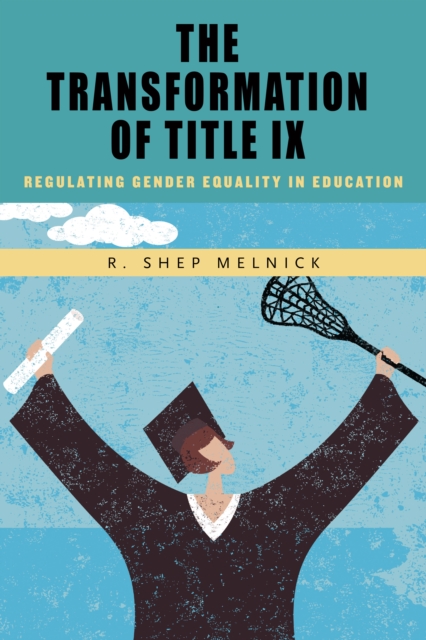
One civil rights-era law has reshaped American society-and contributed to the country's ongoing culture warsFew laws have had such far-reaching impact as Title IX of the Education Amendments of 1972.
The stunning political upheavals witnessed across the western world over the past year have raised the question of whether the neoliberal economic system that has dominated since the 1980s is about to unravel.
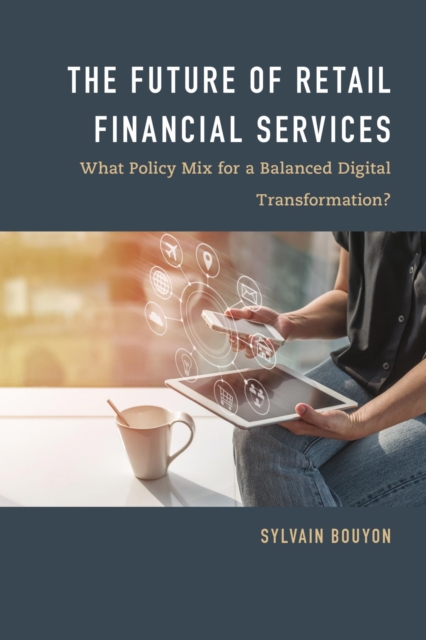
In recent years, the digitalisation of retail financial services - retail payments, current/savings accounts, consumer/housing credit, car insurance, property insurance and health insurance - has accelerated significantly.
This CEPS book comprises a first-ever economic and regulatory analysis of a possible Free Trade Area (FTA) between China and the EU, whose design is supposed to be 'deep and comprehensive'.
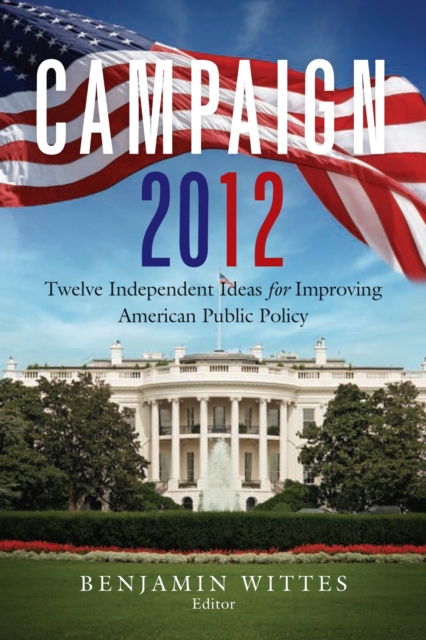
Campaign 2012: Twelve Independent Ideas for Improving American Public Policy is an indispensable guide to the questions facing White House hopefuls in 2012, as well as the challenges awaiting the winner.
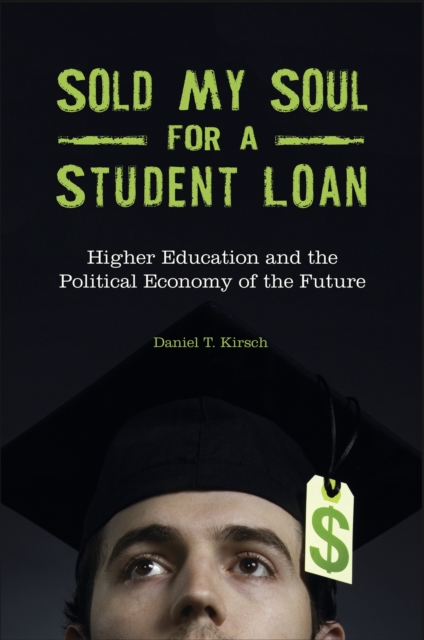
With unprecedented student debt keeping an entire generation from realizing the "e;American Dream,"e; this book sounds a warning about how that debt may undermine both higher education-and our democracy.
Sandford Borins addresses the enduring significance of innovation in government as practiced by public servants, analyzed by scholars, discussed by media, documented by awards, and experienced by the public.
The ambitious 15-year agenda known as the Sustainable Development Goals, adopted in 2015 by all members of the United Nations, contains a pledge that "e;no one will be left behind.
THE BROOKINGS ESSAY: In the spirit of its commitment to high-quality, independent research, the Brookings Institution has commissioned works on major topics of public policy by distinguished authors, including Brookings scholars.
A Brookings Institution Press and Ash Center for Democratic Governance and Innovation publicationWhile governments around the world struggle to maintain service levels amid fiscal crises, social innovators are improving social outcomes for citizens by changing the system from within.
The twenty-first-century telecommunications landscape is radically different from the one that prevailed as recently as the last decade of the twentieth century.
As baby boomers retire over the coming decades, one of the big questions facing the American economy is whether the younger, more diverse generation will be prepared to fill the demands of the workforce.
While the immediate dangers from the recent financial crisis have abated much of the financial system has returned to profitability and the economy is growing, albeit slowly the damage to the economy will linger for years.
The financial crisis exposed the potentially unsavory results of the interaction between low- and moderate income households and alternative and mainstream financial institutions.
In this commemorative volume, India's top business leaders and economic luminaries come together to provide a balanced picture of the consequences of the country's economic reforms, which were initiated in 1991.
In The Pursuit of Happiness, renowned economist Carol Graham explores what we know about the determinants of happiness and clearly presents both the promise and the potential pitfalls of injecting the "e;"e;economics of happiness"e;"e; into public policymaking.
A positive agenda for achieving the Sustainable Development Goals by 2030All 193 member nations of the United Nations agreed in September 2015 to adopt a set of seventeen "e;Sustainable Development Goals,"e; to be achieved by 2030.
The story of men who are hurting-and hurting America by their absenceMan Out describes the millions of men on the sidelines of life in the United States.
Unlocking the American DreamAt a time when deep divisions headline the national discourse on equality, Reclaiming the American Dream: Proven Solutions for Creating Economic Opportunity for All uses real-world examples to illustrate how America can evolve to include everyone in its promise of opportunity.
How Nicolas Maduro reinvented authoritarianism for the twenty-first centurVenezuela, which once enjoyed periods of democratically elected governments in the latter half of the twentieth century, has descended into autocratic rule, coupled with economic collapse.
Museum planners Gail Lord and Ngaire Blankenberg demonstrate how museums and cities are using their soft power to address some of the most important issues of our time.