A close description of Amal El'Sana-Alh'jooj's experiences as a Palestinian Bedouin female activist, this book explores Amal's activism and demonstrates that activists' biographies provide a means of understanding the complexities of political situations they are involved in.
The US's once-enthusiastic commitment to restore trustworthy relations with the Muslim world has dwindled considerably since Obama's 2009 Cairo speech.
This book looks at the Guatemalan peace process, which was successful in providing a development program to modernize the economy and national infrastructure with the support of international organizations and negotiating parties, analyzing the extent to which peace processes offer opportunity for progressive social transformation.
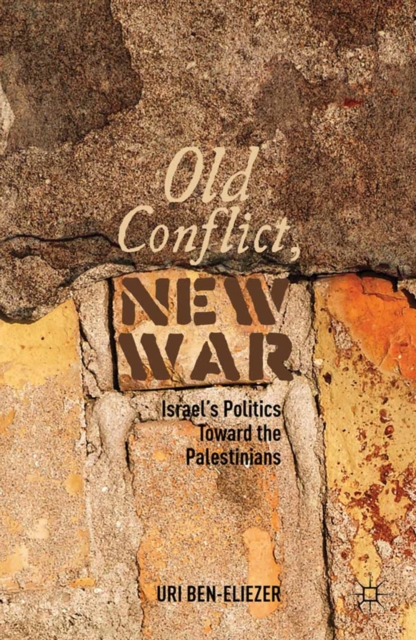
The book provides a comprehensive sociological and cultural explanation of Israel's politics toward the Palestinians, covering the period of the Oslo Accords and the Second Intifada and focusing on the concept of a 'new war' that is an outgrowth of internal relations within Israel itself and the diversionary politics of its leadership.
The contributors attempt to look into how China and Europe differently interpret political concepts such as: sovereignty, soft power, human rights, democracy, stability, strategic partnership, multilateralism/multipolarization, and global governance, to examine what implications of their conceptual gaps may have on China-EU relations.
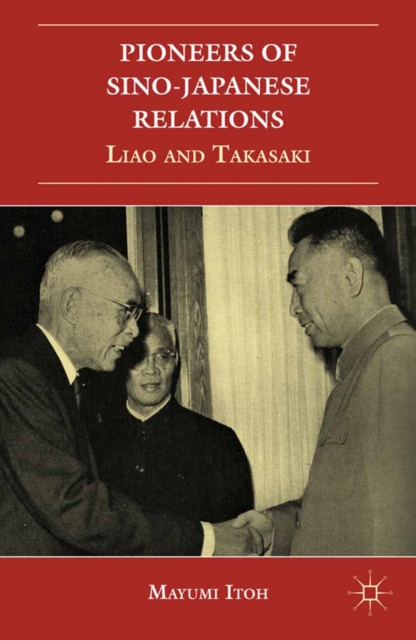
This book examines the careers of Liao Chengzhi and Takasaki Tatsunosuke, who were not only the architects of Sino-Japanese economic relations, but also pioneers of contemporary Sino-Japanese relations.
The book seeks to understand China's evolving political and economic role in Africa and assesses what impacts Chinese aid, trade and investment have on the politics of specific African countries, and the extent to which it excites geopolitical competition.
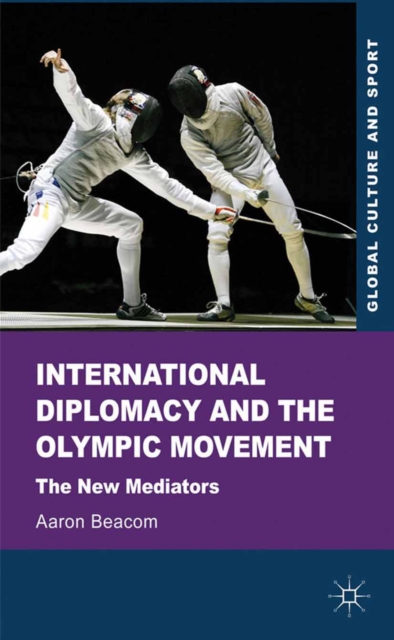
This book explores the relationship between diplomatic discourse and the Olympic Movement, charting its continuity and change from an historical perspective.
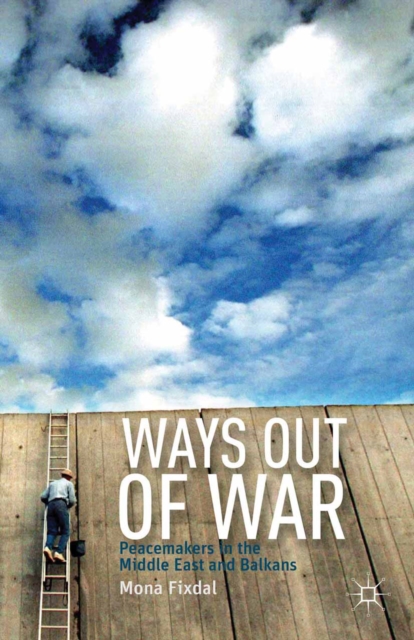
An exploration of the individual work of ten diplomats who were charged with negotiating conclusions to intractable conflicts in the Middle East and Balkans, this book is the first study to combine the outlooks of practitioners and academics on new forms of war, especially asymmetrical warfare between state and non-state actors.
Dispelling the myth of decline, Stuart Brown argues that the US continues to enjoy the economic, political, cultural and military underpinnings befitting a pre-eminent global power.
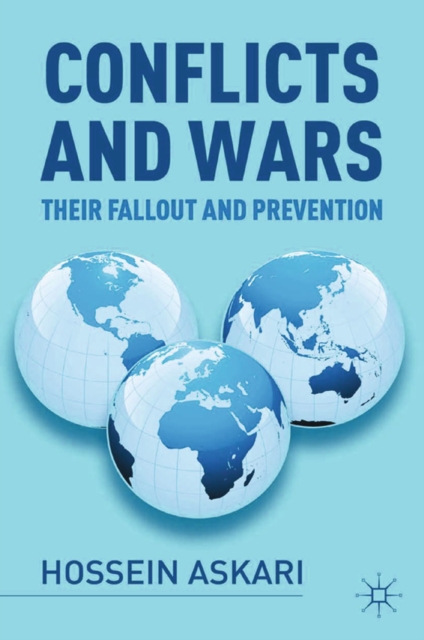
Explaining how the price of aggression is low enough that governments do not avoid conflicts, this book uses examples drawn from recent conflicts in the Persian Gulf to examine many dimensions of costs incurred by warfare and proposes a private sector solution to warfare's low cost.
Offering conclusions for improving intergovernmental relations, determining international economic development strategies, and showing how many subnational governments are involved in world politics, this book examines how US states and governors connect to American foreign relations, tracing activities that began in the 1950s and have expanded with globalization.
Analysing the relationship between EU unity and effectiveness in multilateral negotiations on food standards, climate change and health, this book develops a new model that simplifies earlier work on 'actorness' as well as combining insights from institutionalist, intergovernmentalist and constructivist theories.
Indispensable for students of diplomacy and junior members of diplomatic services, this dictionary not only covers diplomacy's jargon but also includes entries on legal terms, political events, international organizations, e-Diplomacy, and major figures who have occupied the diplomatic scene or have written about it over the last half millennium.
In an age of uncertainties influenced by information technologies and the networking of societies, the maritime domain remains the main global lane of communication, vital for trade and security.
Thalakada argues that the principal purpose of US alliances have shifted since the end of the Cold War from containing communist expansionism (balance of power) to preserving and exercising US power (management of power).
In light of the events of 2011, Real-Time Diplomacy examines how diplomacy has evolved as media have gradually reduced the time available to policy makers.
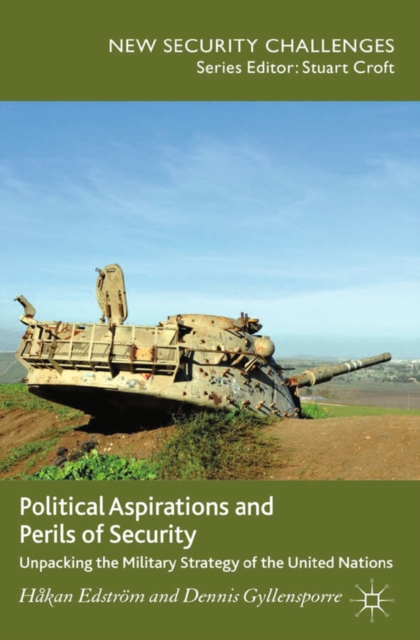
This book comprises of a range of case studies of military strategy, based on UN documents, observing and concluding the effectiveness of each individual case.
This book examines Elizabeth's correspondence with several significant rulers, analyzing how her letters were constructed, drafted and presented, the rhetorical strategies used, and the role these letters played in facilitating diplomatic relations.
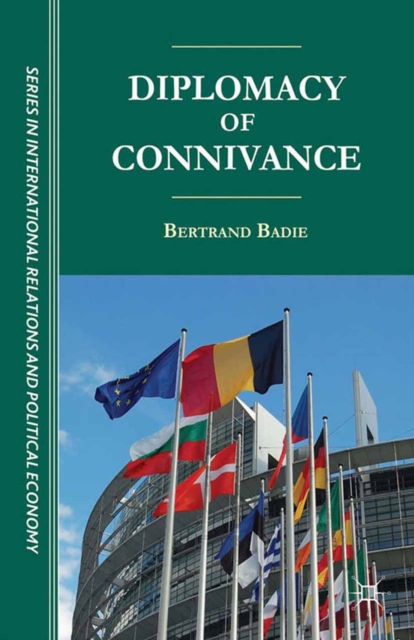
The status quo of the modern world order, a diplomatic entente best characterized as "e;connivance diplomacy,"e; is limited in its performances, defensive of its privileges, midway between competition and cooperation.
The leaders and bureaucrats of China have actively attended, initiated, promoted or made skilful use of regional multilateral political, economic, and security institutions to accelerate regional cooperation and integration with neighboring states, convince Asian states that China's rise will not threaten the regional order and their national interests, and exploit its role and diplomacy in the Asia-Pacific as a launch pad for greater influence in world affairs.
The leaders and bureaucrats of China have actively attended, initiated, promoted or made skilful use of regional multilateral political, economic, and security institutions to accelerate regional cooperation and integration with neighboring states, convince Asian states that China's rise will not threaten the regional order and their national interests, and exploit its role and diplomacy in the Asia-Pacific as a launch pad for greater influence in world affairs.
Despite Beijing's repeated assurance that China's rise will be "e;peaceful"e;, the United States, Japan and the European Union as well as many of China's Asian neighbours feel uneasy about the rise of China.
Despite Beijing's repeated assurance that China's rise will be "e;peaceful"e;, the United States, Japan and the European Union as well as many of China's Asian neighbours feel uneasy about the rise of China.
This book analyses four major long-standing and intractable conflicts in the Asia-Pacific region (the Korean Peninsula; the Taiwan Strait; the South China Sea (Spratly Islands); and India-Pakistan), and aims to identify the mechanisms used to manage these conflicts.
This book analyses four major long-standing and intractable conflicts in the Asia-Pacific region (the Korean Peninsula; the Taiwan Strait; the South China Sea (Spratly Islands); and India-Pakistan), and aims to identify the mechanisms used to manage these conflicts.
This study describes the British government's policy towards China during the first phases of the undeclared Sino-Japanese war, starting in July 1937 when the conflict in North China culminated in all-out hostilities; and ending in September 1939 when the outbreak of the war over Poland forced the British government to turn almost all its attention to Europe.
This study describes the British government's policy towards China during the first phases of the undeclared Sino-Japanese war, starting in July 1937 when the conflict in North China culminated in all-out hostilities; and ending in September 1939 when the outbreak of the war over Poland forced the British government to turn almost all its attention to Europe.
This volume draws together material from The Japan Chronicle, The Japan Gazette and the China Treaty Port foreign papers, all of which are of great historical value.
This volume draws together material from The Japan Chronicle, The Japan Gazette and the China Treaty Port foreign papers, all of which are of great historical value.
Soft power has tended to be overlooked in the field of international relations, often dismissed as lacking relevance or robustness as a theoretical concept.
Soft power has tended to be overlooked in the field of international relations, often dismissed as lacking relevance or robustness as a theoretical concept.