'Crisp, clear and quietly devastating' Guardian'Excellent, authoritative, highly readable' Irish TimesA succinct, expert guide to how we got to BrexitAfter all the debates, manoeuvrings, recriminations and exaltations, Brexit is upon us.
From Nobel Prize-winning economist and best-selling author Joseph Sitglitz, author of Globalization and Its Discontents, this is the essential, must-read guide to the future of Europe.
'It will change the way you remember the 20th century and read the news in the 21st' Steven Pinker'A clarion call to preserve law and order across our planet' Philippe Sands'A fascinating and important book .
The Council of Ministers provides a comprehensive analysis of the Council of Ministers: how it works, its varied activities, functions, and its relationships with the other key EU institutions and the member states.
This book assesses the recent growth and future prospects of private transnational environmental certification and standards regimes, examining in detail to what degree, and under what circumstances, do these transnational regimes truly influence industrial environmental practices in developing countries?
By comparing the role and influence of early Christian missionaries with those of Christian NGOs today, this book critically assesses the idea of a Christian 'civilizing mission' within the context of China.
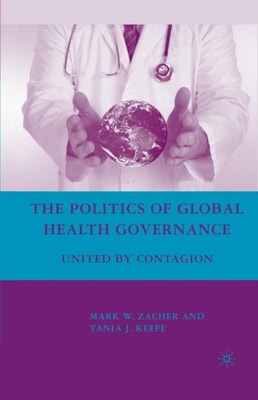
Diseases do not recognize national borders, and as we are gradually learning, failure to govern health effectively at a global level profoundly affects us all.
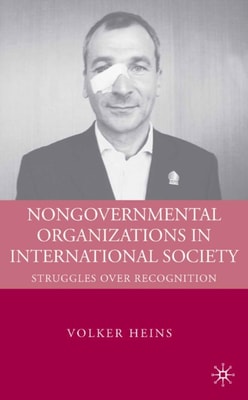
Based on a wealth of original information and research, this book offers both a critical introduction to NGOs and a discussion of recent theoretical approaches which have either dismissed or wildly exaggerated their political significance.
This book describes the WTO from its post-WWII beginnings in the General Agreement on Tariffs and Trade through a series of negotiated enhancements of these agreements.
Informed by critical theory, the essays in this collection examine the complex dynamics of globalization, the challenges that confront democracy, justice and rights under globalization, and new approaches that seek to contest the excesses of globalization and promote the struggle for global justice.
After an exploration of the experience gained by former central and eastern European countries in the General Agreement on Tariffs and Trade, Peter Naray gives an analysis of the Russian economic and social crisis and comes to the conclusion that this crisis is responsible for the delay of Russia's accession to the World Trade Organization (WTO).
Twenty-First Century Populism analyses the phenomenon of sustained populist growth in Western Europe by looking at the conditions facilitating populism in specific national contexts and then examining populist fortunes in those countries.
This volume offers a timely and important study on how norms are transferred from the international into the domestic domain through processes of socialization.
This book examines the economic consequences of immigration and asylum migration, it focuses on the economic consequences of legal and illegal immigration as well as placing the study of immigration in a global context.
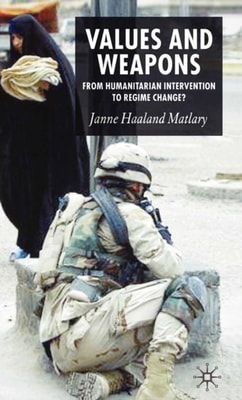
During the 1990s the United Nations was called upon to conduct unprecedented peacekeeping and humanitarian operations in order to bring peace to war-torn states.
Dicklitch challenges the dominant discourse of neo-liberalism which places NGOs and civil society at the forefront of democratization and development in Africa.
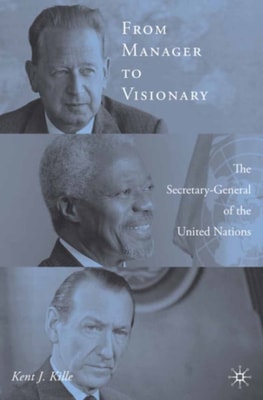
An in-depth examination of the evolving peace and security activities of the United Nations Secretary-General in the context of developments in international politics.
This is the first book to examine in-depth the EU's relationship with the UN and to analyze critically the EU's contribution to 'effective multilateralism'.
EU-US Relations offers answers to the major questions of the future of transatlantic relations and includes almost 30 contributions from prominent worldwide scholars that assess the state of EU-US relations after the war in Iraq.
This work traces the attempts by the United Nations to bring about the reunification of Cyprus prior to the island's accession to the European Union on 1 May 2004.
Casualties of the New World Order contends that the high rate of failure among post-Cold War UN missions are attributable to common weaknesses which are vulnerable to civil war dynamics.
In contrast to the Cold War era the new European order is characterised by uncertainty, fluidity and new security challenges including separatism, ethnic conflict and intra-state conflict.
This is the personal story of Dame Margaret Anstee's experiences as Special Representative of the Secretary-General of the UN for Angola and Head of the UN peacekeeping mission there from February 1992 to June 1993.
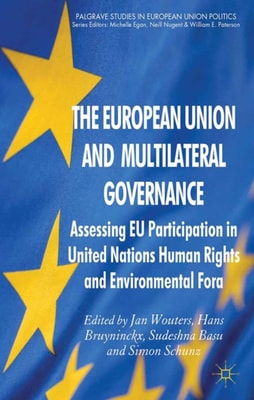
An interdisciplinary approach to the study of the EU in UN human rights and environmental governance which addresses the legal and political science dimensions.