This book examines the role of faith-based organizations in managing international aid, providing services, defending human rights and protecting democracy.
Given the weaknesses of mainstream democratisation since the 1980s, the authors present a cutting edge examination of dynamics of political change in the direction of more substantive democracy.
The term 'structural adjustment' has been associated with rioting as angry and hungry masses protest food price increases due to subsidy cuts or due to other structural adjustment conditions prescribed by the IMF and the World Bank.
Activists and academics look back over ten years of 'politics from below', and ask whether it is merely the critical gaze upon the concept that has changed - or whether there is something genuinely new about the way in which civil society is now operating.
International institutions (United Nations, World Bank) and multinational companies have voiced concern over the adverse impact of resource extraction activities on the livelihood of indigenous communities.
This book outlines the content of the main treaties that form the 'constitutional' basis of the European Union and analyses changes in these over time.
Combining studies of demography, climate change, technology and innovation, political development, new actors in international development, and global governance frameworks, this book highlights the major underlying determinants of change in the African context and key uncertainties about the continent's future development prospects.
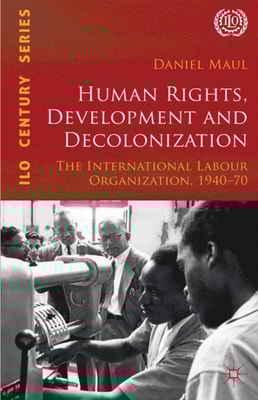
An innovative diplomatic and intellectual history of decolonization, post-colonial nation building and international human rights and development discourses, this study of the role of the ILO during 1940-70 opens up new perspectives on the significance of international organisations as actors in the history of the 20th century.
This pioneering volume invites scholars from different social science disciplines to contribute their competing perspectives to a far-ranging albeit understudied dimension of globalization.
In the context of the financial and economic crisis, corporate governance and regulatory supervision failures, Laura Horn investigates one of the defining questions in social power relations in contemporary capitalism: who controls the modern corporation, and why.
Drawing on the fields of political economy and historical sociology, Jones dispels the overwhelming consensus among scholars that members of the Association of Southeast Asian Nations (ASEAN) never interfere in the internal affairs of other states, and pioneers a new approach to the understanding of regional politics in Southeast Asia.
With inevitable major economic and political transformations ahead, NGOs need to acknowledge and manage their policy dilemmas so that they can anticipate the many inevitable problems that consistently arise in attempting to avoid the return of war by building peace over the medium to long-term
In order to help the understanding of international campaigning activities of Non-Governmental Organisations, Tepe analyses the domestic politics of the International Campaign to Ban Landmines and provides a theoretical framework through which to access these.
Corporations in conflict zones and their provision of security are particularly relevant for understanding whether private actors are increasingly sources of governance contributions that regulate public goods.
This book examines the role of everyday action in accepting, resisting and reshaping interventions, and the unique forms of peace that emerge from the interactions between local and international actors.
The authors explore the complex dynamics of mining and Corporate Social Responsibility (CSR) in Latin America, including a reflection on the African continent, presenting arguments and case studies based on new research on a set of urgent and emerging questions surrounding mining, development and sustainability.
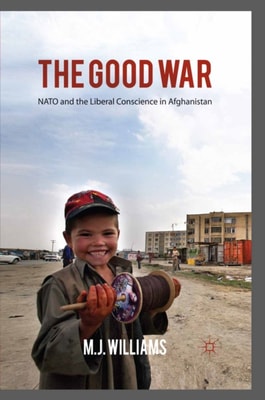
The Good War tackles the issue of NATO in Afghanistan, exploring NATO's evolution in the 1990s and blending NATO's transformation from a reactive defense organization into a pro-active risk manager with the ethic of liberalism.
As the international community struggles with major issues such as deforestation, it is increasingly turning to sustainable development and market-based mechanisms to tackle environmental problems.
Simon Reich presents an interpretation of the relationship between material (hard) and social (soft) power, with implications for the alternative ways these link and the impact of these linkages on the future of American policy.
This study explores three generations of approaches to ending conflict and examines how, in the context of the failings of the Westphalian international system, their peacekeeping, mediation and negotiation, conflict resolution and peacebuilding approaches as well as UN peace operations, and asks via an empirical and theoretical analysis, what role such approaches have played and are playing in replicating an international system prone to intractable forms of conflict.
As one of the most pioneering development economists, Hans Singer has stimulated many of the ideas that have engaged the attention of the world community for several decades.
This new edition of the established reference work provides, in the form of a dictionary, a comprehensive and balanced guide to intergovernmental institutions serving political, military, economic, social and cultural purposes.