This book comes at a crucial time as the USA and countries around the world wrestle with an ongoing period of democratic backsliding that shows little sign of abating.
First published in 1987 and this edition in 1990, Israel, Palestinians and the Intifada is a comprehensive book covering the dynamics of interaction between Israeli policies and Palestinian responses.
Methoden an Staatsgrenzen, die die Einreise von Migranten verhindern sollen, können von Pushbacks auf Hoher See, gewaltsamen Zurückweisungen an Landesgrenzen bis hin zu kompletten Grenzschließungen reichen.
Human Rights, Impunity and Anti-Press Violence is a qualitative, comparative and interdisciplinary exploration of journalists' responses to impunity for anti-press violence in two Latin American partial democracies, Mexico and Honduras.
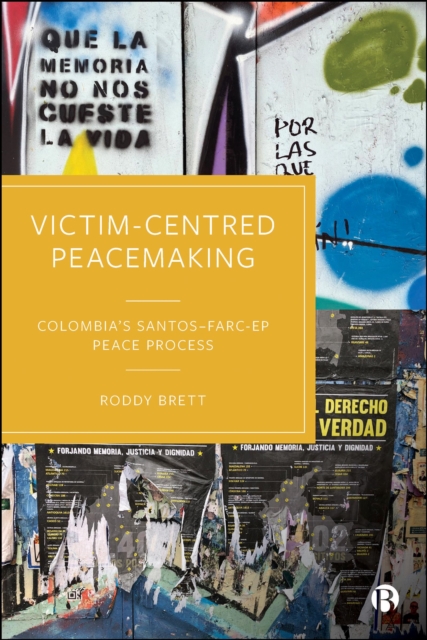
Based on unique empirical research into Colombia's Santos-FARC-EP peace process (2012-2016), this book interrogates how, if at all, survivors and victims may assert agency and contribute to formal peacemaking and transitional justice initiatives.
The Decline of Neutrality (1971) examines the impartial, disinterested neutrality as it was codified in the Hague Convention in 1907 and the changes the concept underwent from the beginning of World War I in 1914 up to Pearl Habor, December 1941.
This comprehensive volume examines developments in diplomatic technique and changes in the diplomatic and political structures which shape, and are shaped, by international relations and the international order.
When this book was originally published in 1974 it was the most comprehensive account yet published of British foreign policy from the end of World War II until the entry of Britian into the European Economic Community in 1973.
An electrifying re-examination of one of the twentieth century's greatest unsung power players, from the bestselling author of A WOMAN OF NO IMPORTANCE'Supremely enjoyable .
This volume explores the determinants of state power, the strategic options of rising powers, the drivers of conflict in dynamic international systems, and American grand strategy past and present to achieve a more comprehensive understanding of the current era of great power competition.
India Korea Connections in the Indo Pacific presents multidimensional aspects of the Special Strategic Relationship between the Republic of Korea (ROK) and India, ranging from security, diplomacy, trade and FDI, and people to people exchanges.
India Korea Connections in the Indo Pacific presents multidimensional aspects of the Special Strategic Relationship between the Republic of Korea (ROK) and India, ranging from security, diplomacy, trade and FDI, and people to people exchanges.
A rich and enlightening study of Chinese international relations, this book examines Chinese world ordering before the West as both intellectual history and institutional practices in deep world history.
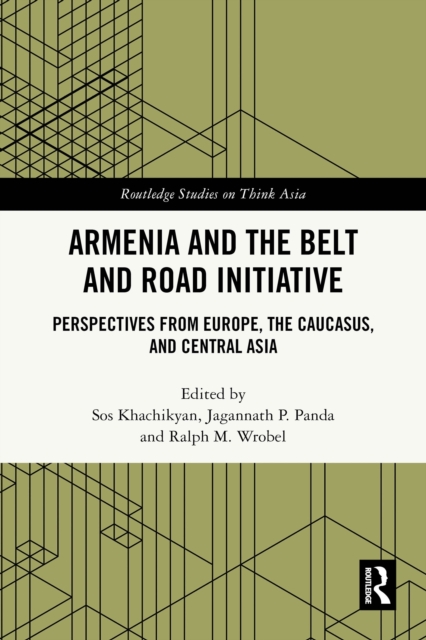
This book analyses the opportunities enabled for Armenia by China's Belt and Road Initiative (BRI) in the framework of economic cooperation, policy diversification, social inclusion and regional cohesion.
This updated and revised second edition of the Routledge Handbook of Peacebuilding contains cutting-edge analyses of contemporary attempts to reach and sustain peace.
This book adopts a sociolegal and interdisciplinary approach to examine how the Responsibility to Protect (R2P) has been understood within the Association of Southeast Asian Nations (ASEAN).
Originally published in 1929, profound changes, political, social, economic and intellectual, had taken place during the previous fifty years in the environment of civilized man, and it was still doubtful whether or not he would succeed in understanding them and adapting himself to meet them.
In his investigation of the nature of madness and civilization, the French social theorist Michel Foucault expressed the difficulty most scholars have in addressing episodes of confusion that lead a society into acts of self-destruction and chaos.
In his investigation of the nature of madness and civilization, the French social theorist Michel Foucault expressed the difficulty most scholars have in addressing episodes of confusion that lead a society into acts of self-destruction and chaos.
We have entered a recent zeitgeist, the era of the "e;new space age"e;, driven by billionaires, technological advancements, and a few dominating state powers.
We have entered a recent zeitgeist, the era of the "e;new space age"e;, driven by billionaires, technological advancements, and a few dominating state powers.
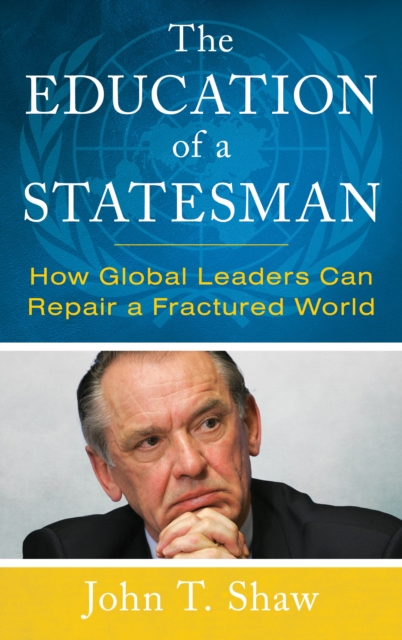
This is a dangerous time-the international system is teetering, jolted by a raging pandemic, climate change, income inequality, cyber threats, terrorism, authoritarian regimes, nationalist demagogues, and frightened and impatient publics.