This book makes a new and original contribution to the old debate about differences between socio-economic and civil and political rights, which has engaged human rights discourse over several decades.
En un tranquilo día soleado, un incidente inesperado sacude el aeropuerto internacional de Ezeiza, desencadenando una serie de eventos que revelan un oscuro complot que se extiende desde las más altas esferas del gobierno hasta los confines de Medio Oriente.
Jean-Jacques Rousseau's international thought anticipates many of the political dynamics that have arisen through globalization and great power competition.
Originally published in 1925, written by someone who was associated with the work of the League of Nations from the beginning, this concise book is a clear and short account of the structure, function and tasks of the League of Nations at the start of the Twentieth Century.
This project seeks to demonstrate how multiple sites of discursive production (political elite, media, and popular culture) interact to construct truths about a conflict that condition political possibility.
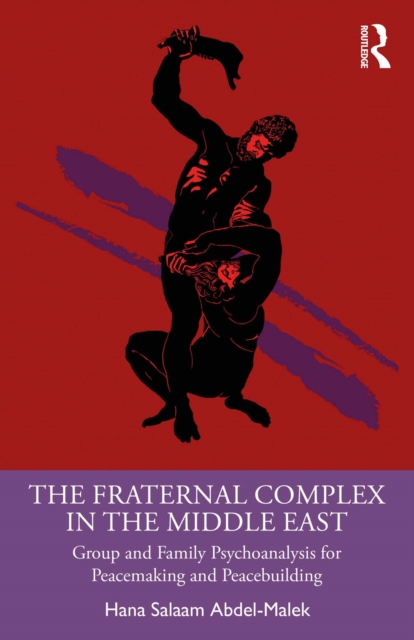
The Fraternal Complex in the Middle East extends group and family psychoanalytic concepts to formulate hypotheses on the psychic functioning of nation-states as very large families.
Owing to its geo-strategic location and mineral wealth, Afghanistan has acquired significance in the inter-state politics of Asia as well as world politics during the past decades.
This book examines the contributions made by the governments, organisations and African people 'on the ground' throughout the continent towards the realisation of the South African dream in 1994.
This book addresses water privatization from a historical-sociological perspective and argues against the unrelenting imposition of neoprivatist water politics worldwide.
This book addresses water privatization from a historical-sociological perspective and argues against the unrelenting imposition of neoprivatist water politics worldwide.
This book explores how information and communications technologies are adapted, governed, and reinterpreted in areas where the state has limited reach.
Trinidad and Chua provide invaluable insights on various dimensions and directions of 21st-century Philippines-Japan relations from Filipino and Japanese scholars.
Qin explores the ten-year development of relations between China and Central and Eastern Europe through the China-CEEC (China-Central and Eastern European Countries) cooperation (16/17+1), which began as a platform for annual high-level meetings between leaders of China and Central and Eastern Europe (CEE) countries, and to stimulate new dynamism and gain recognition through effective shared practice.
First published in 1967, International Nationalism discusses the Southern Rhodesian Nationalist Movement and explores how nationalists tried to combine internal with international pressure for self-government.
Originally published in 1983 and here reissuing the second edition of 1993, An Introduction to South Asia presents the geographical and historical background to the diversities of the region.
As one of the most enduring and bitter struggles we have seen in over 100 years, the Israeli-Palestinian conflict is a powder keg, always on the verge of exploding and drawing in the wider region, the international community at large, and, in particular, the U.
After the withdrawal of the Allied Occupation forces, many Japanese political leaders sought for their country a larger and more independent role in world affairs.