Understanding Collective Political Violence offers a unique view on contemporary processes of violent political mobilization across continents: Africa, Latin America, South East Asia and the Middle East.
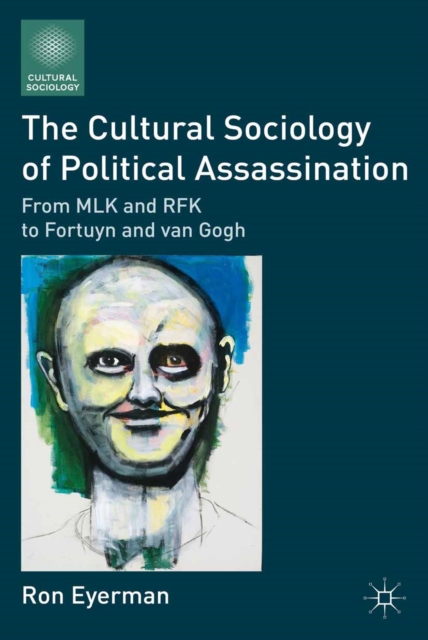
Developing the theory of cultural trauma in regard to the shattering potential effects of political assassinations, Eyerman examines political and social life in three different national contexts: Martin Luther King, Bobby Kennedy, and Harvey Milk in the U.
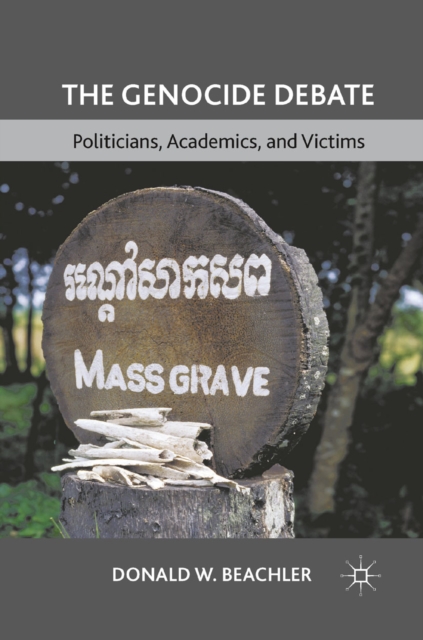
Neither a case study of a particular genocide nor a work of comparative genocide, this book explores the political constraints and imperatives that motivate debates about genocide in the academic world and, to a lesser extent, in the political arena.
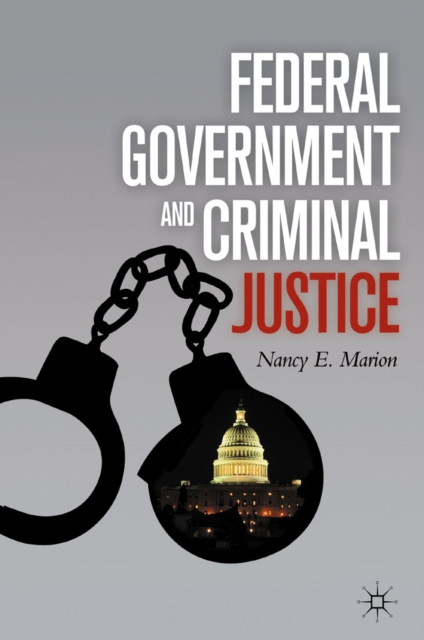
Providing a description of the responses taken by the federal government to issues revolving around criminal justice, each chapter focuses on a different problem and shows what different presidents have said, what policies were proposed and/or passed by Congress, and any cases heard by the Supreme Court on the issue.
Assembling a high profile group of scholars and practitioners, this book investigates the interplay of forecasting; warnings about, and responses to, known and unknown transnational risks.
Baker provides a unique insider perspective on factors affecting British Muslim converts and their susceptibility to violent radicalisation, including firsthand accounts of convicted terrorists Richard Reid (the 'Shoe Bomber'), Zacarius Moussaoui (the 20th 9/11 bomber), and Abdullah el-Faisal who is alleged to have been a radicalising influence.
The study analyses Soviet policy towards Nicaragua during the rule of the Sandinista National Liberation Front (FSLN) and towards the guerrillas fighting for political and social change in El Salvador and Guatemala.
In a new book about Northern Ireland historian Peter Rose argues that if Harold Wilson's government in the late sixties had pursued a different policy the province might have been spared The Troubles.
This volume investigates the role of the transnational terrorist and criminal organizations in the peace-building processes, with a particular focus on the Western Balkan region.
This book introduces a constructivist approach to the study of terrorism and shows how language in the media affects our perceptions of 'terrorists' and how particular constructions of 'terrorist' automatically make certain counter-terrorism policies possible, logical and seemingly appropriate.
This book focuses on insurgent stateless warfare in its guerrilla and terrorist modes and in its nationalist, maoist and postmaoist phases of modernization.
Using a transnational approach, this volume surveys the origins of Irish terrorism and its impact on the Anglo-Saxon community during an era of intense imperialism.
Carl Schmitt's friend/enemy principle is exposed to in-depth philosophical analysis and historical examination with the aim of showing that the political follows hostility, violence and terror as form follows matter.
The first comprehensive discussion of all the main philosophical issues raised by terrorism against the background of its past and recent developments.
This volume includes contributions of scholars from various fields - the social sciences, journalism, the humanities and the arts - whose work offers insightful and innovative ways to understand the devastating and unprecedented forms of violence currently experienced in Latin America.
Feste develops a framework of terrorism termination dynamics constructed from empirical cases and applies it to the current al Qaeda problem to offer a new method for tracking development of terrorist episodes with implications for U.
Through various lenses and theoretical approaches, this book explores the contested experiences, meanings, realms, goals, and challenges associated with the construction, preservation, and transmission of the memories of state repression in Argentina, Chile, and Uruguay.
A primer to terrorist financing and resourcing, this book examines what terrorist organizations must acquire in order to survive and operate, and describes the various means used to meet these needs.
In contrast to a globalizing approach to 'transnational organized crime,' this edited volume studies socio-historical environments in which mafia-esque violence has found a fertile ground for growth and development within the political arena.
While, not discounting the potency of the radical Islamic religious discourse in fuelling the contemporary wave of terrorism, this book makes an attempt to explain terrorism in China as an ethno-nationalist conflict rooted in issues involving minority identity.
This study expounds upon the composition, dynamics, and consequences of the post-9/11 global security context by positing the following overarching research question: how has the event of 9/11 further enabled the US to legitimately articulate, disseminate, and implement an absolutist security agenda (ASA) on the world stage?
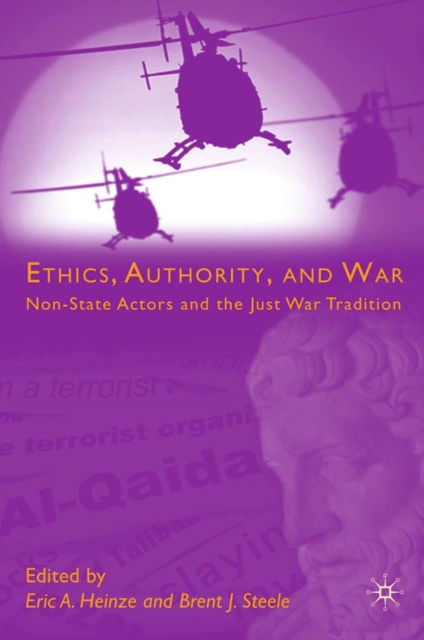
In original essays written by both senior scholars as well as rising younger scholars in the field of international ethics, this volume addresses the ethics of war in an era when non-state actors are playing an increasingly prominent role in armed conflict.
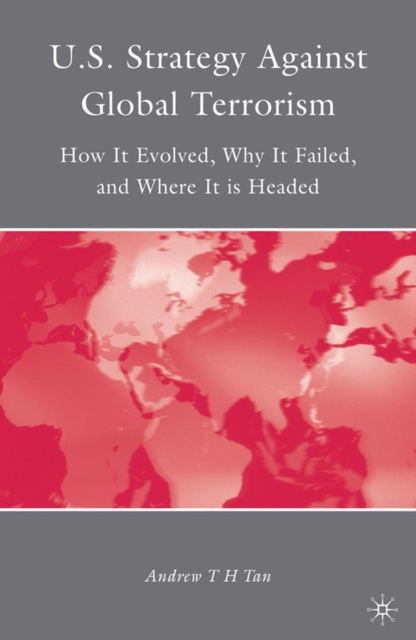
This book examines the various strategies, including Global Counterinsurgency (GCOIN), which have been put forward as alternatives to the Global War On Terror (GWOT), concluding that while a consensus can be found on the key elements of a grand strategy, based on failures in the GWOT, it is far from clear if any GCOIN strategy could work.
This book examines the influence of terrorist threat in the recent elections in the US, Great Britain, and Russia to analyze the influence of post-9/11 fears on voting behaviour in comparative perspective.
This volume is a timely contribution to the current debates and potential efforts to study and counter the phenomena of extreme right violence in a period when the rise of right-wing extremism is being witnessed across the globe.