Karrin Hanshew examines West German responses to 1970s terrorism to explain why the experience had lasting significance for German politics and society.
Karrin Hanshew examines West German responses to 1970s terrorism to explain why the experience had lasting significance for German politics and society.
Investigates the origins of fundamentalism, outlining its characteristics and history, considering examples from Christianity, Islam, Buddhism and Hinduism.
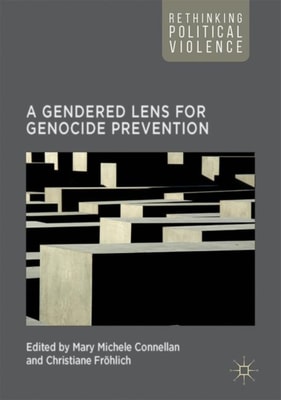
This edited collection develops a gendered lens for genocide prevention by uncovering socially constructed gender roles which are crucial for the onset, form and prevention of genocide and mass atrocities.
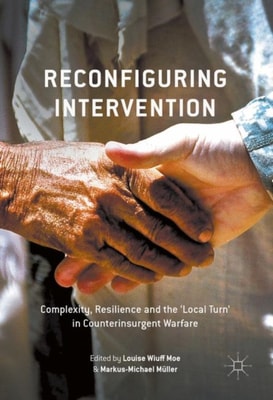
This edited volume critically assesses emerging trends in contemporary warfare and international interventionism as exemplified by the 'local turn' in counterinsurgent warfare.
By examining Libya's security architecture before and after the North Atlantic Treaty Organization (NATO) intervention in 2011, this book aims to answer three questions.
This highly original book suggests that the practices of Taliban and the American far right, two very significant and poorly understood groups, share common features.
This book investigates the ways in which the particular nature and character of the state can impact upon the effectiveness of counter-terrorism efforts, and on the trajectory of violent conflicts.
This book assesses President Barack Obama's counterterrorism policy as it evolved throughout his presidency, from the expanded use of drones to the controversial decisions regarding the Syrian conflict.
The Palgrave Handbook of Global Counterterrorism Policy examines a comprehensive range of counterterrorism policies, strategies, and practices across dozens of states and actors around the world.
Since 1989, when the movement for Kashmiri independence took the form of an armed insurgency, it has been one of the most highly militarized regions in the world.
This study examines the US fiction and related films which makes a series of interventions in the cultural debate over the threat of nuclear terrorism.
Although many scholars and practitioners recognize that development and conflict are intertwined, there is much less understanding of the mechanisms behind these linkages.
While the Arab people took center stage in the Arab Spring protests, academic studies have focused more on structural factors to understand the limitations of these popular uprisings.