Since the early weeks of the so-called Arab Spring, high hopes for democratic, social, and political change in the Middle East have been met with varying degrees of frustration.
Japan was shaken by the 'double disaster' of earthquake and sarin gas attack in 1995, and in 2011 it was hit once again by the 'triple disaster' of earthquake, tsunami, and nuclear meltdown.
The 'Cominternians' who staffed the Communist International in Moscow from its establishment in 1919 to its dissolution in 1943 led transnational lives and formed a cosmopolitan but closed and privileged world.
Drawing on lessons from civil society in Northern Ireland, Beyond Social Capital examines the limitations of social capital theory in deeply divided societies.
This book analyzes the effects of economic, social, and political disruptions that have come with integration into the global economy for countries in five different regions and the developing world as a whole.
During the revolution in Iran, a small, fanatical group called the Forqan used targeted assassinations of religious leaders to fight the Ayatollah Khomeini's plan to establish a theocratic Islamic state.
Drawing on unique first-hand data from Russia's North Caucasus, this study is the first of its kind to detail the causes and contexts of individual disengagement of various types of militants: avengers, nationalists, and jihadists.
This book explores the success and failures of the Prevent strategy, which was developed by the UK Government to help stop people becoming terrorists or supporting terrorism.
This work examines violence in the age of the terror wars with an eye toward the technologies of governance that create, facilitate, and circulate that violence.
This book provides the first overarching, empirically grounded, critical analysis of child trafficking as an idea, ordering principle, and artefact of politics.
While the deterrence of cyber attacks is one of the most important issues facing the United States and other nations, the application of deterrence theory to the cyber realm is problematic.
Offering an introduction to clanism and tribalism in the Gulf of Aden area, Dr Lewis uses these concepts to analyse security in Yemen, Somalia, Somaliland and the broader region.
Building upon Mitchell's earlier work, The Structure of International Conflict, this volume surveys the field of conflict analysis and resolution in the twenty-first century, exploring the methods which people have sought to mitigate destructive processes including the creative and innovative new ways of resolving insoluble disputes.
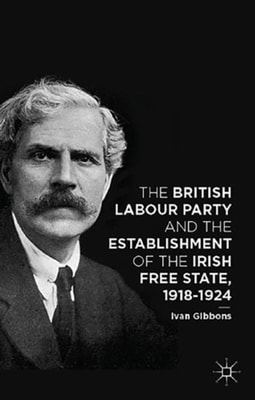
This book examines the rapidly evolving relationship between the British Labour Party and the emerging Irish nationalist forces, from which was formed the first government of the Irish Free State as both metamorphosed from opposition towards becoming the governments of their respective states.
In the aftermath of the Edward Snowden leaks, the Obama administration has been hard pressed to yield to greater transparency and openness to constructive change.
This book rigorously documents and explains the genocide perpetrated by the Guatemalan state against indigenous Maya populations within the context of its counterinsurgency campaign against leftist guerrillas between 1981 and 1983.
While the 2011 Egyptian revolution has already become the subject of much debate, the roots of the socio-economic context which made the revolution possible have seldom been explored.
This unique, historical study explores how states have articulated statements about terrorism since the 1930s and what effect these discourses have had on global politics.
Mega Cause I was one of the largest in a recent surge of trials in Argentina for human rights violations committed during the dictatorship of 1976-1983.
This innovative new book aims to put society's fight against terrorism into a comprehensive crime prevention perspective with a clear, understandable theoretical foundation, developing a general model for the prevention of crime which is, in this book, applied to terrorism.
Niranjan Ramakrishnan examines the surprising extent to which Gandhi's writings still provide insight into current global tensions and the assumptions that drive them.
As democracy encounters difficulties, many citizens are turning to the domain of alternative politics and, in so doing, making considerable use of the new communication technologies.
Now in paperback for the first time, Social Movements and their Technologies explores the interplay between social movements and their 'liberated technologies'.
This book explores Israeli Religious Zionism and US Christian Zionism by focusing on the Messianic and Millenarian drives at the basis of their political mobilization towards a 'Jewish colonization' of the occupied territories.
The IRA's ability to exploit the border between Northern Ireland and the Republic of Ireland was central to the organisation's capacity to wage its 'Long War' over a quarter of a century.