This book analyzes the evolution of the Hojjatiyeh movement in Iran, a semi-clandestine movement which emerged in the 1950s as an anti-Baha'i movement, went underground in the 1960s, and re-emerged openly after Iran's 1979 revolution with its members coming to occupy some of the highest echelon posts in Iranian politics
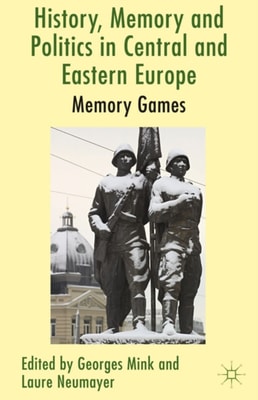
Fourteen specialists of Central and Eastern European politics explore memory policies and politics by examining how and why contested memories are constantly reactivated in the former Soviet bloc.
The favelas (slums) of Rio de Janeiro provide an ideal case study since they are renowned for high levels of police and gang violence resulting in high death rates among young black men, causing both outrage and fear.
Calhoun examines the centuries-old paradigm of just war theory to determine whether modern 'just war' rationalizations constitute sound justifications or pro-military propaganda.
Disasters are part of the modern condition, a source of physical anxiety and existential angst, and they are increasing in frequency, cost and severity.
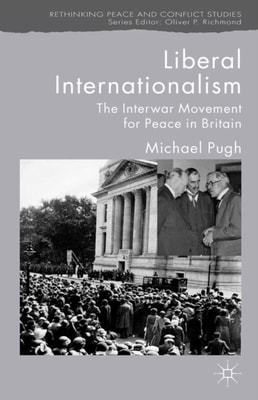
The book investigates the role of popular liberal internationalism as a social movement in Britain using Gramscian and Foucauldian ideas of civil society.
We cannot truly understand - let alone counter - terrorism in the 21st century unless we also understand the processes of communication that underpin it.
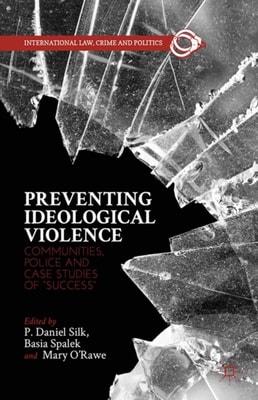
This book presents the voices of police and community members who have been involved in engagement and partnership projects designed for countering violent extremism.
This volume moves beyond Cold War deterrence theory to show the many ways in which deterrence is applicable to contemporary security: in space, in cyberspace, and against non-state actors.
In this concise introduction to the complexities of contemporary western intelligence and its dynamics during an era of globalization, Adam Svendsen discusses intelligence cooperation in the early 21st century, with a sharp focus on counter-terrorism and WMD counter-proliferation during the 'War on Terror.
This interdisciplinary study explores the interaction between memory and transitional justice in post-dictatorship Argentina and Uruguay and develops a theoretical framework for bringing these two fields of study together through the concept of critical junctures.
Dabashi's newest book is a meditation on suicidal violence in the immediate context of its most recent political surge and a critical examination of the radical transformation of the human body, supported by close readings of cinematic and artistic evidence.
While secondary texts on Paul Virilio typically see no way out of the tempo- and techno-dystopia he articulates, Occupy Time engages the events of Occupy Wall Street to fix attention on what such readings circumvent: Virilio's elusive theory of resistance.
This book carefully develops the perspective of nonprofit organizations as social capital assets and agents of public policy within a principal-agent framework.
This book argues that it is witnesses who are the targets of terrorism and that the question of whose witnessing counts, and which stories are the most legitimate, is of vital importance for understanding the meanings and consequences of contemporary terrorism.
As part of its general rethinking of America's global strategy, the Bush Administration initiated a re-examination of America's nuclear doctrine that has generated considerable controversy with its focus on maintaining a reliance on nuclear weapons and potentially increasing willingness to use them.
The contributors explores the intellectual, cultural, and political logics of the US-led war on terror and its consequences on lived lives in a range of contexts.
The book provides a comprehensive sociological and cultural explanation of Israel's politics toward the Palestinians, covering the period of the Oslo Accords and the Second Intifada and focusing on the concept of a 'new war' that is an outgrowth of internal relations within Israel itself and the diversionary politics of its leadership.
Explaining how the price of aggression is low enough that governments do not avoid conflicts, this book uses examples drawn from recent conflicts in the Persian Gulf to examine many dimensions of costs incurred by warfare and proposes a private sector solution to warfare's low cost.
Presenting the reader with provocative articles that critically examine the morality of the war on terrorism as it has evolved over the past eight years, this book consists of articles that effectively address specific aspects of the war on terrorism that are missing or underrepresented in ethical discourse since 9/11
Mirbagheri traces the revival of Islamic/ist movements, and embarks on a theoretical study of some of the fundamental concepts in Islam and International Relations such as the self, Jihad, peace and universalism.
From the terrorist attacks of September 11, 2001 in New York to the Madrid and London bombings of 2004 and 2005, the presence of Muslim communities in the West has generated security issues and major political concern.
From the terrorist attacks of September 11, 2001 in New York to the Madrid and London bombings of 2004 and 2005, the presence of Muslim communities in the West has generated security issues and major political concern.
This book investigates terrorism and anti-terrorism as related and interacting phenomena, undertaking a simultaneous reading of terrorist and statist ideologists in order to reconstruct the 'deadly dialogue' between them.
This book investigates terrorism and anti-terrorism as related and interacting phenomena, undertaking a simultaneous reading of terrorist and statist ideologists in order to reconstruct the 'deadly dialogue' between them.
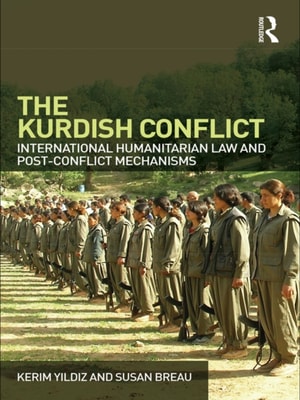
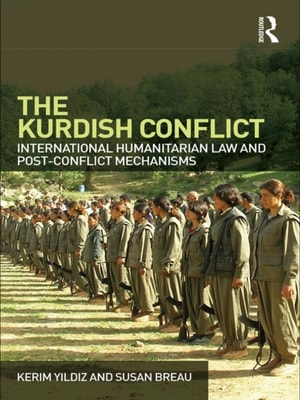
This book is highly topical considering the recent resurgence of violence by the PKK, the incursions into Northern Iraq by the Turkish army and security forces and Turkey's EU accession negotiations.
This book is highly topical considering the recent resurgence of violence by the PKK, the incursions into Northern Iraq by the Turkish army and security forces and Turkey's EU accession negotiations.
This book examines the doctrine of giving no concessions to terrorists, and uses empirical research to establish whether there is any link between negotiating with such groups and the spread of violence.
This book examines the doctrine of giving no concessions to terrorists, and uses empirical research to establish whether there is any link between negotiating with such groups and the spread of violence.