This study explores the intersection of politics, religious thought, and religious culture in pre-revolutionary England, using hitherto unknown or overlooked manuscripts and printed material to reconstruct and contextualize a forgotten but highly significant antinomian religious subculture that evolved at the margins of the early seventeenth-century puritan community.
The 2016 presidential election campaign and its aftermath have underscored worrisome trends in the present state of our democracy: the extreme polarization of the electorate, the dismissal of people with opposing views, and the widespread acceptance and circulation of one-sided and factually erroneous information.
Many argue that "e;civic duty"e; explains why Americans engage in politics, but what does civic duty mean, and does it mean the same thing across communities?
In the years since the end of apartheid, South Africans have enjoyed a progressive constitution, considerable access to social services for the poor and sick, and a booming economy that has made their nation into one of the wealthiest on the continent.
Delineating an approach to activism at the intersection of queer rights, immigration rights, and social justice, Queer Migration Politics examines a series of "e;coalitional moments"e; in which contemporary activists discover and respond to the predominant rhetoric, imagery, and ideologies that signal a sense of national identity.
A chapter-by-chapter explanation of the Book of Exodus, revealing its wisdom about nation building and people formation"e;Kass draws from Exodus' record of the founding of Judaism timely even urgent universal lessons about twenty-first-century preconditions for human flourishing in any community.
One of the great liberal politicians of the twentieth century, rediscovered in an important, definitive biographyHubert Humphrey (1911'Ai1978) was one of the great liberal leaders of postwar American politics, yet because he never made it to the Oval Office he has been largely overlooked by biographers.
The term "e;community organizer"e; was deployed repeatedly against Barack Obama during the 2008 presidential campaign as a way to paint him as an inexperienced politician unfit for the presidency.
This collection of fifteen insightful essays examines the complexity and diversity of Quaker antislavery attitudes across three centuries, from 1658 to 1890.
A thought-provoking reflection on why secular national liberation movements are so often challenged by militant religious revivals Many of the successful campaigns for national liberation in the years following World War II were initially based on democratic and secular ideals.
In this eagerly awaited book, political theorist Michael Walzer reports his findings after decades of reading and thinking about the politics of the Hebrew Bible.
In Memory Eternal, Sergei Kan combines anthropology and history, anecdote and theory to portray the encounter between the Tlingit Indians and the Russian Orthodox Church in Alaska in the late 1700s and to analyze the indigenous Orthodoxy that developed over the next 200 years.
From one of the leading historians of Christianity comes this sweeping reassessment of religious freedom, from the church fathers to John Locke“Robert Louis Wilken’s new masterpiece.
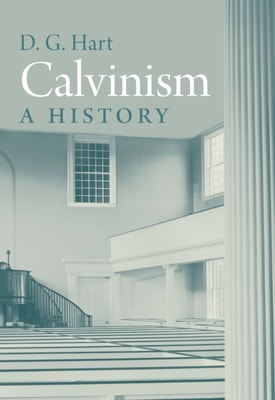
The first single-volume history of Reformed Protestantism from its sixteenth-century origins to the present This briskly told history of Reformed Protestantism takes these churches through their entire 500-year history—from sixteenth-century Zurich and Geneva to modern locations as far flung as Seoul and São Paulo.
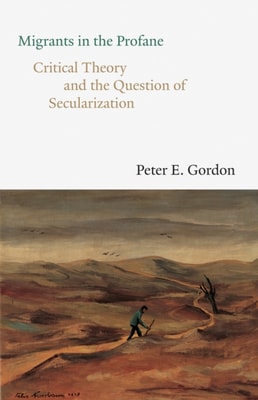
A beautifully written exploration of religion's role in a secular, modern politics, by an accomplished scholar of critical theoryMigrants in the Profane takes its title from an intriguing remark by Theodor W.
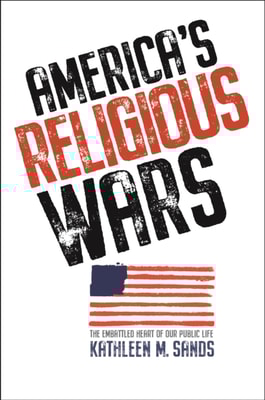
How American conflicts about religion have always symbolized our foundational political values When Americans fight about “religion,” we are also fighting about our conflicting identities, interests, and commitments.
“[Tufekci’s] personal experience in the squares and streets, melded with her scholarly insights on technology and communication platforms, makes [this] such an unusual and illuminating work.
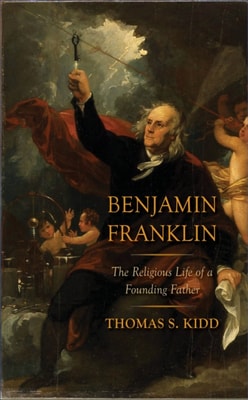
A major new biography, illuminating the great mystery of Benjamin Franklin’s faith Renowned as a printer, scientist, and diplomat, Benjamin Franklin also published more works on religious topics than any other eighteenth-century American layperson.
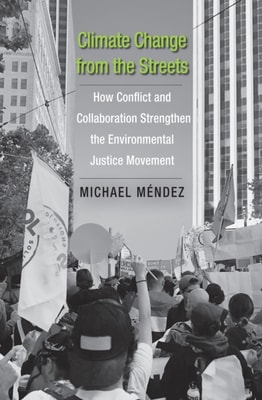
An urgent and timely story of the contentious politics of incorporating environmental justice into global climate change policy Although the science of climate change is clear, policy decisions about how to respond to its effects remain contentious.
A compelling argument that the Internet of things threatens human rights and security The Internet has leapt from human-facing display screens into the material objects all around us.
The life of John Davenport, who co-founded the colony of New Haven, has long been overshadowed by his reputation as the most draconian of all Puritan leaders in New England—a reputation he earned due to his opposition to many of the changes that were transforming New England in the post-Restoration era.
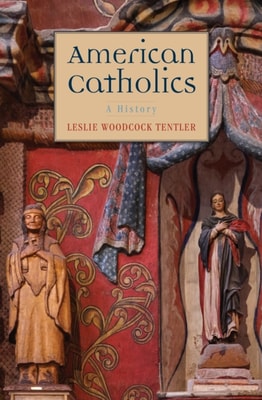
A sweeping history of American Catholicism from the arrival of the first Spanish missionaries to the presentThis comprehensive survey of Catholic history in what became the United States spans nearly five hundred years, from the arrival of the first Spanish missionaries to the present.
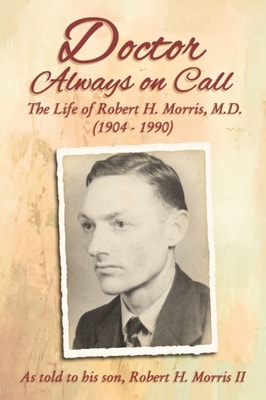
Robert Morris II recorded eight hours of interviews with his father, Robert Morris, MD (1904-1990), from which he drafted an autobiography and presented it to his dad on his 85th birthday.
An expansive and ambitious intellectual history of democratic socialism from one of the world’s leading intellectual historians and social ethicists The fallout from twenty years of neoliberal economic globalism has sparked a surge of interest in the old idea of democratic socialism—a democracy in which the people control the economy and government, no group dominates any other, and every citizen is free, equal, and included.
An award-winning scholar's sweeping history of American secularism, from Jefferson to Trump"e;An essential book for understanding today's culture wars.
This mirror for princes sheds light on the relationship between spiritual and political authority in early modern Egypt This guide to political behavior and expediency offers advice to Sufi shaykhs, or spiritual guides, on how to interact and negotiate with powerful secular officials, judges, and treasurers, or emirs.
In this, the first major treatment of party identification in twenty years, three political scientists assert that identification with political parties still powerfully determines how citizens look at politics and cast their ballots.
In the first book to investigate in detail the origins of antislavery thought and rhetoric within the Society of Friends, Brycchan Carey shows how the Quakers turned against slavery in the first half of the eighteenth century and became the first organization to take a stand against the slave trade.