Arguing that the hegemony of the neoliberal/capitalist nexus must be challenged if we are to address the proliferating challenges facing our world, this inspiring book explains how democracy can revive the political fortunes of the left.
Arguing that the hegemony of the neoliberal/capitalist nexus must be challenged if we are to address the proliferating challenges facing our world, this inspiring book explains how democracy can revive the political fortunes of the left.
Volume II offers a world-encompassing overview of movements and parties that wanted to promote social justice by social reform – the conquering and transforming of state power.
This book explores two themes in connection with contemporary capitalism: infrastructural capitalism as the most advanced phase of a modernity, of which the "e;workman"e; or homo faber is the embodiment, who exists within an infrastructure whose logic of connectivity is aimed at value extraction; and a landscape of ruins - in the form of symbolic misery, the Anthropocene and a process of refeudalisation - that the homo faber has been piling up around himself as a result.
Challenging persistent geopolitical asymmetries in feminist knowledge production, this collection depicts collisions between concepts and lived experiences, between academic feminism and political activism, between the West as generalizable and the East as the concrete Other.
Challenging persistent geopolitical asymmetries in feminist knowledge production, this collection depicts collisions between concepts and lived experiences, between academic feminism and political activism, between the West as generalizable and the East as the concrete Other.
First published in 1935, Practical Socialism for Britain presents an assessment of the Labour government's policy options and aggressively advocates for socialism Britain's panacea.
First published in 1935, Practical Socialism for Britain presents an assessment of the Labour government's policy options and aggressively advocates for socialism Britain's panacea.
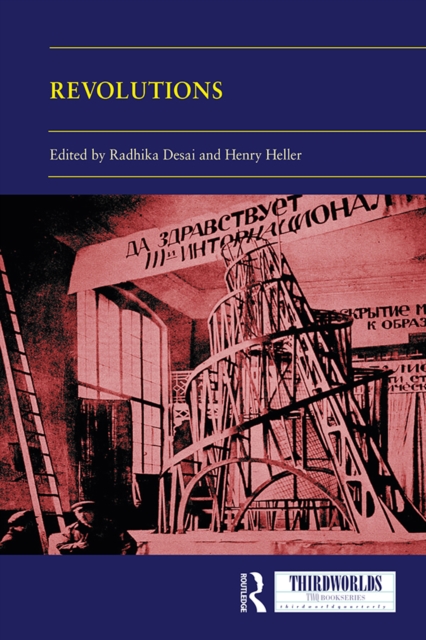
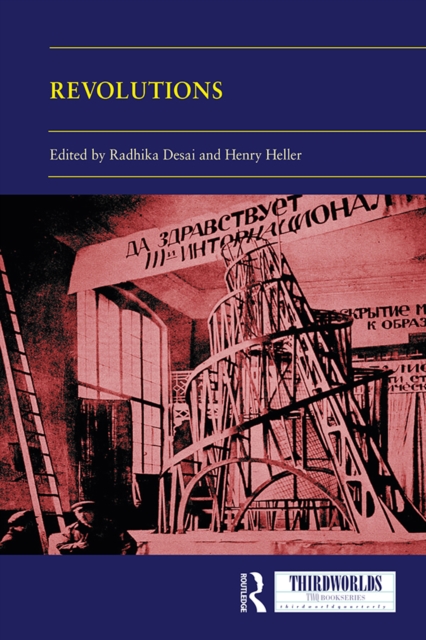
As the centres of world capitalism struggle to overcome long-term stagnation and existential crisis, this book aims to recover the legacy of revolutions against capitalism and imperialism.
As the centres of world capitalism struggle to overcome long-term stagnation and existential crisis, this book aims to recover the legacy of revolutions against capitalism and imperialism.
Social and Political Transitions During the Left Turn in Latin America provides fourteen contributions to understand, from a multidisciplinary perspective, processes of socio-political reconfigurations in the region from the early 2000s to the mid-2010s.
Social and Political Transitions During the Left Turn in Latin America provides fourteen contributions to understand, from a multidisciplinary perspective, processes of socio-political reconfigurations in the region from the early 2000s to the mid-2010s.
This book, first published in 1979, is a representative sample of some of the best articles that have appeared in DISSENT, the American democratic socialist quarterly.
Robert Owen (1771-1858) was the founder of British socialism, and one of the most influential reformers in Britain and America in the first half of the 19th century.
Robert Owen (1771-1858) was the founder of British socialism, and one of the most influential reformers in Britain and America in the first half of the 19th century.
Robert Owen (1771-1858) was the founder of British socialism, and one of the most influential reformers in Britain and America in the first half of the 19th century.
Robert Owen (1771-1858) was the founder of British socialism, and one of the most influential reformers in Britain and America in the first half of the 19th century.
Robert Owen (1771-1858) was the founder of British socialism, and one of the most influential reformers in Britain and America in the first half of the 19th century.
Robert Owen (1771-1858) was the founder of British socialism, and one of the most influential reformers in Britain and America in the first half of the 19th century.
Robert Owen (1771-1858) was the founder of British socialism, and one of the most influential reformers in Britain and America in the first half of the 19th century.
Robert Owen (1771-1858) was the founder of British socialism, and one of the most influential reformers in Britain and America in the first half of the 19th century.
This book brings together a collection of essays by progressive global activists in response to Samir Amin's call for a new global organization of progressive workers and peoples.
This book brings together a collection of essays by progressive global activists in response to Samir Amin's call for a new global organization of progressive workers and peoples.
Capitalism and the Commons focuses on the political and social perspectives that commons offer, how they are appropriated or suppressed by capital and state, and how social initiatives and movements contest these dynamics or build their struggles on commoning.
Capitalism and the Commons focuses on the political and social perspectives that commons offer, how they are appropriated or suppressed by capital and state, and how social initiatives and movements contest these dynamics or build their struggles on commoning.
This book provides an overview of Tanzania, one of Africa's economically most distressed, socially most innovative, and politically most controversial countries.
In a book that is both a critical analysis of contemporary society and the record of a feminist intellectual odyssey, Ann Ferguson, one of the most influential socialist-feminist theorists, develops a new theory of social domination.
Renewing Socialism opens with an exploration of the contemporary meaning of revolution and reform, beginning by stressing the appropriation of both terms into the rhetoric of the political right.
This book is based on Conference on the Transformation of Socialism in the Soviet Union and China, and reveals a second feature of the conference: the candor of the presentations.
This book examines the inner dynamics of one of the most significant social democratic parties in Europe and weighs the causes and effects of the policies that have shaped its chequered post-war course.