An award-winning scholar's sweeping history of American secularism, from Jefferson to Trump"e;An essential book for understanding today's culture wars.
A sweeping, ambitious history of American democratic socialism from one of the world's leading intellectual historians and social ethicists "e;Dorrien is supremely qualified for the task he has set himself in this very thoughtful, necessary, and timely book.
An illuminating work revealing the long history of xenophobia-and what it means for today's divided world Over the last few years, it has been impossible to ignore the steady resurgence of xenophobia.
A chapter-by-chapter explanation of the Book of Exodus, revealing its wisdom about nation building and people formation"e;Kass draws from Exodus' record of the founding of Judaism timely even urgent universal lessons about twenty-first-century preconditions for human flourishing in any community.
A celebrated Israeli author explores the roots of the divide between religion and secularism in Israel today, and offers a path to bridging the divide Zionism began as a movement full of contradictions, between a pull to the past and a desire to forge a new future.
The story behind the 1940s Commission on Freedom of the Press-groundbreaking then, timelier than ever now"e;A well-constructed, timely study, clearly relevant to current debates.
A beautifully written exploration of religion's role in a secular, modern politics, by an accomplished scholar of critical theoryMigrants in the Profane takes its title from an intriguing remark by Theodor W.
Available now for the first time in English, the most important work of one of the great moderate political leaders of the Muslim world Rached Ghannouchi has long been known as a reformist or moderate Islamist thinker.
A fresh, original history of America's national narratives, told through the loss, recovery, and rise of one influential Puritan sermon from 1630 to the present day.
A sweeping history of American Catholicism from the arrival of the first Spanish missionaries to the presentThis comprehensive survey of Catholic history in what became the United States spans nearly five hundred years, from the arrival of the first Spanish missionaries to the present.
From one of the world’s leading philosophers, this is a powerful defense of religion’s role within the modern university What is religion’s place within the academy today?
From one of the leading historians of Christianity comes this sweeping reassessment of religious freedom, from the church fathers to John Locke“Robert Louis Wilken’s new masterpiece.
How American conflicts about religion have always symbolized our foundational political values When Americans fight about “religion,” we are also fighting about our conflicting identities, interests, and commitments.
An expansive and ambitious intellectual history of democratic socialism from one of the world’s leading intellectual historians and social ethicists The fallout from twenty years of neoliberal economic globalism has sparked a surge of interest in the old idea of democratic socialism—a democracy in which the people control the economy and government, no group dominates any other, and every citizen is free, equal, and included.
In Poland in the 1940s and '50s, a new kind of Catholic intended to remake European social and political life—not with guns, but French philosophy This collective intellectual biography examines generations of deeply religious thinkers whose faith drove them into public life, including Karol WojtySa, future Pope John Paul II, and Tadeusz Mazowiecki, the future prime minister who would dismantle Poland’s Communist regime.
A preeminent scholar explores the evolution of the Christian worldview and argues that it no longer offers a satisfactory vision for our democratic, multicultural society This book is the culmination of a lifelong scholarly inquiry into Christian history, religion as a social institution, and the role of myth in the history of religions.
Essential primary sources reveal the central tensions between American politics and religion throughout the nation’s history Despite the centrality of separation of church and state in American government, religion has played an important role in the nation’s politics from colonial times through the present day.
This mirror for princes sheds light on the relationship between spiritual and political authority in early modern Egypt This guide to political behavior and expediency offers advice to Sufi shaykhs, or spiritual guides, on how to interact and negotiate with powerful secular officials, judges, and treasurers, or emirs.
Both celebrated and condemned, Ukrainian nationalism is one of the most controversial and vibrant topics in contemporary discussions of Eastern Europe.
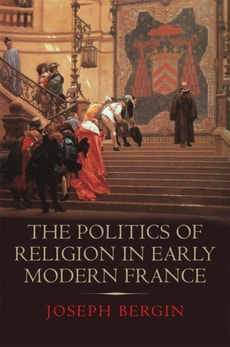
Rich in detail and broad in scope, this majestic book is the first to reveal the interaction of politics and religion in France during the crucial years of the long seventeenth century.
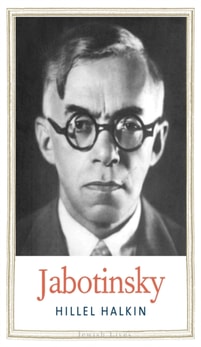
From the prizewinning Jewish Lives series, an insightful new biography of the most controversial and perhaps most fervent of all Zionist political figures Vladimir Jabotinsky (1880–1940) was a man of huge paradoxes and contradictions and has been the most misunderstood of all Zionist politicians--a first-rate novelist, a celebrated Russian journalist, and the founder of the branch of Zionism now headed by Benjamin Netanyahu.
New observations on the persistence of God in modern times and why “authentic” atheism is so very hard to come by How to live in a supposedly faithless world threatened by religious fundamentalism?
In this eagerly awaited book, political theorist Michael Walzer reports his findings after decades of reading and thinking about the politics of the Hebrew Bible.
The controversy over settlements in the occupied territories is a far more intractable problem for Israel than is widely perceived, Gadi Taub observes in this illuminating book.
This timely book investigates the increasing visibility and influence of evangelical Christians in recent American politics with a focus on racial justice.
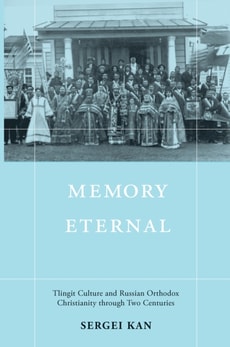
In Memory Eternal, Sergei Kan combines anthropology and history, anecdote and theory to portray the encounter between the Tlingit Indians and the Russian Orthodox Church in Alaska in the late 1700s and to analyze the indigenous Orthodoxy that developed over the next 200 years.
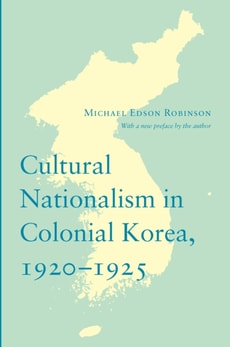
By studying the early splits within Korean nationalism, Michael Robinson shows that the issues faced by Korean nationalists during the Japanese colonial period were complex and enduring.
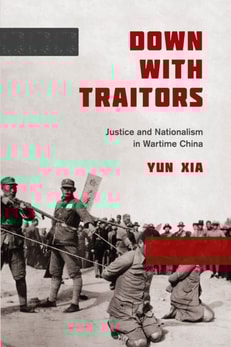
Throughout the War of Resistance against Japan (19311945), the Chinese Nationalist government punished collaborators with harsh measures, labeling the enemies from within hanjian (literally, traitors to the Han Chinese).
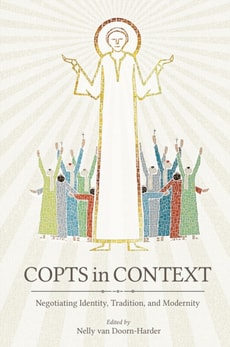
A comprehensive examination of this deeply traditional Christian religion as it confronts modernityThough the Coptic Orthodox Church of Egypt is among the oldest Christian communities in the world, it remained relatively unknown outside of Egypt for most of its existence.
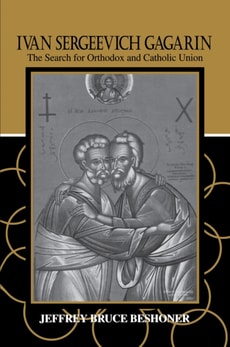
Ivan Sergeevich Gagarin analyzes questions of nationality and religious identity in nineteenth-century Russian history as reflected in the life of Jesuit priest Ivan Gagarin.