This is the first complete, one-volume English translation of the ancient Chinese text Xunzi, one of the most extensive, sophisticated, and elegant works in the tradition of Confucian thought.
In recent years, Roman political thought has attracted increased attention as intellectual historians and political theorists have explored the influence of the Roman republic on major thinkers from the Renaissance to the Enlightenment.
Don't Blame Us traces the reorientation of modern liberalism and the Democratic Party away from their roots in labor union halls of northern cities to white-collar professionals in postindustrial high-tech suburbs, and casts new light on the importance of suburban liberalism in modern American political culture.
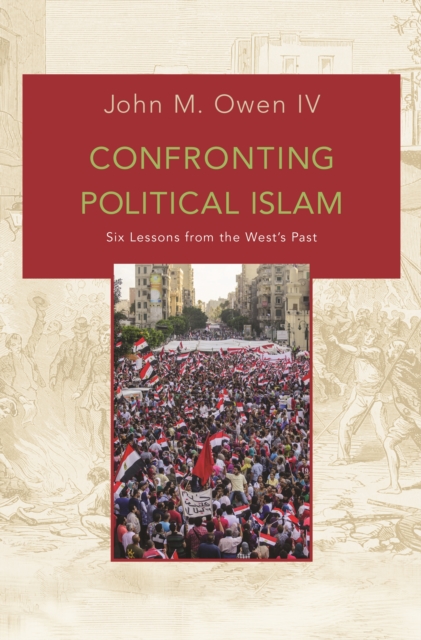
How the conflicts of Western history shed light on current upheavals in the Middle EastPolitical Islam has often been compared to ideological movements of the past such as fascism or Christian theocracy.
A lively and accessible introduction to the Greek and Roman origins of our political ideasIn The Birth of Politics, Melissa Lane introduces the reader to the foundations of Western political thought, from the Greeks, who invented democracy, to the Romans, who created a republic and then transformed it into an empire.
A major new history of classical Greece-how it rose, how it fell, and what we can learn from itLord Byron described Greece as great, fallen, and immortal, a characterization more apt than he knew.
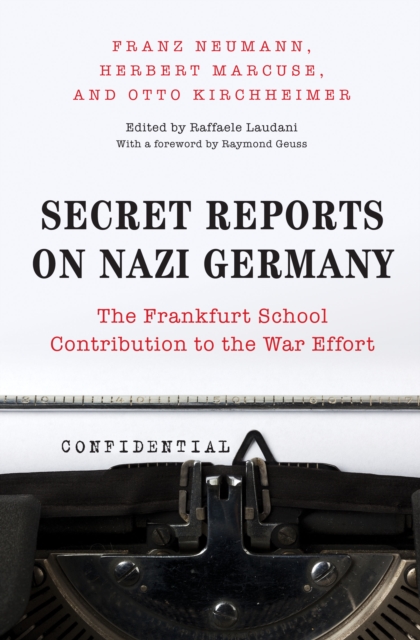
A groundbreaking book that gathers key wartime intelligence reportsDuring the Second World War, three prominent members of the Frankfurt School-Franz Neumann, Herbert Marcuse, and Otto Kirchheimer-worked as intelligence analysts for the Office of Strategic Services, the wartime forerunner of the CIA.
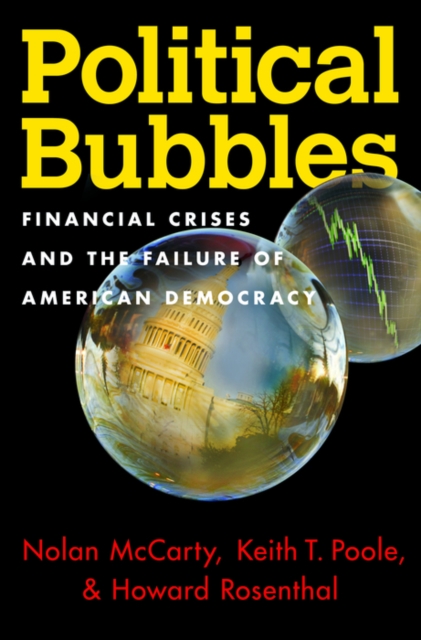
How governmental failure led to the 2008 financial crisis-and what needs to be done to avoid another similar event Behind every financial crisis lurks a "e;political bubble"e;-policy biases that foster market behaviors leading to financial instability.
Why "e;the Muslim question"e; is really about the West and its own anxieties-not IslamIn the post-9/11 West, there is no shortage of strident voices telling us that Islam is a threat to the security, values, way of life, and even existence of the United States and Europe.
With each day that passed after the 2003 invasion, the United States seemed to sink deeper in the treacherous quicksand of Iraq's social discord, floundering in the face of deep ethno-sectarian divisions that have impeded the creation of a viable state and the molding of a unified Iraqi identity.
In this volume, Albert Hirschman reconstructs the intellectual climate of the seventeenth and eighteenth centuries to illuminate the intricate ideological transformation that occurred, wherein the pursuit of material interests--so long condemned as the deadly sin of avarice--was assigned the role of containing the unruly and destructive passions of man.
A Nobel Prizewinning economist makes a new argument about the real roots of prosperityand why they are under threat todayIn this book, Nobel Prize-winning economist Edmund Phelps draws on a lifetime of thinking to make a sweeping new argument about what makes nations prosperand why the sources of that prosperity are under threat today.
This book provides a solution to the ecological inference problem, which has plagued users of statistical methods for over seventy-five years: How can researchers reliably infer individual-level behavior from aggregate (ecological) data?
The past thirty years have seen a surge of empirical research into political decision making and the influence of framing effects--the phenomenon that occurs when different but equivalent presentations of a decision problem elicit different judgments or preferences.
How Red Scare politics undermined the reform potential of the New DealIn the name of protecting Americans from Soviet espionage, the post-1945 Red Scare curtailed the reform agenda of the New Deal.
Nasser's Gamble draws on declassified documents from six countries and original material in Arabic, German, Hebrew, and Russian to present a new understanding of Egypt's disastrous five-year intervention in Yemen, which Egyptian president Gamal Abdel Nasser later referred to as "e;my Vietnam.
Political moderation is the touchstone of democracy, which could not function without compromise and bargaining, yet it is one of the most understudied concepts in political theory.
Robert Wokler was one of the world's leading experts on Rousseau and the Enlightenment, but some of his best work was published in the form of widely scattered and difficult-to-find essays.
A groundbreaking exploration of how race in America is being redefinedThe American racial order-the beliefs, institutions, and practices that organize relationships among the nation's races and ethnicities-is undergoing its greatest transformation since the 1960s.
The American public has consistently declared itself less concerned with foreign affairs in the post-Cold War era, even after 9/11, than at any time since World War II.
This groundbreaking book represents the most systematic examination to date of the often-invoked but rarely examined declaration that "e;history matters.
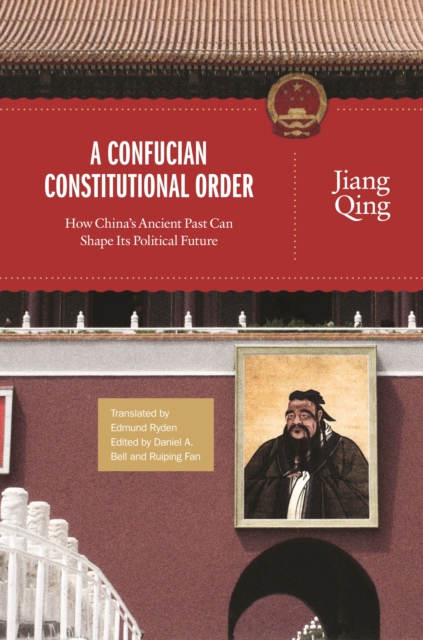
What a Confucian constitutional government might look like in China's political futureAs China continues to transform itself, many assume that the nation will eventually move beyond communism and adopt a Western-style democracy.
The story of a Princeton professor's role as the unofficial philosophical adviser to the Spanish governmentThis book examines an unlikely development in modern political philosophy: the adoption by a major national government of the ideas of a living political theorist.
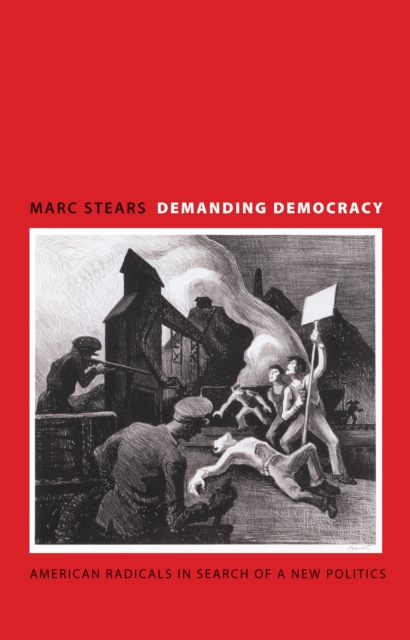
What today's political thinkers can learn from the radical democratic movements of twentieth-century AmericaThis is a major work of history and political theory that traces radical democratic thought in America across the twentieth century, seeking to recover ideas that could reenergize democratic activism today.
Realism, the dominant theory of international relations, particularly regarding security, seems compelling in part because of its claim to embody so much of Western political thought from the ancient Greeks to the present.
The freedom to take part in civic life--whether in the exercise of one's right to vote or congregate and protest--has become increasingly less important to Americans than individual rights and liberties.
The contemporary American political landscape has been marked by two paradoxical transformations: the emergence after 1960 of an increasingly activist state, and the rise of an assertive and politically powerful conservatism that strongly opposes activist government.
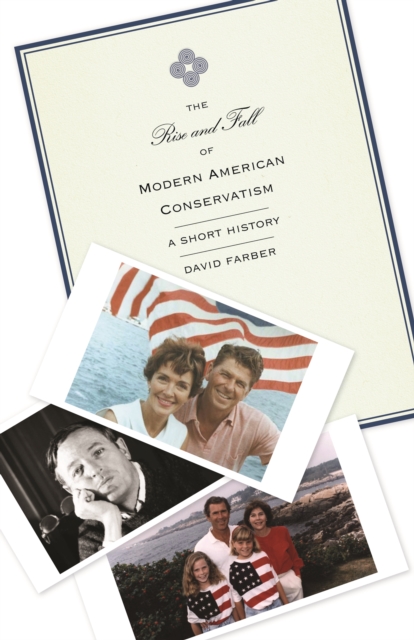
The story of modern conservatism through the lives of six leading figuresThe Rise and Fall of Modern American Conservatism tells the gripping story of perhaps the most significant political force of our time through the lives and careers of six leading figures at the heart of the movement.
Timeless lessons from the military strategies of the ancient Greeks and RomansIn this prequel to the now-classic Makers of Modern Strategy, Victor Davis Hanson, a leading scholar of ancient military history, gathers prominent thinkers to explore key facets of warfare, strategy, and foreign policy in the Greco-Roman world.
On November 4, 1979, when students occupied the American Embassy in Tehran and subsequently demanded that the United States return the Shah in exchange for hostages, the deposed Iranian ruler's regime became the focus of worldwide scrutiny and controversy.
This anthology gathers Giuseppe Mazzini's most important essays on democracy, nation building, and international relations, including some that have never before been translated into English.
Modern presidents are usually depicted as party "e;predators"e; who neglect their parties, exploit them for personal advantage, or undercut their organizational capacities.
The field of international political economy gained prominence in the early 1970s--when the Arab oil embargo and other crises ended the postwar era of virtually unhindered economic growth in the United States and Europe--and today is an essential part of both political science and economics.
The conventional wisdom holds that the president of the United States is weak, hobbled by the separation of powers and the short reach of his formal legal authority.