Why the world's most resilient dictatorships are products of violent revolutionRevolution and Dictatorship explores why dictatorships born of social revolution-such as those in China, Cuba, Iran, the Soviet Union, and Vietnam-are extraordinarily durable, even in the face of economic crisis, large-scale policy failure, mass discontent, and intense external pressure.
How remittances-money sent by workers back to their home countries-support democratic expansionIn the growing body of work on democracy, little attention has been paid to its links with migration.
Ever since the shocking revelations of the fascist ties of Martin Heidegger and Paul de Man, postmodernism has been haunted by the specter of a compromised past.
This book brings together Algerian-based scholars and Algerians in the diaspora to address the many, salient issues facing Algeria, the largest country in Africa and the Middle East.
This book brings together Algerian-based scholars and Algerians in the diaspora to address the many, salient issues facing Algeria, the largest country in Africa and the Middle East.
This work explains elite behaviour in authoritarian systems and proposes why elites withdraw their support for the incumbent when faced with popular uprisings.
This work explains elite behaviour in authoritarian systems and proposes why elites withdraw their support for the incumbent when faced with popular uprisings.
This book explores to what extent China has drawn lessons from Singapore, both in terms of its ruling ideology and through the policy-specific learning process.
This book explores to what extent China has drawn lessons from Singapore, both in terms of its ruling ideology and through the policy-specific learning process.
A liberalization of economic policies has inspired considerable economic growth and encouraged the development of Burma's natural resources, but, according to David Steinberg, the current military government is akin to previous civilian governments in its commitment to socialism as a vehicle for development.
Since the retirement of longtime dictator Tiburcio Carias Andino (1932-1949), the search for institutional stability in Honduras has led to both democratically elected governments and the imposed discipline of military rule.
The social and economic forces that worked together to bring the Ba'thist party to power in 1963: the failure of traditional and liberal leadership, an agrarian crisis, the development of party ideology, the politicization of the army and rural mobilization - are examined in this study.
Dr Volten analyses the foreign policy-making process in the Soviet Union, particularly in connection with the Brezhnev's Peace programme in the 1970s, which was supposed to normalise political-economic relations with the West and curb military rivalry.
Soviet scholars have apparently stayed clear of meaningful analysis of such touchy subjects as interdependence and conflict in the relationship between economics and politics.
A liberalization of economic policies has inspired considerable economic growth and encouraged the development of Burma's natural resources, but, according to David Steinberg, the current military government is akin to previous civilian governments in its commitment to socialism as a vehicle for development.
Since the retirement of longtime dictator Tiburcio Carias Andino (1932-1949), the search for institutional stability in Honduras has led to both democratically elected governments and the imposed discipline of military rule.
The social and economic forces that worked together to bring the Ba'thist party to power in 1963: the failure of traditional and liberal leadership, an agrarian crisis, the development of party ideology, the politicization of the army and rural mobilization - are examined in this study.
Dr Volten analyses the foreign policy-making process in the Soviet Union, particularly in connection with the Brezhnev's Peace programme in the 1970s, which was supposed to normalise political-economic relations with the West and curb military rivalry.
Soviet scholars have apparently stayed clear of meaningful analysis of such touchy subjects as interdependence and conflict in the relationship between economics and politics.
Investigating key features of contemporary Egypt, this volume includes Egypt's modern history, politics, economics, the legal system, environment, and its media and modes of cultural expression.
Investigating key features of contemporary Egypt, this volume includes Egypt's modern history, politics, economics, the legal system, environment, and its media and modes of cultural expression.
Between the mid-eighteenth and the mid-nineteenth century, the idea of dictatorship changed drastically, leaving back the ancient Roman paradigm and opening the way to a rule with extraordinary powers and which was unlimited in time.
Between the mid-eighteenth and the mid-nineteenth century, the idea of dictatorship changed drastically, leaving back the ancient Roman paradigm and opening the way to a rule with extraordinary powers and which was unlimited in time.
Both Russia and Turkey were pioneering examples of feminism in the early 20th Century, when the Bolshevik and Republican states embraced an ideology of women's equality.
Both Russia and Turkey were pioneering examples of feminism in the early 20th Century, when the Bolshevik and Republican states embraced an ideology of women's equality.
Following Stalin's death in 1953, association football clubs, as well as the informal supporter groups and communities which developed around them, were an important way for the diverse citizens of the multinational Soviet Union to express, negotiate and develop their identities, both on individual and collective levels.
One of Financial Times' Summer Books of 2020An explosive and unprecedented inside look at Steve Bannon's entourage of global powerbrokers and the hidden alliances shaping today's geopolitical upheaval.
A timely, riveting book that presents for the first time an alternative history of 1930s Britain, revealing how prominent fascist sympathizers nearly succeeded in overturning British democracyusing the past as a road map to navigate the complexities of todays turn toward authoritarianism.
_______________THE SUNDAY TIMES BESTSELLERTHE NEW YORK TIMES BESTSELLER_______________'A powerful love story spanning generations Full of ambition and humanity' - Sunday Times'One of the strongest and most affecting works in Allende's long career' - New York Times Book Review_______________On September 3, 1939, the day of the Spanish exiles' splendid arrival in Chile, the Second World War broke out in Europe.
Renowned journalist Thierry Cruvellier takes us into the dark heart of Cambodia's Khmer Rouge with The Master of Confessions, a suspenseful account of a Chief Interrogator's trial for war crimes.
From the author of international bestseller On Tyranny, this prescient analysis of Russia's ongoing interference in the West is now more relevant than ever.
**NEW YORK TIMES #1 BESTSELLER **THE BOOK TO HELP YOU UNDERSTAND WHY DEMOCRACY IS FAILING IN 2025 The most coherent manifesto on confronting Trump New StatesmanIn the twentieth century, European democracies collapsed into fascism, Nazism and communism.
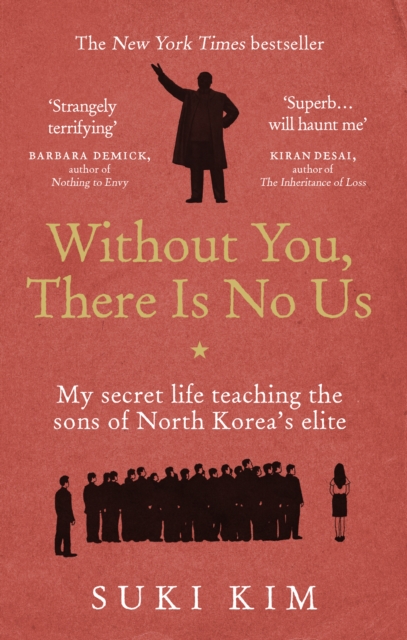
It is 2011, and all universities in North Korea have been shut down for an entire year, except for the all-male Pyongyang University of Science and Technology.