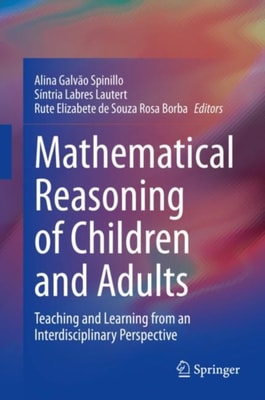
This book adopts an interdisciplinary approach to investigate the development of mathematical reasoning in both children and adults and to show how understanding the learner's cognitive processes can help teachers develop better strategies to teach mathematics.
This is the first book focusing on the animal's perspective and best practices to ensure the welfare of both therapy animals and their human counterparts in animal-assisted interventions.
This book provides an overview of the key theoretical and empirical issues relating to autobiographical memory: the extraordinarily complex psychological activity that enables us to retrieve, relive and reappraise our pasts.
This volume is comprised of contributions to the 67th Nebraska Symposium on Motivation, which brought together various research disciplines such as psychology, education, health sciences, natural resources, environmental studies to investigate the ways in which nature influences cognition, health, human behavior, and well-being.
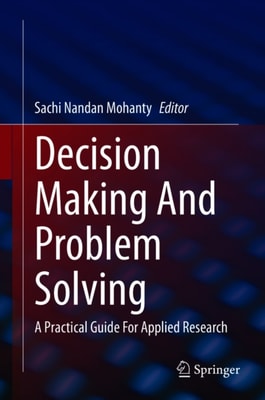
In Decision Making and Problem Solving: A Practical Guide for Applied Research, the author utilizes traditional approaches, tools, and techniques adopted to solve current day-to-day, real-life problems.
This book takes a sociocultural, developmental and dialogical perspective to explore the constructive and interconnected nature of remembering and imagining.
This book presents a theoretical critical appraisal of the Mechanistic Theory of Human Cognition (MTHC), which is one of the most popular major theories in the contemporary field of cognitive science.
This book presents the proceedings of the virtual conference NeuroIS Retreat 2020, June 2-4, hosted in Austria, reporting on topics at the intersection of information systems (IS) research, neurophysiology and the brain sciences.
This book delivers stimulating input for a broad range of researchers, from geographers and ecologists to psychologists interested in spatial perception and physicists researching in complex systems.
This book covers topics such as digitalization of production, operations, logistics and supply chains leading to new requirements for human capabilities and collaboration.
This book brings together ideas from experts in cognitive science, mathematics, and mathematics education to discuss these issues and to present research on how mathematics and its learning and teaching are evolving in the Information Age.
This book provides a detailed example of an eye-tracking method for comparing the reading experience of a literary source text readers with readers of a translation at stylistically marked points.
This book brings together a number of essays that are optimistic about the ways certain neuroscientific insights might advance philosophical ethics, and other essays that are more circumspect about the relevance of neuroscience to philosophical ethics.
This book provides a corpus-led analysis of multi-word units (MWUs) in English, specifically fixed pairs of nouns which are linked by a conjunction, such as 'mum and dad', 'bride and groom' and 'law and order'.
This book is a newly revised version of the highly influential text, Rational Emotive Behavioral Approaches to Childhood Disorders: Theory, Practice and Research, based on an earlier volume by Bernard and Ellis.
This book brings together mobilities and possibility studies by arguing that the possible emerges in our experience in and through acts of movement : physical, social and symbolic.
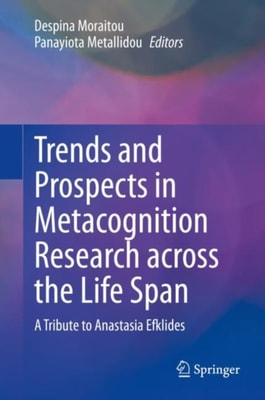
This volume brings together trends and their prospects to understand the complexity of metacognitive phenomena, with emphasis on the interactions of metacognition with affect.
This book consists of thirteen chapters covering many facts like psycho-social intervention on emotional disorders in individuals, impact of emotion and cognition on blended theory, theory and implication of information processing, effects of emotional self esteem in women, emotional dimension of women in workplace, effects of mental thinking in different age groups irrespective of the gender, negative emotions and its effect on information processing, role of emotions in education and lastly emotional analysis in multi perspective domain adopting machine learning approach.
The purpose of this book is to educate readers regarding the efficacy of cognitive rehabilitation across a variety of neurological conditions, with specific emphasis on rehabilitation-related change detectable via neuroimaging.
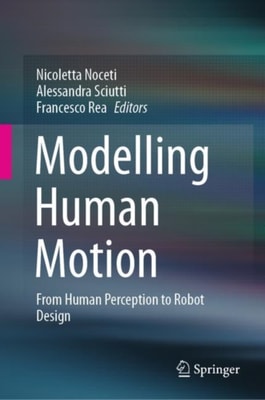
The new frontiers of robotics research foresee future scenarios where artificial agents will leave the laboratory to progressively take part in the activities of our daily life.
This book reviews the latest research from psychology, neuroscience, and behavioral economics evaluating how people make financial choices in real-life circumstances.
This first-of-its-kind book offers clinicians a unique and comprehensive system of cognitive and behavioral testing that is tiered and context-appropriate for the diagnosis of mental status.
This book demonstrates and discusses the hypothesis that, within the theory of multiple intelligences, graphic intelligence can be isolated and defined as the ability to use graphic skills to solve problems and create products through the integration and coordination of eye, mind and hand, that is, visual perception, thought and graphic representation.