Las mujeres han tenido un lugar destacado en el psicoanálisis, Sigmund Freud les abrió las puertas a principio del siglo XX para acompañarlo en sus investigaciones, tanto en el trabajo con niños como también dilucidar sus preguntas acerca del goce femenino.
This carefully crafted ebook: "e;THE "e;UNCONSCIOUS"e; TRILOGY: The Interpretation of Dreams, Psychopathology of Everyday Life & Wit and Its Relation to the Unconscious"e; is formatted for your eReader with a functional and detailed table of contents.
An authoritative bibliography of Jung's works in German and EnglishA record of all of Jung' s publications in German and in English, this volume replaces the general bibliography published in 1979 as Volume 19 of the Collected Works of C.
The authoritative edition of Jung's miscellaneous collected writingsThe Symbolic Life gathers some 160 of Jung's writings that span sixty years and reflect his inquiring mind, numerous interests, and wide circle of professional and personal acquaintance.
An authoritative edition of Jung's shorter works on the psychology of religious phenomenaThis volume collects Jung's shorter writings on religion and psychology, including several that are of major importance.
An authoritative collection of Jung's writings on contemporary events, including The Undiscovered Self and Flying SaucersCivilization in Transition features Jung's writings on contemporary events, especially the relation between the individual and society.
A collection of some of Jung's most important essays on the archetypes and the collective unconsciousThe Archetypes and the Collective Unconscious features many of Jung's most important essays describing and elaborating on these two central, related concepts.
An authoritative collection of Jung's writings on analytical psychology, including SynchronicityThe Structure and Dynamics of the Psyche features a selection of Jung's writings, ranging over four decades of his career, which illustrate the development of the conceptual foundations of analytical psychology.
The authoritative edition of Jung's essential writings for understanding his early enthusiasm forand later split withFreud and psychoanalysisFreud and Psychoanalysis gathers Jung's writings on Freud and psychoanalysis published between 1906 and 1916, along with two later, related papers.
The authoritative edition of some of Jung's most important writings on psychiatryThe Psychogenesis of Mental Disease presents some of Jung's most important writings on psychiatry, including ';On the Psychology of Dementia Praecox, his landmark early study of what is today called schizophrenia.
The authoritative edition of Jung's important early writings on his word-association experimentsAfter joining the staff of the Burgholzli Mental Hospital in 1900, Jung developed and applied word-association tests for studying normal and abnormal psychology.
The authoritative edition of early psychiatric studies by Jung, which foreshadow much of his later workPsychiatric Studies gathers writings on descriptive and experimental psychiatry that Jung published between 1902 and 1905, early in his career as a psychiatrist.
Nine essays, written between 1922 and 1941, on Paracelsus, Freud, Picasso, the sinologist Richard Wilhelm, Joyce's Ulysses, artistic creativity generally, and the source of artistic creativity in archetypal structures.
Jung's landmark account of the connections between alchemy, its symbolism, the collective unconscious, and modern psychologyPsychology and Alchemy is one of Jung's most influential works.
One of the most important of Jung's longer works, and probably the most famous of his books, Psychological Types appeared in German in 1921 after a "e;fallow period"e; of eight years during which Jung had published little.
Papers on child psychology, education, and individuation, underlining the overwhelming importance of parents and teachers in the genesis of the intellectual, feeling, and emotional disorders of childhood.
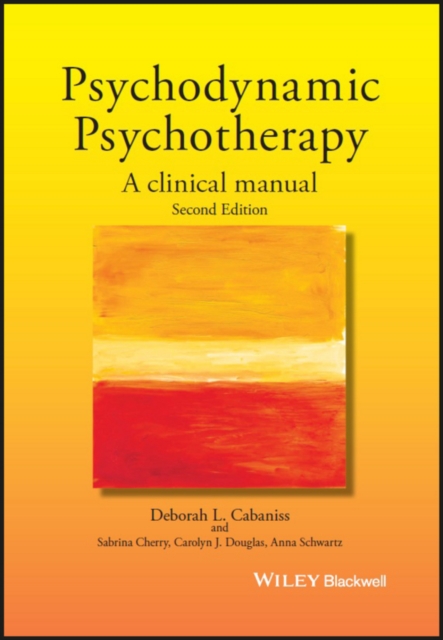
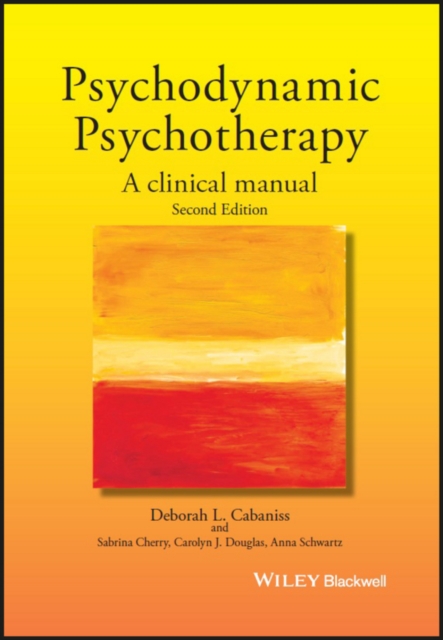
An updated and expanded new edition of a widely-used guide to the theory and practice of psychodynamic psychotherapy, Cabaniss' Psychodynamic Psychotherapy: A Clinical Manual, 2nd Edition provides material for readers to apply immediately in their treatment of patients.
An updated and expanded new edition of a widely-used guide to the theory and practice of psychodynamic psychotherapy, Cabaniss' Psychodynamic Psychotherapy: A Clinical Manual, 2nd Edition provides material for readers to apply immediately in their treatment of patients.
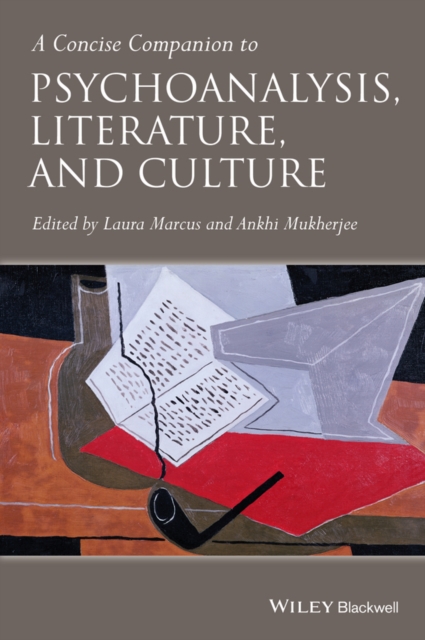
This concise companion explores the history of psychoanalytic theory and its impact on contemporary literary criticism by tracing its movement across disciplinary and cultural boundaries.
This concise companion explores the history of psychoanalytic theory and its impact on contemporary literary criticism by tracing its movement across disciplinary and cultural boundaries.
Divided into three overarching themes, theory, application and research, this cutting edge book explores the influence of psychoanalytic theories on occupational therapy practice and thinking.
Divided into three overarching themes, theory, application and research, this cutting edge book explores the influence of psychoanalytic theories on occupational therapy practice and thinking.
Dieses eBook: "Triebe und Triebschicksale - Die Unterscheidung vom Triebreiz und anderen physiologischen Reizen" ist mit einem detaillierten und dynamischen Inhaltsverzeichnis versehen und wurde sorgfältig korrekturgelesen.
The poet laureate of human emotion ELIZABETH DAY Left me feeling wiser and more open to life OLIVER BURKEMAN A work of genius INDIA KNIGHTChange the way you think about love.
THE INTERPRETATION OF MURDER is an inventive tour de force inspired by Sigmund Freud's 1909 visit to America, accompanied by prot g and rival Carl Jung.