Psychoanalytic Concepts and Technique in Development offers a clear and thorough overview of contemporary psychoanalytic theory and clinical technique, from a largely post-Freudian, French perspective, but also informed by the work of Klein, Bion and Winnicott.
Misogyny, Projective Identification, and Mentalization looks at how the psychoanalytic concepts of projective identification and mentalization may explain the construction of society and how they have enabled misogyny to be expressed in social, political, and institutional settings.
Misogyny, Projective Identification, and Mentalization looks at how the psychoanalytic concepts of projective identification and mentalization may explain the construction of society and how they have enabled misogyny to be expressed in social, political, and institutional settings.
This collection of contemporary clinically-oriented papers covers a range of theoretical approaches to the fundamentally important technical issue of interpretation.
This collection of contemporary clinically-oriented papers covers a range of theoretical approaches to the fundamentally important technical issue of interpretation.
This timely collection asks the reader to consider how society's modern notion of humans as rational, isolated individuals has contributed to psychological and social problems and oppressive power structures.
This timely collection asks the reader to consider how society's modern notion of humans as rational, isolated individuals has contributed to psychological and social problems and oppressive power structures.
This book looks at innovative tools developed by Japanese and Korean researchers and practitioners to tackle cyberbullying and internet-related problems (addiction, cybercrimes, etc.
This book looks at innovative tools developed by Japanese and Korean researchers and practitioners to tackle cyberbullying and internet-related problems (addiction, cybercrimes, etc.
Psychoanalysis, Law, and Society explores the connections between psychoanalysis and law, arguing that these are required not only for conceptual or theoretical needs in both fields, but also for the vast range of practical implications and possibilities their association enables.
In this, the latest in a series of books examining emotional states and psychological life, Salman Akhtar and Aisha Abbasi critically discuss a concept that remains, appropriately perhaps, elusive and hard to define: privacy.
Psychoanalysis, Law, and Society explores the connections between psychoanalysis and law, arguing that these are required not only for conceptual or theoretical needs in both fields, but also for the vast range of practical implications and possibilities their association enables.
In this, the latest in a series of books examining emotional states and psychological life, Salman Akhtar and Aisha Abbasi critically discuss a concept that remains, appropriately perhaps, elusive and hard to define: privacy.
This book uses an interdisciplinary approach to explore the ways in which sexual difference can be understood as an encounter with otherness through the abjected, investigating social discourses and unconscious anxieties around "e;monstrous"e; women throughout history and how they may challenge these characterizations.
This book uses an interdisciplinary approach to explore the ways in which sexual difference can be understood as an encounter with otherness through the abjected, investigating social discourses and unconscious anxieties around "e;monstrous"e; women throughout history and how they may challenge these characterizations.
A complete, illustrated guide to the ancient tradition of reading the face to gain insight into health, personality, relationships, and career *; Details how to read the profile, front face, features, and musculature of the face to reveal temperament, personality traits, health predispositions, and mental state *; Explores the history and development of face morphology from its origins in Israel and Egypt more than 4,500 years ago to its modern use in French medical schools *; Examines the Foursquare diagram, developed by French occultist Papus, for highly accurate and detailed facial readings The face is a unique reflection of our genetic, inherited inclinations as well as the effects that life, nature, and relationships have had upon us.
A comprehensive guide to the inner psychology revealed by the hand *; Details how to interpret the entire hand--the shape of the palm and fingers, mounts, lines, fingerprints, flexibility, nails, and skin texture *; Reveals the personality archetypes, strengths, and weaknesses connected with each of the seven mounts and how the rest of the hand modifies these traits *; Explains how lines change and the decisive influence of the person's own mind in healing defects found on the lines Palmistry is a science and a universal language.
A collection of colorful and candid essays and other pieces about Freud and his legacy today, featuring twenty-five leading writersWith original contributions by Andre Aciman *; Sarah Boxer *; Jennifer Finney Boylan *; Susie Boyt *; Gerald Early *; Esther Freud *; Rivka Galchen *; Adam Gopnik *; David Gordon *; Siri Hustvedt *; Sheila Kohler *; Peter D.
Presenting an original and vital model for psychological development, the brilliant and pioneering author of He, She, and We offers a new understanding of the stages of personal growth through which maturity and wholeness can be achieved.
The first in-depth look at how postwar thinkers in Egypt mapped the intersections between Islamic discourses and psychoanalytic thoughtIn 1945, psychologist Yusuf Murad introduced an Arabic term borrowed from the medieval Sufi philosopher and mystic Ibn 'Arabi-al-la-shu'ur-as a translation for Sigmund Freud's concept of the unconscious.
The first comprehensive look at how Victorian fiction and British psychoanalysis shaped each otherNovel Relations engages twentieth-century post-Freudian British psychoanalysis in an unprecedented way: as literary theory.
A book which offers fresh perspectives on the scientific developments of the past hundred years through the complementary work of two of the century's greatest thinkers, Einstein and Freud.
The story of the sexual revolution that brought Freud's couch to the explosion of the 60s, and the left-field pioneer Wilhelm Reich who made it all happen.
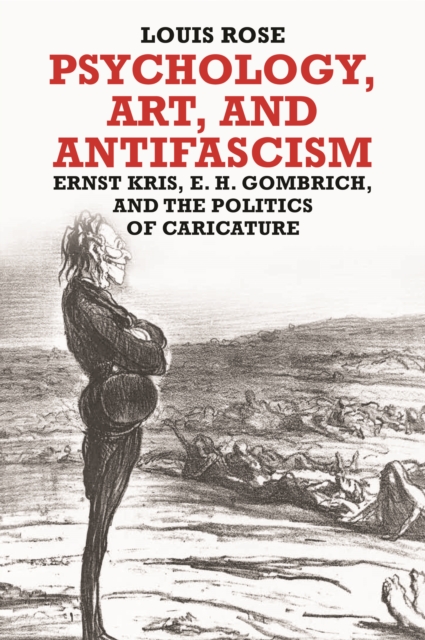
A vivid portrait of two remarkable twentieth-century thinkers and their landmark collaboration on the use and abuse of caricature and propaganda in the modern world In 1934, Viennese art historian and psychoanalyst Ernst Kris invited his mentee E.
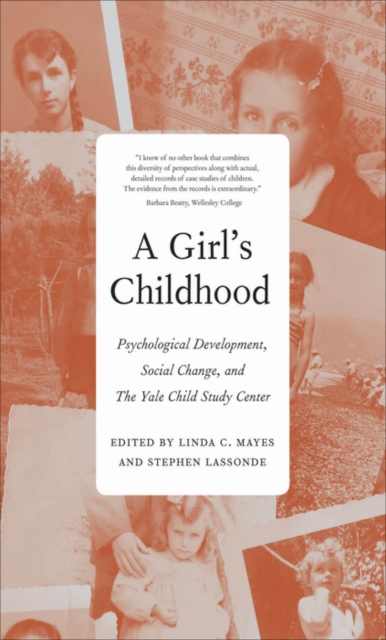
A uniquely detailed study of child development theory and practice in the post–World War II era Sixty years ago, a group of prominent psychoanalysts, developmentalists, pediatricians, and educators at the Yale Child Study Center joined together with the purpose of formulating a general psychoanalytic theory of children’s early development.