Building on the foundation of the previous five editions, Hospital and Healthcare Security, 6th Edition includes new and updated chapters to reflect the current state of healthcare security, particularly in data security and patient privacy, patient-generated violence, and emergency preparedness and management.
Workplace Security Playbook: The New Manager's Guide to Security Risk is a set of comprehensive risk management guidelines for companies that have other business functions coordinating security.
Whether you are a business owner, department manager, or even a concerned employee, Workplace Security Essentials will show you how to improve workplace safety and security using real-life examples and step-by-step instructions.
Bloodstain Patterns: Identification, Interpretation and Application combines material from Blood Dynamics (2001) and Bloodstain Pattern Evidence (2007) with updated case work and scientific advances from medical and hard sciences.
It seems that every day there's a new story about a security lapse, emergency lock-down, or violent act taking place at a school somewhere in the United States.
Surveillance and Threat Detection offers readers a complete understanding of the terrorist/criminal cycle, and how to interrupt that cycle to prevent an attack.
Advanced Topics in Forensic DNA Typing: Interpretation builds upon the previous two editions of John Butler's internationally acclaimed Forensic DNA Typing textbook with forensic DNA analysts as its primary audience.
Security Science integrates the multi-disciplined practice areas of security into a single structured body of knowledge, where each chapter takes an evidence-based approach to one of the core knowledge categories.
The second edition of Practical Aviation Security is a complete guide to the aviation security system, from crucial historical events to the policies, policymakers, and major terrorist and criminal acts that have shaped the procedures in use today.
Cargo Theft, Loss Prevention, and Supply Chain Security outlines steps for identifying the weakest links in the supply chain and customizing a security program to help you prevent thefts and recover losses.
The Routledge International Handbook on Fear of Crime brings together original and international state of the art contributions of theoretical, empirical, policy-related scholarship on the intersection of perceptions of crime, victimisation, vulnerability and risk.
Crime Reconstruction, Second Edition is an updated guide to the interpretation of physical evidence, written for the advanced student of forensic science, the practicing forensic generalist and those with multiple forensic specialists.
It seems that every day there's a new story about a security lapse, emergency lock-down, or violent act taking place at a school somewhere in the United States.
This book offers a critical and empirical examination of gang life, using an intersectional framework considering race, class, gender, and other characteristics.
Forensic Science Laboratory Benchmarking: The FORESIGHT Manual takes a step-by-step instructional approach to utilizing FORESIGHT data, detailing how labs can participate in the process to improve efficiencies.
Forensic Science Laboratory Benchmarking: The FORESIGHT Manual takes a step-by-step instructional approach to utilizing FORESIGHT data, detailing how labs can participate in the process to improve efficiencies.
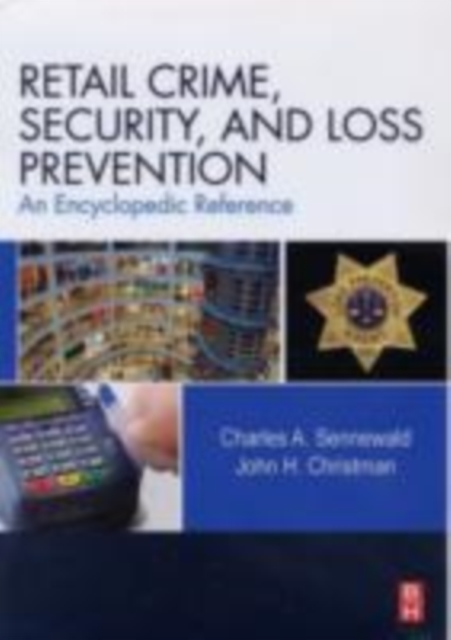
Retail Crime, Security, and Loss Prevention is destined to become the "e;go to"e; source of crime- and loss prevention- related information in the retail industry.
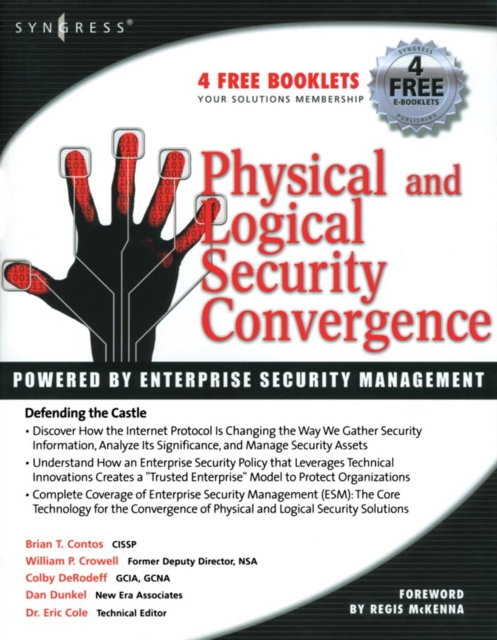
Government and companies have already invested hundreds of millions of dollars in the convergence of physical and logical security solutions, but there are no books on the topic.
High-Security Mechanical Locks comprehensively surveys and explains the highly technical area of high security locks in a way that is accessible to a wide audience.
Alcohol, Crime and Public Health explores the issue of drinking in the criminal justice system, providing an overview of the topic from both a criminal justice and a public health perspective.
In the field of forensics, there is a critical need for genetic tests that can function in a predictive or inferential sense, before suspects have been identified, and/or for crimes for which DNA evidence exists but eye-witnesses do not.
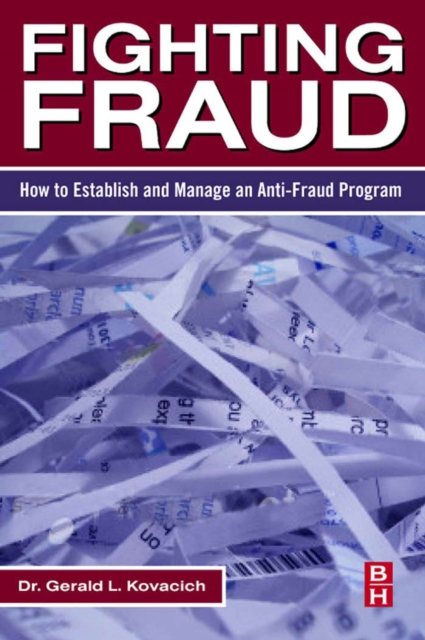
This practical reference provides the basics for instituting a corporate anti-fraud program that helps prepare corporate security professionals and other corporate managers for fighting corporate fraud from inside the company.
In Bloodstain Pattern Evidence, the concepts introduced in the author's first book, Blood Dynamics, are updated and applied to provide essential answers in the resolution of actual crimes.
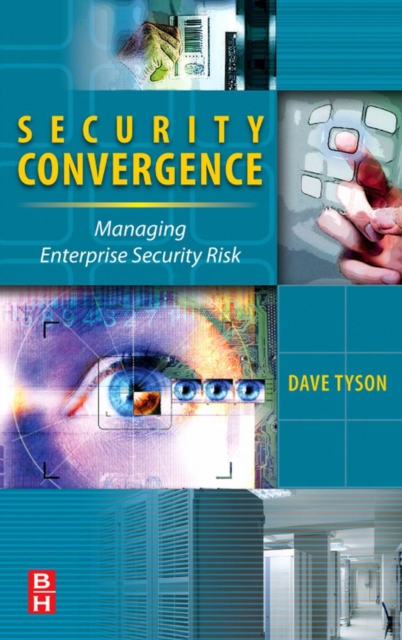
Security Convergence describes the movement in business to combine the roles of physical security and security management with network computer security measures within an organization.
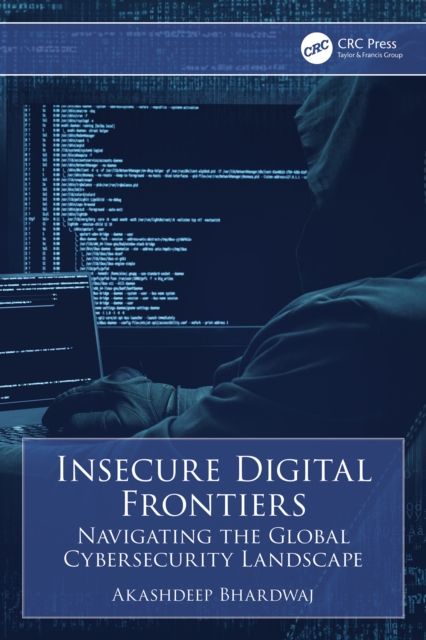
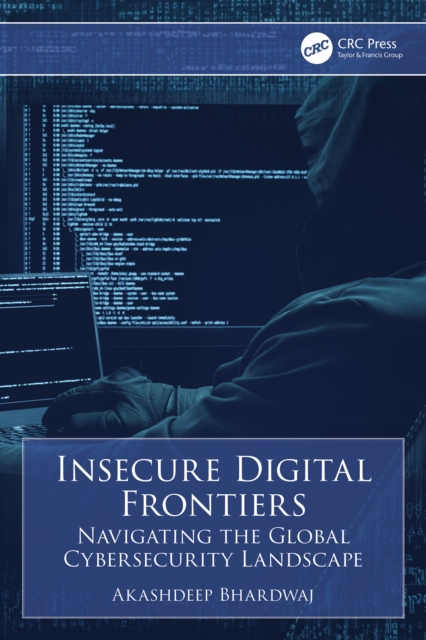
Insecure Digital Frontiers is an immersive exploration into the tumultuous realm of cybersecurity, where the ever-expanding digital frontiers are both the battleground and the prize.
Insecure Digital Frontiers is an immersive exploration into the tumultuous realm of cybersecurity, where the ever-expanding digital frontiers are both the battleground and the prize.
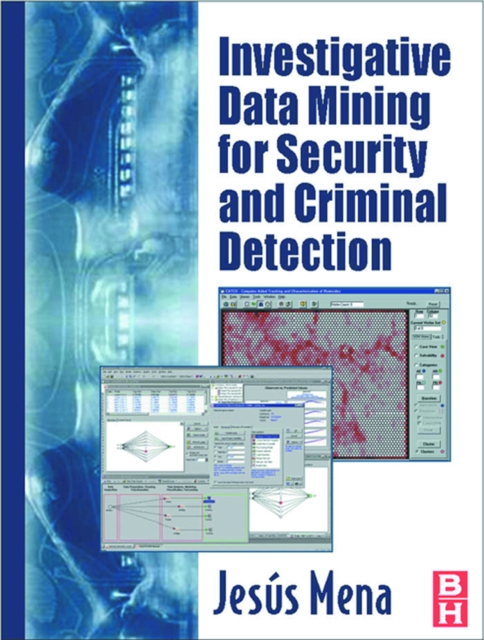
Investigative Data Mining for Security and Criminal Detection is the first book to outline how data mining technologies can be used to combat crime in the 21st century.
Guard Force Management looks at the contract guard force as a business and demonstrates how current management techniques can be used to improve efficiency and increase profitability.
Crime Laboratory Management is the first book to address the unique operational, administrative, and political issues involved in managing a forensic laboratory.
This unique volume presents cutting-edge research on the nature and extent of a wide range of scams, cons, frauds, and deceptive activities, including sextortion, the use of ransomware, phishing, identity theft, Ponzi schemes, online shopping fraud, gift card scams, and health care fraud targeting elderly victims.