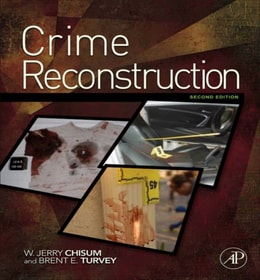
Crime Reconstruction, Second Edition is an updated guide to the interpretation of physical evidence, written for the advanced student of forensic science, the practicing forensic generalist and those with multiple forensic specialists.
Rape Investigation Handbook details specific investigative and forensic processes related to sex crimes casework invaluable to those in law enforcement, the legal community, and the private sector.
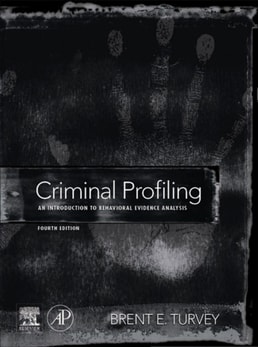
Focused on Behavioral Evidence Analysis (BEA), a method of criminal profiling developed and refined by the author over the past 15 years, the fourth edition of Criminal Profiling maintains the same core foundation that made previous editions best sellers in the professional and academic community worldwide.
This work will draw upon the expertise of the editors as authors and various contributors in order to present several different perspectives with the goal of approaching and understanding when ethical lines are crossed.
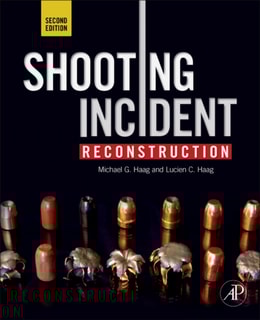
Shooting Incident Reconstruction, Second Edition, offers a thorough explanation of matters from simple to complex to help the reader understand the factors surrounding ballistics, trajectory, and shooting scenes.
Forensic Criminology gives students of criminology and criminal justice an introduction to the forensic realm and the applied forensic issues they will face when working cases within the justice system.
Cellular Internet of Things: From Massive Deployments to Critical 5G Applications, Second Edition, gives insights into the recent and rapid work performed by the 3rd Generation Partnership Project (3GPP) and the Multefire Alliance (MFA) to develop systems for the Cellular IoT.
Building Wireless Sensor Networks: Application to Routing and Data Diffusion discusses challenges involved in securing routing in wireless sensor networks with new hybrid topologies.
The Bioarchaeology of Metabolic Bone Disease, Second Edition is a comprehensive source dedicated to better understanding this group of conditions that have significant consequences for health in both past and present communities on a global scale.
The considerable growth of RFID is currently accompanied by the development of numerous identification technologies that complement those already available while seeking to answer new problems.
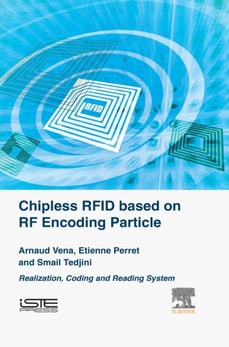
Chipless RFID based on RF Encoding Particle: Realization, Coding and Reading System explores the field of chipless identification based on the RF Encoding Particle (REP).
RFID and Wireless Sensors using Ultra-Wideband Technology explores how RFID-based technologies are becoming the first choice to realize the last (wireless) link in the chain between each element and the Internet due to their low cost and simplicity.
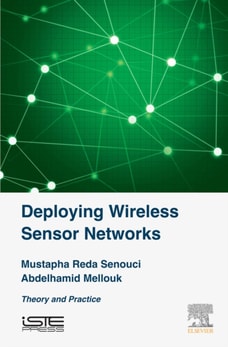
Wireless Sensor Networks: Theory and Practice for Deployment addresses WSNs deployment, a mandatory and critical step in the process of developing WSNs solutions for real-life applications.
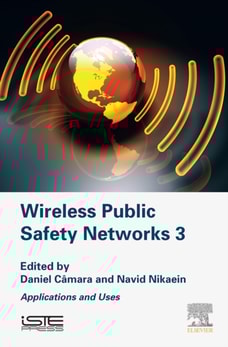
This third volume of the Wireless Public Safety Networks series explores new tendencies in the Public Safety Networks (PSNs) field, highlighting real-use cases and applications that can be used by practitioners to help victims in the case of danger.
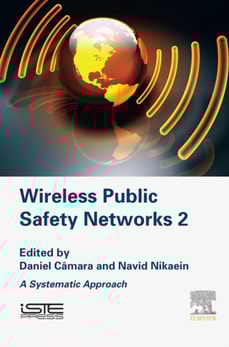
Wireless Public Safety Networks, Volume Two: A Systematic Approach presents the latest advances in the wireless Public Safety Networks (PSNs) field, the networks established by authorities to either prepare the population for an eminent catastrophe, or those used for support during crisis and normalization phases.
Wireless Public Safety Networks, Volume One: Overview and Challenges presents the latest advances in the wireless Public Safety Networks (PSNs) field, the networks established by authorities to either prepare the population for an eminent catastrophe, or as support during crisis and normalization phases.
Evidence Found: An Approach to Crime Scene Investigation is not another analysis of forensic errors using an "e;After the Fact"e; or "e;Lessons Learned"e; approach but a "e;Before the Fact"e; guide that examines the thought processes that can lead to those mistakes.
Reflecting the recent completion of LTE's specification, the new edition of this bestseller has been fully updated to provide a complete picture of the LTE system.
Death Investigation: A Field Guide, Second Edition is updated and expanded to include a chronological analysis of the death scene investigative process from the first notification to the autopsy and final report.
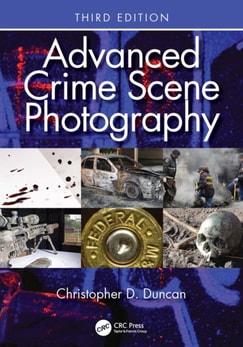
The ability to thoroughly and accurately photograph a crime scene is a mandate for all investigators, regardless of the time of day, weather conditions, or confines within which a piece of evidence is concealed.
The ability to thoroughly and accurately photograph a crime scene is a mandate for all investigators, regardless of the time of day, weather conditions, or confines within which a piece of evidence is concealed.
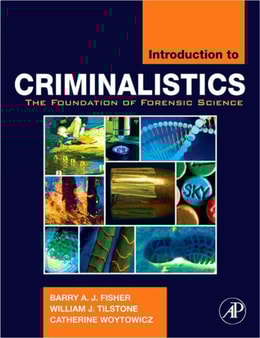
Introduction to Criminalistics covers the basics of Criminalistics in a textbook for a one or two semester course, with the intention of preparing the student for a future in forensic science.
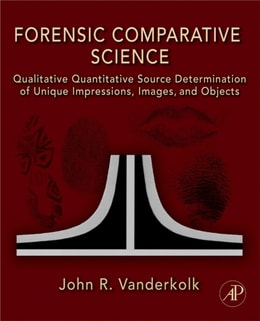
While there is no such thing as a perfect match in the field of forensic comparative science, Forensic Comparative Science: Qualitative Quantitative Source Determination of Unique Impressions, Images, and Objects provides the experience, understanding, and judgment, necessary for concluding whether two unique images share common origin from a unique and persistent source.
A British detective superintendent recounts a remarkable ten-year investigation, and other compelling murder cases he worked in his long police career.
Handbook of Digital Forensics and Investigation builds on the success of the Handbook of Computer Crime Investigation, bringing together renowned experts in all areas of digital forensics and investigation to provide the consummate resource for practitioners in the field.
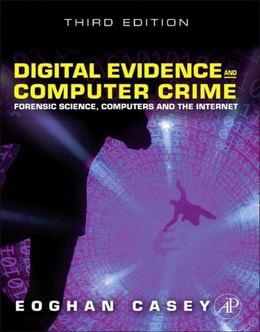
Digital Evidence and Computer Crime, Third Edition, provides the knowledge necessary to uncover and use digital evidence effectively in any kind of investigation.
Police Intelligence: Totality of Circumstances is an essential resource and is designed for any individual who may encounter the field of criminal justice, whether the person is a police chief who oversees the department's standard operating procedures, a police officer who enforces the law, a civilian who is expected to follow the law, a lawyer who may challenge an action in court, or a judge who will interpret the law.
Cyber security is one of the most critical problems faced by enterprises, government organizations, education institutes, small and medium scale businesses, and medical institutions today.
Forensic Science Laboratory Benchmarking: The FORESIGHT Manual takes a step-by-step instructional approach to utilizing FORESIGHT data, detailing how labs can participate in the process to improve efficiencies.
Forensic Science Laboratory Benchmarking: The FORESIGHT Manual takes a step-by-step instructional approach to utilizing FORESIGHT data, detailing how labs can participate in the process to improve efficiencies.
With the ever-increasing threat of cyber-attacks, especially as the COVID-19 pandemic helped to ramp up the use of digital communications technology, there is a continued need to find new ways to maintain and improve cybersecurity.
With the ever-increasing threat of cyber-attacks, especially as the COVID-19 pandemic helped to ramp up the use of digital communications technology, there is a continued need to find new ways to maintain and improve cybersecurity.
A Litigator's Guide to DNA educates both criminal law students and forensic science students about all aspects of the use of DNA evidence in criminal and civil trials.
Forensic Art Essentials teaches artists to extract information from a witness or victim about a face they have seen, and produce an image good enough to lead detectives to the criminal being described.
The study of fire debris analysis is vital to the function of all fire investigations, and, as such, Fire Debris Analysis is an essential resource for fire investigators.
This text provides training on the fundamental tools and methodologies used in active forensic laboratories for the complicated analysis of fire debris and explosives evidence.
The Newnes Know It All Series takes the best of what our authors have written to create hard-working desk references that will be an engineer's first port of call for key information, design techniques and rules of thumb.
In the field of forensics, there is a critical need for genetic tests that can function in a predictive or inferential sense, before suspects have been identified, and/or for crimes for which DNA evidence exists but eye-witnesses do not.
Forensic Neuropathology provides superior visual examples of the more commonly encountered conditions in forensic neuropathology and answers questions that arise regarding neuropathological findings.