A collection of original contributions by philosophers working in the ethics of punishment, gathering new perspectives on various challenging topics including punishment and forgiveness, dignity, discrimination, public opinion, torture, rehabilitation, and restitution.
The probation service's venture into financial partnerships with non-statutory agencies during the 1990s was viewed both as a development opportunity for improving services, and as a threat to professional identity and job security.
Examining the successful movements to abolish capital punishment in the UK, France, and Germany, this book examines the similarities in the social structure and political strategies of abolition movements in all three countries.
This book focuses on the world's first publicly-funded body- the Criminal Cases Review Commission- to review alleged miscarriages of justice, set up following notorious cases such as the Birmingham Six in the UK.
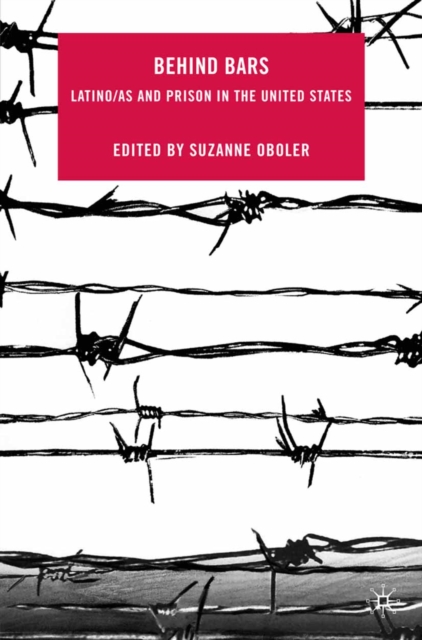
This book addresses the complex issue of incarceration of Latino/as and offers a comprehensive overview of such topics as deportations in historical context, a case study of latino/a resistance to prisons in the 70s, the issues of youth and and girls prisons, and the post incarceration experience.
In this fascinating new work, Karen Duke explores the conflicts and contradictory pressures in the development of prison drugs policy in Britain from 1980 to the present.
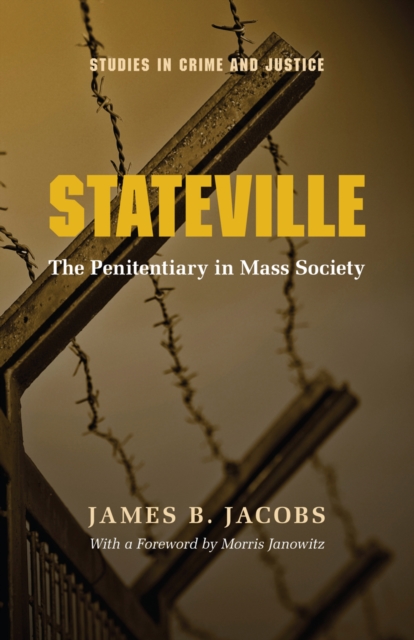
Stateville penitentiary in Illinois has housed some of Chicago's most infamous criminals and was proclaimed to be "e;the world's toughest prison"e; by Joseph Ragen, Stateville's powerful warden from 1936 to 1961.
Originally published in 1985, Imprisonment in England and Wales is an account of the changing functions and conditions of imprisonment in England and Wales from the Medieval period to the present day.
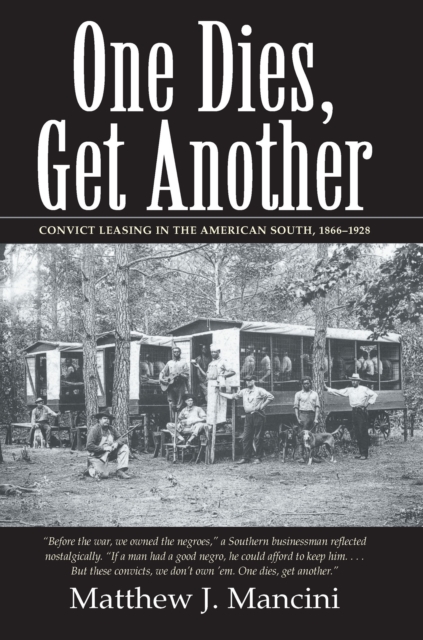
A chronicle one of the harshest, most exploitative labor systems in American historyIn his seminal study of convict leasing in the post-Civil War South, Matthew J.
An unrelenting prison boom, marked by stark racial disparities, pulled a disproportionate number of young black men into prison in the last forty years.
An unrelenting prison boom, marked by stark racial disparities, pulled a disproportionate number of young black men into prison in the last forty years.
Imprisoned by the Past: Warren McCleskey and the American Death Penalty connects the history of the American death penalty to the case of Warren McCleskey.
Research on prisons prior to the prison boom of the 1980s and 1990s focused mainly on inmate subcultures, inmate rights, and sociological interpretations of inmate and guard adaptations to their environment, with qualitative studies and ethnographic methods the norm.
It is no secret that America's sentencing and corrections systems are in crisis, and neither system can be understood or repaired fully without careful consideration of the other.
Today, two-thirds of the world's nations have abolished the death penalty, either officially or in practice, due mainly to the campaign to end state executions led by Western European nations.
The word "e;prison"e; immediately evokes stark images: forbidding walls spiked with watchtowers; inmates confined to cramped cells for hours on end; the suspicious eyes of armed guards.
Focusing contemporary democratic theory on the neglected topic of punishment, Punishment, Participatory Democracy, and the Jury argues for increased civic engagement in criminal justice as an antidote to the American penal state.
This book presents the first-ever English translation of the Prison Narratives written by the seventeenth-century French mystic and Quietist, Jeanne Guyon (1648-1717).
For nearly two centuries in the United States, the punishment of crime was largely aimed, in theory and in practice, at prevention, rehabilitation or incapacitation, and deterrence.
InThe Death Penalty in America: Current Controversies, Hugo Adam Bedau, one of our preeminent scholars on the subject,provides a comprehensive sourcebook on the death penalty, making the process of informed consideration not only possible but fascinating as well.
When news breaks that a convicted murderer, released from prison, has killed again, or that an innocent person has escaped the death chamber in light of new DNA evidence, arguments about capital punishment inevitably heat up.
When news breaks that a convicted murderer, released from prison, has killed again, or that an innocent person has escaped the death chamber in light of new DNA evidence, arguments about capital punishment inevitably heat up.
Today, two-thirds of the world's nations have abolished the death penalty, either officially or in practice, due mainly to the campaign to end state executions led by Western European nations.
People convicted of crimes are subject to a criminal sentence, but they also face a host of other restrictive legal measures: Some are denied access to jobs, housing, welfare, the vote, or other goods.
Although the issue of offender decision-making pervades almost every discussion of crime and law enforcement, only a few comprehensive texts cover and integrate information about the role of decision-making in crime.